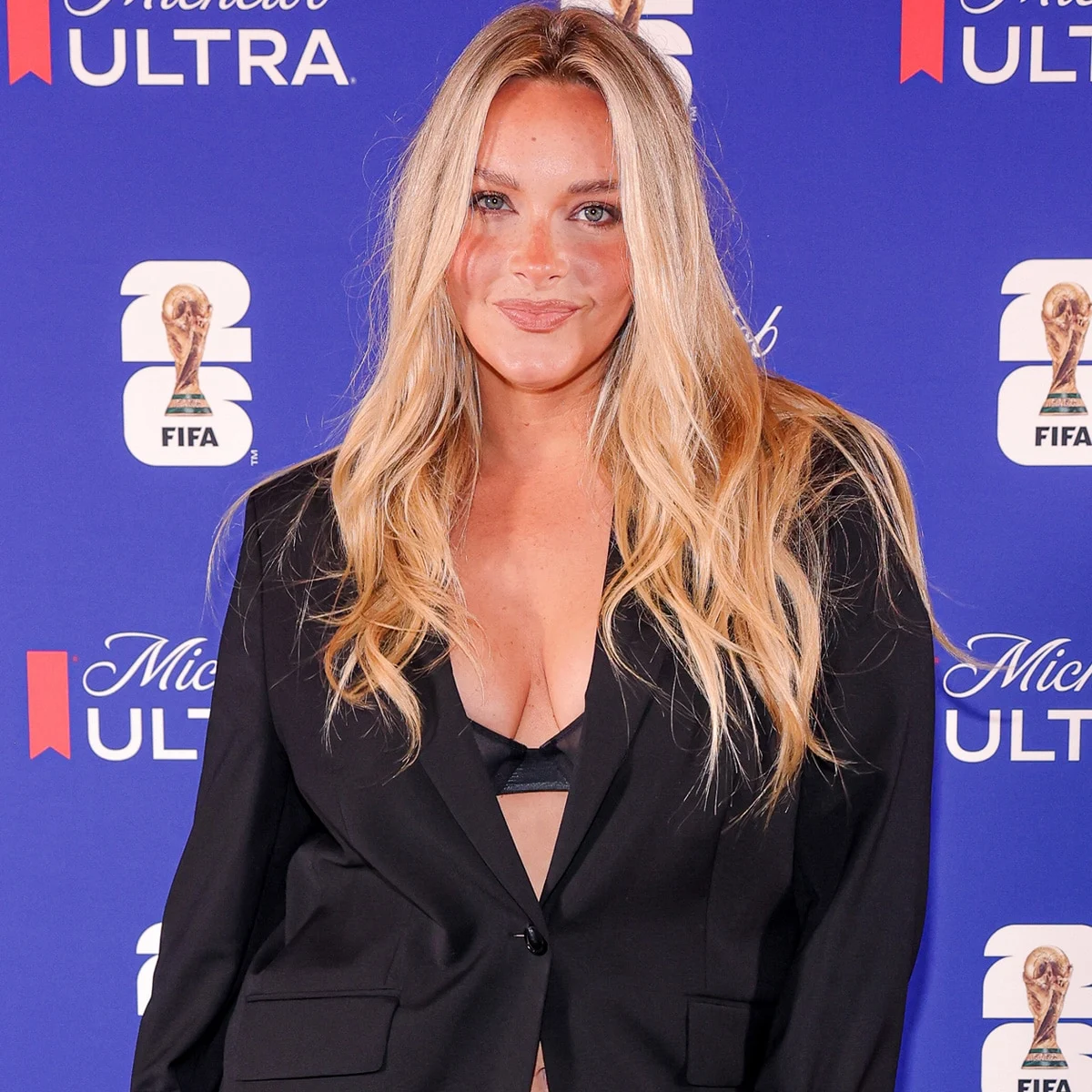
Camille Kostek, a prominent figure in the modeling world and known for her appearances in Sports Illustrated Swimsuit, has publicly addressed and denounced the pervasive issue of online body shaming. The model, who has been in a relationship with former NFL star Rob Gronkowski since 2023, took to TikTok on July 23rd to voice her frustration. In a video featuring trending audio, Kostek expressed her weariness of encountering negative comments about her body whenever she checks her phone. She captioned the clip with a pointed message: "me wondering when I’m going to stop opening my phone to losers having conversations about my body." To further emphasize her stance, she added a directive for these critics: "go outside and get some sun!!"
The outpouring of support from fans in the comment section was immediate and substantial. Many users expressed admiration for Kostek’s physique and acknowledged her positive influence on their own self-confidence. One fan’s comment highlighted the profound impact Kostek has had, stating, "You are SO HOT and have helped give so many of us so much confidence in ourselves!" Another user shared a deeply personal anecdote, revealing, "One day my daughter is going to ask me where I got her name and I’ll tell her that I named her Camille because of you. Knowing she shares her name with you will truly give her confidence because you radiate light and have always been an epitome of beauty." Kostek acknowledged these heartfelt messages by "liking" them, indicating her appreciation for the positive reinforcement.
This public stance against body shaming by Kostek underscores a broader conversation about the pressures faced by public figures, particularly women, in the age of social media. Even individuals in industries that celebrate diverse body types, like swimsuit modeling, are not immune to harsh criticism. Kostek’s experiences highlight the emotional toll that constant scrutiny can take and her desire for others to cultivate self-acceptance.
A History of Speaking Out Against Body Shaming
Kostek’s current public statements are not isolated incidents. She has previously articulated her struggles with online negativity. In a 2019 interview with Fox News, following her debut on the cover of Sports Illustrated, Kostek shared her vulnerability: "I have problems of my own and I have people trying to label me, label my life, trying to figure who I am. Just because it may seem like I am so confident, so happy all the time, there are times when I feel low. There are times when I want to curl up in a ball and not expose myself on social media anymore and just close it down because of the trolls. But, I will not let those people affect me."
Her philosophy for navigating such challenges centers on self-acceptance and internal validation. "I try to remind people that as soon as you get to a place where you fully accept yourself, wherever you are in your journey, you get to a point where these trolls don’t even affect you at all," she explained. Her advice to others is to cultivate a strong sense of self-awareness: "The best advice I can give is to know yourself better than anyone else. You’re already hard enough on yourself. Don’t allow these people to affect you and don’t compare yourself to anyone else. That’s how I get through it."
Broader Trends of Celebrity Pushback Against Body Shaming
Camille Kostek’s experience is part of a larger, growing trend of celebrities using their platforms to challenge body shaming and promote body positivity. This movement has gained significant traction as more individuals in the public eye speak out against the often relentless and unfair criticism they face regarding their physical appearance.
Ava Phillippe: In May 2024, Ava Phillippe, daughter of Reese Witherspoon and Ryan Phillippe, shared a TikTok video detailing her encounters with contradictory online comments about her body. She described one stranger suggesting she take weight-loss medication due to being "too fat," while another accused her of starving herself because she was "too thin." Phillippe emphasized that her weight had not changed and, regardless, it was not anyone’s business. She powerfully stated, "no one deserves to be picked apart for what they look like… Your beauty exceeds such superficial measures."
Bebe Rexha: The Grammy-nominated singer has been vocal about her experiences with body shaming. In June 2023, after receiving criticism about her weight, Rexha tweeted, "I know I got fat. I’m just so sick of people talking about it. NEXT!!!!!!" She further elaborated in a separate post, highlighting the natural fluctuations in human weight due to various factors such as medication, illness, and life circumstances, urging people to be more understanding.
Rumer Willis: The actress has directly confronted online trolls who commented on her perceived thinness. In response to criticism on an Instagram post, she shared, "Coming for me in my comments and telling me how I’m too skinny or I need to eat is absolutely not helpful and extremely body shaming. Body shaming of any kind is something I will not stand for." Willis later posted a defiant photo of herself sunbathing, sending a "cheeky message to her haters."
Natalie Portman: In February 2021, Portman addressed speculation about her body shape that arose from photos taken on a film set. She used her Instagram Story to call out a news outlet, stating, "Hey, so I’m totally not pregnant…but apparently, it’s still OK in 2021 for anyone to speculate and comment on a woman’s body shape whenever they want? Do better."
Christina Haack: The "Flip or Flop" star has spoken out against online judgment regarding her appearance, particularly comments suggesting she looked "really skinny" or needed to eat more. Haack clarified that she was at her natural weight and that viewers had simply seen her body change during and after pregnancies.
Nelly Furtado: The singer subtly addressed body-shaming remarks by making a fashion statement. At Manchester Pride in 2025, she performed wearing an oversized T-shirt with a woman’s silhouette printed on the front, which featured a cropped tank top and bra, effectively reclaiming her image and challenging the scrutiny.
Meghan King Edmonds: Following her divorce, the former reality television star requested that fans stop commenting on her thin figure, stating, "I’ll be real with you: I’m too thin. But please, I deserve some grace. I am doing the damn thing with all of the dignity I can muster as I put my kiddos before anything else."
Celine Dion: The legendary singer responded to comments calling her "too skinny" by explaining that her lifestyle, which includes ballet and stretching, contributes to her physique. She asserted, "Is there anything wrong about my body? I’ve always been very thin… If you don’t want to be criticized, you are in the wrong place." Dion emphasized her focus on her own well-being and her ability to filter out negative opinions.
Lizzo: A vocal advocate for body positivity, Lizzo addressed body shamers in a June 2020 TikTok video. She stated, "I’m not working out to have your ideal body type. I’m working out to have my ideal body type, and you know what type that is? None of your f–king business, because I am beautiful, I am strong, I do my job and I stay on my job."
Demi Lovato: Known for their openness about body image, Lovato has consistently spoken against body shamers. In a 2016 interview with Glamour, they stated, "If somebody calls me fat, even in a vulnerable moment, I laugh to myself and think, I’m doing everything I can, so there’s nothing I can do about it." Lovato has also expressed a lack of desire for a conventional "six-pack" physique, prioritizing overall well-being.
Halle Berry: After sharing a nude photo of herself online, Berry received a critical comment about aging with dignity. She responded with a humorous and unrelated fact about shrimp anatomy, deflecting the negativity with wit.
Camila Cabello: The singer took to Instagram Stories to address body shaming, specifically mentioning cellulite and not sucking in her stomach. She powerfully stated, "Girls, cellulite is normal. fat is normal. It’s beautiful and natural. I won’t buy into the bulls—t today!!!! Not today satan and I hope you don’t either." Cabello emphasized the unrealistic beauty standards perpetuated by social media.
Bebe Rexha (Second Instance): In May 2019, Rexha responded to a tweet commenting on her weight gain by saying, "I gained weight get over it." She also publicly called out the fashion industry for refusing to dress her for the Grammys due to her size, advocating for body acceptance across all sizes.
Ayesha Curry: The wife of NBA star Stephen Curry shut down a follower who questioned her pregnancy status based on a photo. When another commenter made a remark about her son’s weight, Curry firmly responded, "Excuse you? No. Just no."
Jana Kramer: A week after welcoming her baby, Kramer posted a candid message on Instagram about the rude comments she received regarding her post-partum body. She advocated for self-kindness and the celebration of diverse female bodies, stating, "Our bodies are all beautiful and crafted differently, they heal different, they react different, they simply look different. Why do we need to shame someone for not looking a certain way?"
Candace Cameron-Bure: The "Fuller House" star addressed a troll’s comment about her weight by stating, "If a 25 inch waist looks big to you…then you’re looking through an altered lens. Be well." She effectively dismissed the criticism by highlighting the absurdity of the comment.
The Impact of Constant Scrutiny on Public Figures
The recurring theme among these public figures is the immense pressure to conform to often unattainable beauty standards and the emotional toll that constant scrutiny takes. For individuals like Camille Kostek, whose career is intrinsically linked to their physical appearance, navigating this landscape is particularly challenging. The proliferation of social media platforms has amplified both the reach of praise and the impact of criticism, making it imperative for celebrities to establish boundaries and advocate for self-acceptance.
Kostek’s proactive approach, utilizing a popular social media platform to voice her discontent and encourage self-love, serves as a powerful reminder that vulnerability can be a source of strength. Her continued efforts, alongside those of many other public figures, contribute to a broader societal shift towards appreciating and celebrating the diversity of human bodies, pushing back against the pervasive and often damaging effects of body shaming. The conversation initiated by Kostek and amplified by her peers underscores a critical need for empathy and understanding in online interactions, promoting a more positive and inclusive digital environment for all.