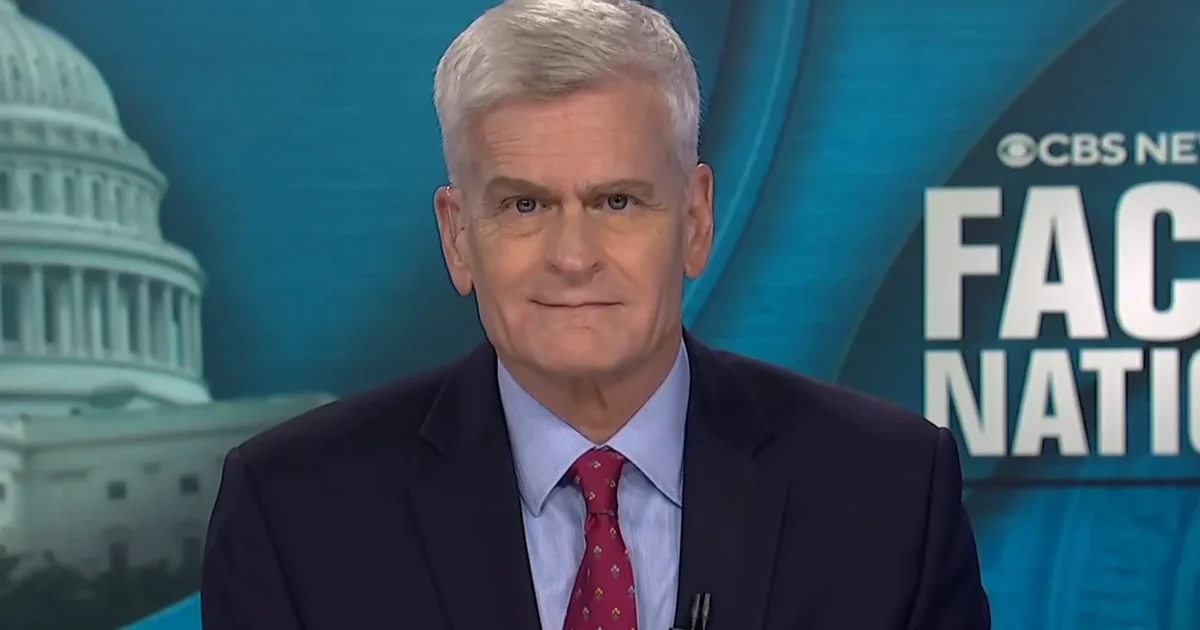
WASHINGTON — Amid the United States grappling with its highest number of measles cases in more than thirty years, Senator Bill Cassidy of Louisiana utilized a national television appearance to issue a stern and direct challenge to the administration. Appearing on a Sunday public affairs program, the Republican lawmaker and practicing physician urged the president to adopt a stance of "radical honesty" regarding childhood immunizations. Cassidy warned that public skepticism, fueled by unsubstantiated claims from high-ranking political figures, poses a direct and fatal threat to public health as preventable diseases make a dangerous resurgence across the country.
The public debate comes at a critical juncture for American healthcare. Decades after the measles, mumps, and rubella (MMR) vaccine was declared successful in eliminating endemic measles from the United States, declining vaccination rates in specific regions have created vulnerabilities. Public health infrastructure, already strained by years of pandemic-era fatigue and polarized political discourse, now faces an uphill battle to restore herd immunity and protect vulnerable populations, including infants too young to receive vaccinations and immunocompromised individuals.
The Evolution of Administration Policies and Controversial Claims
In recent months, the federal government has delivered a mixed and sometimes contradictory message regarding childhood inoculations. While parts of the executive branch and federal health agencies have intermittently encouraged parents to ensure their children receive the MMR vaccine to curb climbing infection rates, the president himself has repeatedly cast doubt on the safety profile and traditional schedule of these inoculations.
Last month, these doubts culminated in a formal executive order suggesting that the combined MMR shot should be broken down into three separate injections administered independently. Furthermore, the president made an unverified and alarming assertion that administering the combined vaccine could be "lethal" if not separated.
Expanding on these comments during an Oval Office media availability, the president went a step further, stating an intention to demand that pharmaceutical manufacturers reconfigure childhood vaccination regimens into five distinct doses spread across six-month intervals. Proposing that this altered schedule would drastically reduce the size of individual vaccine doses, the administration argued without clinical backing that such a change would yield a "massive reduction in autism." The president suggested removing specific components that cause public anxiety, effectively altering a decades-old, scientifically verified immunization roadmap.
Medical Community and Legislative Pushback
As a physician who has spent decades treating patients, Senator Cassidy sharply rebuffed the administration’s claims, demanding accountability and scientific transparency. Addressing reporters and program hosts, Cassidy questioned the origin of the administration’s medical advice and challenged the factual basis of labeling standard vaccines as lethal.
"Have the president come forward — what is he basing this on? Who’s giving him advice?" Cassidy asked during the interview. He emphasized that healthcare professionals must meet public anxiety with evidence-based reassurance rather than political accommodation. "If you want to be radically honest, the vaccines are safe, they’ve been proven to be safe, and the current regimen has been timed to be most convenient to the parent. At any point, the parent can say, ‘I want something different.’"
Cassidy pressed the administration to answer for its rhetoric, questioning whether the president or his advisors had ever clinically witnessed a case of vaccine-induced lethality, contrasted against the undeniable, documented reality of unvaccinated individuals suffering severe morbidity and mortality from preventable infections.
The Human Toll: Measles as a Public Health Crisis
To underscore the gravity of the situation, the Louisiana Republican highlighted recent, tragic fatalities tied directly to the current outbreak. Among them, he referenced the deaths of an 18-year-old in Mifflin County and a 40-year-old in Jefferson County, Pennsylvania—stark reminders that measles is far from a benign childhood ailment.
Drawing a parallel to reckless behavior that endangers public safety, Cassidy asserted that contracting and spreading a vaccine-preventable disease carries societal consequences.
"Having measles is not a kind of victimless kind of experience," Cassidy said. "You can drink and get drunk, but if you drive, you’re going to hurt other people. You can get measles, but when you start spreading it to other people, a 40-year-old dies, an 18-year-old dies, children in a neonatal intensive care unit are at risk. People have got to realize, and the government has to realize it. The president should be saying, ‘Be vaccinated. It is safe and effective.’"
Cassidy reiterated that leadership requires a unified, factual message to protect American lives. He warned that framing proven medical interventions as lethal risks unnecessary casualties, stating that if the executive branch cannot substantiate its claims, it has a moral obligation to cease rhetoric that undermines public health.
Senate Oversight and Confirmation Hearings
The debate over vaccine safety is directly intersecting with the legislative branch’s constitutional duty of advice and consent. As the chair of the Senate Health, Education, Labor and Pensions Committee, Senator Cassidy occupies a pivotal position in vetting nominees to key health agencies. His tenure in the Senate is drawing to a close, as he is set to leave office early next year following the president’s endorsement of a primary challenger. Before his departure, however, his committee holds substantial sway over the confirmation of leadership positions tasked with steering federal health policy.
During upcoming committee hearings, the scrutiny on nominees is expected to center heavily on scientific integrity and public health communication. Cassidy outlined his expectations for Heidi Overton, the nominee for Food and Drug Administration (FDA) commissioner, stating unequivocally that he must hear her reject the characterization of the measles vaccine as lethal.
"I need to hear that she understands that calling the measles vaccine lethal is absurd, and we need radical honesty," Cassidy remarked.
Conversely, Cassidy pointed to the recent committee appearance of Nicole Saphier, the nominee for surgeon general, as a positive counterexample. During her confirmation hearing, Saphier explicitly testified that the MMR vaccine is not lethal and encouraged parents to maintain up-to-date immunization schedules. Her forthright stance earned her Cassidy’s endorsement.
"When somebody is willing to be honest to the American people and say that vaccines are safe, you should be taking it, and the consequence of not can even include death, well, what else can you ask for when it comes to vaccines?" Cassidy said.
Broader Implications for Public Health and Policy
The public divergence between a prominent Senate Republican and the executive branch highlights a deep ideological and scientific fracture within conservative politics regarding public health administration. For decades, federal vaccine policy was characterized by broad bipartisan consensus, anchored by agencies such as the Centers for Disease Control and Prevention (CDC) and the FDA. The politicization of routine immunization schedules risks accelerating vaccine hesitancy, potentially creating permanent pockets of susceptibility that allow eradicated pathogens to regain a permanent foothold in communities.
Public health organizations, pediatric associations, and infectious disease specialists have consistently echoed Cassidy’s sentiments, noting that splitting or delaying vaccines does not reduce the risk of autism—a link thoroughly debunked by numerous large-scale, peer-reviewed global studies—while significantly extending the window during which children remain completely unprotected against dangerous pathogens.
As the outbreak continues to challenge local health departments across multiple states, the political and medical fallout from the administration’s vaccine skepticism remains a central issue in Washington. Whether the federal health nominees can successfully navigate confirmation while balancing administration directives with empirical science will serve as a crucial test for the nation’s regulatory bodies in the months ahead.