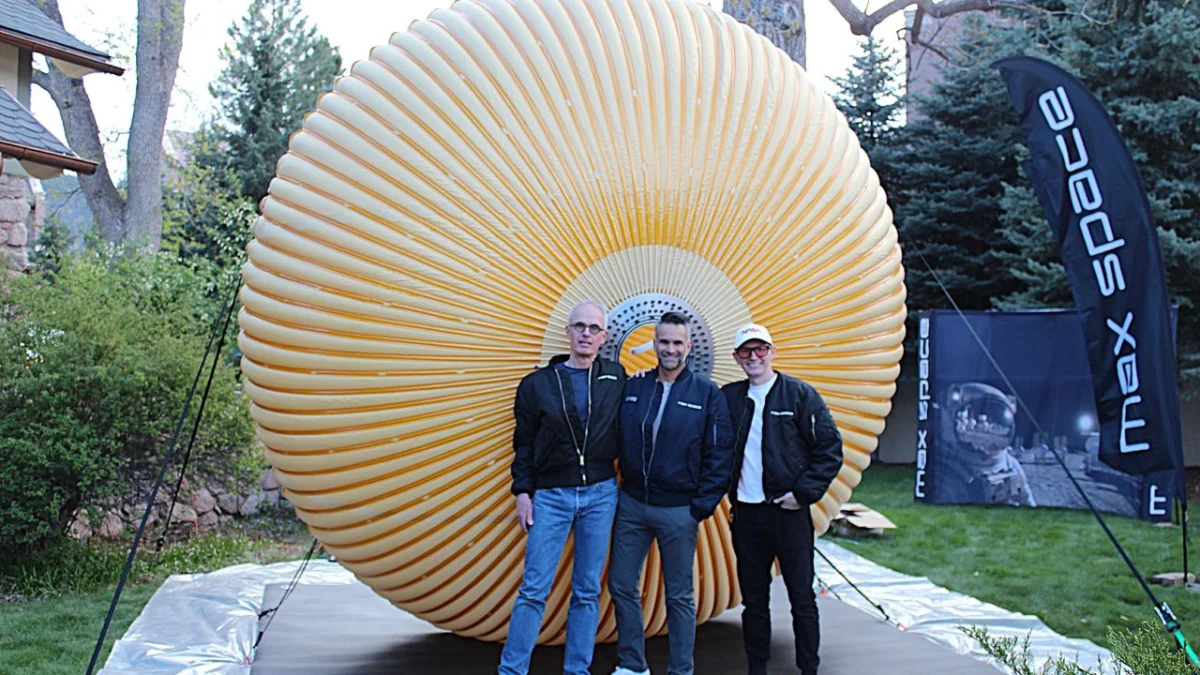
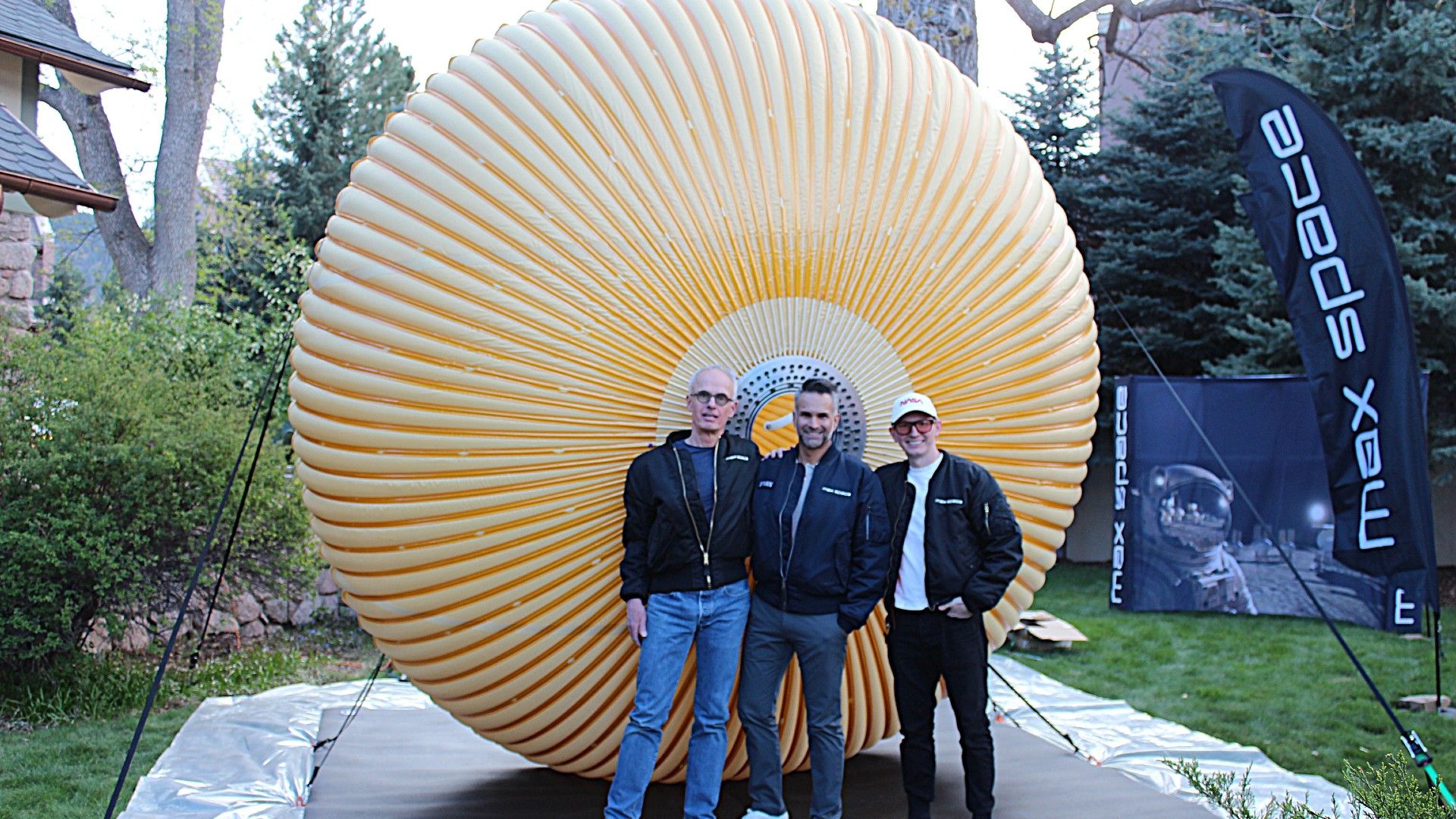
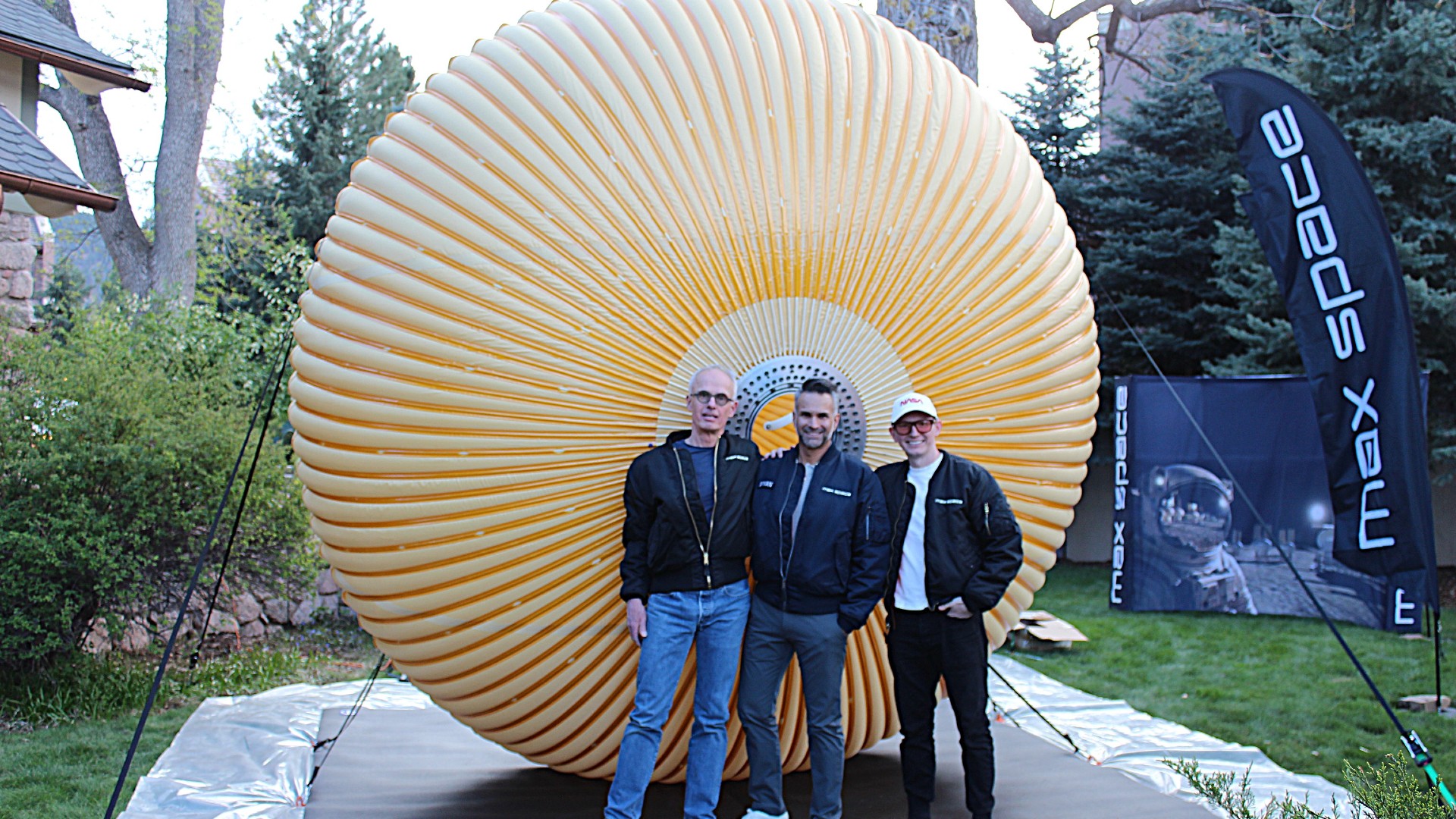
COLORADO SPRINGS, Colorado – At the 41st annual Space Foundation Space Symposium, a pivotal gathering for space industry leaders and innovators, Max Space has showcased a significant sub-scale model of its expandable habitat technology. This development marks a critical step forward in realizing ambitious goals for human habitation beyond Earth, promising enhanced habitable volume and reduced logistical burdens for future space missions, from commercial low Earth orbit stations to lunar bases and deep space outposts. The unveiling, held amidst a backdrop of intense industry focus on sustainable space exploration and development, underscores the growing momentum behind modular and scalable extraterrestrial infrastructure.
The physical demonstration, presented by Max Space co-founder and CEO Saleem Miyan, represents a tangible realization of the company’s vision for advanced space architecture. "This is more than a model," Miyan stated, emphasizing the practical readiness of their innovation. "It is a physical demonstration of a new approach to space infrastructure, far greater habitable volume, lower launch mass and logistics burden, scalable architecture for commercial low Earth orbit stations, lunar surface systems, and future deep space missions." This statement highlights the multifaceted applicability of their technology, addressing key challenges that have historically constrained the expansion of human presence in space.
The Evolution of Space Habitation: From Modules to Expandable Structures
For decades, the concept of space habitation has largely relied on rigid, pre-fabricated modules launched into orbit or to celestial bodies. While these modules have been instrumental in enabling space exploration, their inherent limitations in terms of volume, mass, and launch cost have presented significant hurdles to establishing robust, long-term human presence. The International Space Station (ISS), a marvel of engineering, is a testament to this approach, comprising numerous interconnected modules, each requiring specialized launch and assembly. However, as the ambitions for lunar bases and eventual Mars missions grow, the need for more efficient and scalable solutions becomes paramount.
Expandable habitat technology, such as that developed by Max Space, offers a compelling alternative. These structures are designed to launch in a highly compressed state, significantly reducing their volume and mass. Upon reaching their destination, they can be deployed to achieve a much larger internal volume than would be feasible with traditional rigid modules of comparable launch mass. This expansion capability is crucial for creating more comfortable and functional living and working spaces for astronauts, as well as for housing larger payloads and more complex scientific equipment.
Max Space’s Approach: Practical Readiness of Materials (PRM)
A core tenet of Max Space’s development philosophy, as articulated by Miyan, is the "Practical Readiness of Materials" (PRM). This concept moves beyond the widely recognized Technical Readiness Levels (TRLs), which assess the maturity of a technology, to focus specifically on the proven durability and suitability of the materials used in their expandable habitats for the harsh environment of space. With over three decades of material science expertise underpinning their work, Max Space claims that their chosen materials are not only robust but are "truly ready for long duration space flights and lunar habitation." This emphasis on material science is critical, as the long-term performance and safety of any space habitat depend heavily on its ability to withstand factors such as radiation, extreme temperature fluctuations, and micrometeoroid impacts.
The company’s assertion that "the next era of space habitation will not be built with small thinking" encapsulates their ambition to provide solutions that facilitate significant expansion of human activity in space, moving beyond mere survival to thriving. This forward-looking perspective is particularly relevant as space agencies and private companies alike begin to outline concrete plans for lunar bases and potentially even settlements.
A Strategic Partnership for Lunar and Deep Space Futures
The announcement in February of a new strategic partnership between Voyager Technologies and Max Space further solidifies the latter’s position in the evolving space landscape. Voyager Technologies, a defense and space technology company, brings its own expertise and resources to the collaboration. Dylan Taylor, chairman and CEO of Voyager, expressed his conviction in the transformative potential of Max Space’s technology. "This technology reflects a fundamental shift in how humanity will live and work in space," Taylor stated. He further elaborated on the strategic importance of such advancements for sustained lunar operations, noting that "sustained operations on the moon require infrastructure designed for endurance, scalability and industrial execution."
Taylor’s perspective highlights a crucial paradigm shift in how the Moon is viewed. No longer just a destination for brief exploratory missions, the Moon is increasingly being recognized as an operational domain within a burgeoning space economy. This evolving perspective necessitates infrastructure capable of supporting long-term human presence, resource utilization, and commercial activities. The partnership between Voyager and Max Space is positioned to address these very needs, aligning with the growing demand for robust and scalable lunar infrastructure.
Phased Development and Alignment with NASA’s Exploration Timelines
Max Space’s development path for its expandable habitats is characterized by a phased approach, aiming for ground validation and in-space demonstrations within the current decade. This timeline is strategically designed to align with the ambitious exploration objectives set forth by NASA’s Artemis program and other international space initiatives. The Artemis program, which aims to return humans to the Moon and establish a sustainable lunar presence, provides a clear framework and timeline for the development and deployment of new space technologies.
The company’s lightweight expandable habitat is designed to launch compactly and expand up to twenty times its initial volume once deployed in orbit or at its destination. This remarkable expansion capability allows for a substantial habitable volume to be launched on a single SpaceX Falcon 9 rocket. The Falcon 9, a workhorse of modern spaceflight, is capable of delivering significant payloads to orbit, making it an ideal launch vehicle for such large, yet compactly packaged, habitat modules. This integration with existing, reliable launch infrastructure is a key factor in the feasibility and cost-effectiveness of the Max Space solution.
The phased development plan includes crucial milestones such as rigorous ground testing to simulate the stresses of launch and deployment, followed by in-space demonstrations to validate the habitat’s performance in the actual space environment. These demonstrations will be critical for gathering data, refining designs, and building confidence in the technology’s reliability for long-duration missions. The ultimate goal is to enable operational capabilities on the Moon and Mars that are synchronized with the timelines and requirements of major space exploration programs.
Broader Implications for the Future of Space Exploration and Commerce
The advancements presented by Max Space at the Space Symposium have far-reaching implications beyond just providing shelter for astronauts. The ability to deploy larger habitable volumes more efficiently can unlock new possibilities for various space-based activities:
- Commercial Space Stations: The development of scalable and cost-effective habitats is crucial for the burgeoning commercial space station market. Companies envision orbital platforms for tourism, research, manufacturing, and even resource processing. Max Space’s technology could significantly reduce the cost and complexity of building and expanding these stations.
- Lunar Bases and Settlements: For sustained human presence on the Moon, robust and expandable living and working spaces are essential. Max Space’s habitats could form the foundational elements of lunar bases, providing the necessary volume for science labs, living quarters, and life support systems. This would facilitate longer-duration stays and more comprehensive lunar exploration and utilization.
- Deep Space Missions: While the immediate focus is on lunar and LEO applications, the underlying technology holds promise for future deep space missions. Larger, more comfortable habitats could be vital for the psychological and physiological well-being of crews on long voyages to Mars and beyond, where the journey itself can take many months or even years.
- In-Situ Resource Utilization (ISRU): Larger habitable volumes can accommodate more sophisticated ISRU equipment, allowing future missions to extract and process resources from the lunar or Martian regolith. This is a critical step towards making human space exploration more sustainable and less reliant on Earth-based resupply.
- Reduced Launch Costs and Increased Payload Capacity: By significantly increasing habitable volume per unit of launch mass, expandable habitats offer a more economical approach to space construction. This can free up payload capacity on launch vehicles for scientific instruments, supplies, and other critical equipment.
The Space Foundation’s annual Space Symposium serves as a vital platform for showcasing these cutting-edge technologies and fostering collaborations that drive the industry forward. The presence of companies like Max Space, alongside established players and government agencies, highlights the dynamic and rapidly evolving nature of the space sector. The discussions and demonstrations at such events not only provide insights into current capabilities but also offer glimpses into the future possibilities of human endeavors in space.
Background of the Space Symposium
The Space Foundation’s Space Symposium, now in its 41st year, has established itself as one of the premier global forums for the space industry. Held annually in Colorado Springs, Colorado, it brings together thousands of participants from government, military, industry, and academia. The symposium serves as a crucial venue for sharing information, fostering dialogue, and identifying emerging trends and opportunities in space. It provides a unique environment for networking, business development, and the showcasing of new technologies and capabilities that are shaping the future of space exploration and utilization. The event typically features keynote addresses from high-ranking officials, panel discussions on critical topics, and extensive exhibition halls where companies like Max Space can present their innovations to a global audience.
The Road Ahead: Challenges and Opportunities
While the Max Space expandable habitat technology represents a significant leap forward, the path to widespread adoption and operational deployment will involve overcoming several challenges. These include:
- Regulatory Approval and Certification: Ensuring that expandable habitats meet stringent safety and performance standards set by space agencies and regulatory bodies will be crucial.
- Long-Term Durability Testing: While the company emphasizes PRM, extensive long-term testing in simulated and actual space environments will be necessary to fully validate the durability and reliability of the materials and deployment mechanisms.
- Integration with Existing and Future Spacecraft: Seamless integration with various launch vehicles, orbital transfer vehicles, and surface mobility systems will be essential for practical deployment.
- Cost and Scalability of Production: As demand for such habitats grows, the ability to produce them at scale and at a competitive cost will be a key factor in their commercial success.
Despite these challenges, the potential benefits offered by Max Space’s technology are substantial. The company’s focus on practical readiness, combined with strategic partnerships and alignment with major exploration initiatives, positions it to play a significant role in the ongoing expansion of human activity beyond Earth. The advancements showcased at the Space Symposium are not just about building more space; they are about building a more sustainable, accessible, and prosperous future in space for humanity.