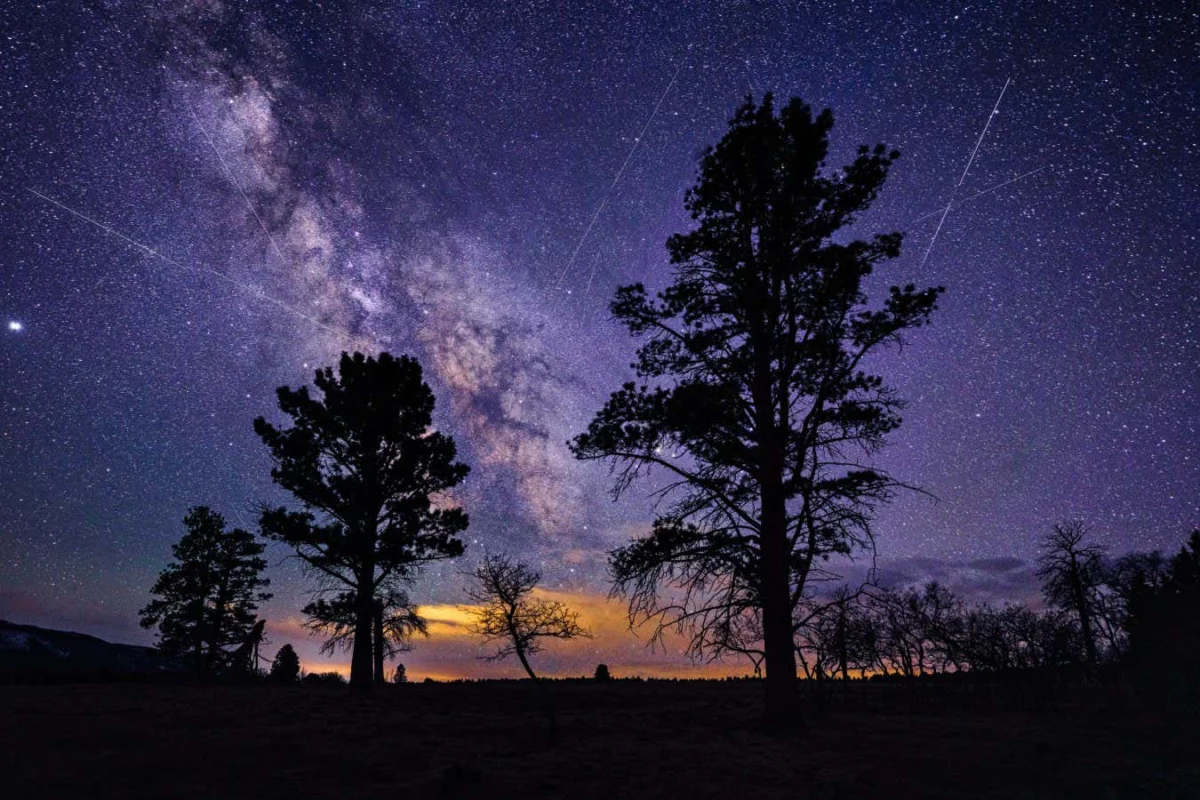
The Lyrid meteor shower will soon hit its peak, offering a spectacular celestial display for stargazers. On the evening of April 22nd and into the early hours of April 23rd, the night sky is expected to be alive with streaks of light as Earth passes through a stream of debris left behind by the long-period comet C/1861 G1, also known as Thatcher. While the peak viewing window is narrow, the Lyrids are active for a more extended period, typically from April 16th to April 25th, providing ample opportunities for observation.
Understanding the Lyrids: A Cosmic Dance of Dust and Light
Meteor showers are a recurring astronomical phenomenon that occurs when Earth, in its orbit around the Sun, encounters a trail of cosmic dust and debris. These particles, often no larger than grains of sand, are remnants of comets or asteroids. As they enter Earth’s atmosphere at incredibly high velocities, typically tens of thousands of miles per hour, the intense friction with the air causes them to heat up and vaporize, creating the brilliant streaks of light we call meteors, or "shooting stars."
The Lyrid meteor shower is specifically linked to Comet Thatcher, a long-period comet discovered in 1861. Comets are essentially icy bodies that, as they approach the Sun, release gas and dust, forming a tail. Thatcher has an exceptionally long orbital period of approximately 415 years, meaning it was last in Earth’s vicinity in the early 17th century and is not expected to return until around 2278. Despite its infrequent visits, the comet’s passage through the inner solar system leaves behind a significant debris trail that Earth intersects annually.
The Radiant Point: Where the Lyrids Appear to Originate
Each meteor shower is named after the constellation from which its meteors appear to radiate. For the Lyrids, this radiant point is the constellation Lyra, a small but distinctive constellation in the northern celestial hemisphere. Lyra is home to Vega, one of the brightest stars in the night sky, which serves as a prominent celestial landmark. While meteors can appear anywhere in the sky, tracing their paths backward will lead observers to this specific region.
For those in the Northern Hemisphere, Lyra will be visible in the eastern sky shortly after sunset. As the night progresses, the constellation will ascend higher, offering a more optimal viewing position. However, as the night approaches sunrise, the increasing ambient light from the dawn can diminish the visibility of fainter meteors. Therefore, the hours between midnight and pre-dawn are generally considered the prime viewing time for most meteor showers.
While the radiant is in the Northern Hemisphere, individuals in the Southern Hemisphere may still catch a glimpse of Lyrid meteors. Although Lyra itself will not be visible, meteors can traverse the sky in any direction. By looking towards the east, particularly in the hours before dawn, Southern Hemisphere observers might witness some of these fleeting celestial visitors.
Maximizing Your Viewing Experience: Tips for Spotting the Lyrids
To best enjoy the Lyrid meteor shower, several factors should be considered:
- Dark Skies are Key: Light pollution from urban areas is the biggest impediment to observing meteors. For the most impressive display, it is advisable to travel away from city lights to a location with minimal artificial illumination. Rural areas, national parks, or designated dark sky preserves offer the ideal conditions.
- Timing is Crucial: While the Lyrids are active for about a week, their peak activity, when the highest number of meteors per hour is expected, occurs on the night of April 22nd and into the early morning of April 23rd.
- Patience and Comfort: Meteor showers require patience. Find a comfortable viewing spot, perhaps with a reclining chair or a blanket, and allow your eyes to adjust to the darkness. This adjustment period can take 20-30 minutes.
- No Special Equipment Needed: Unlike observing planets or distant galaxies, meteor showers are best viewed with the naked eye. Telescopes or binoculars are not suitable as they narrow the field of vision and would require constant repositioning to track the fast-moving meteors.
- Understanding the Zenithal Hourly Rate (ZHR): The ZHR is a theoretical measure of the number of meteors an observer could see under ideal conditions (dark skies, radiant directly overhead). For the Lyrids, under optimal conditions during their peak, astronomers anticipate a ZHR of around 10 to 18 meteors per hour. This means that in a perfect scenario, you might witness approximately one to three meteors every minute. However, actual visibility can vary significantly due to factors like moonlight, cloud cover, and the observer’s location relative to the radiant.
Navigating the Night Sky: Finding Lyra
For those in the Northern Hemisphere, locating Lyra can be facilitated by identifying the prominent asterism known as the Summer Triangle. This celestial landmark is formed by three bright stars: Vega in Lyra, Deneb in Cygnus, and Altair in Aquila. While traditionally associated with summer evenings, the Summer Triangle becomes visible in the eastern sky around midnight in late April. Vega, being the highest of these three stars, is situated within the constellation Lyra.
Alternatively, dedicated stargazing apps and charts can provide real-time guidance on the position of Lyra and other celestial objects throughout the night. These tools can be invaluable for pinpointing the radiant and understanding the orientation of the constellations.
The Role of the New Scientist Stargazing Companion
To further assist the public in appreciating astronomical events like the Lyrid meteor shower, New Scientist offers a stargazing companion. This resource, available in audio format, aims to provide guidance on what to look for, how to interpret celestial phenomena, and practical tips for observation. These companions often delve into the science behind the events, offering context and enriching the viewer’s experience. The audio guide for the Lyrids can be accessed through New Scientist‘s podcast feed, specifically within "The world, the universe and us" episode series.
Broader Implications and Astronomical Significance
The annual Lyrids meteor shower, while not the most prolific, holds significant importance in the astronomical calendar. It serves as a consistent reminder of Earth’s dynamic journey through the solar system and the predictable yet ever-fascinating interactions with cometary debris. Each meteor sighting is a tangible connection to the vastness of space and the processes that have shaped our cosmic neighborhood over eons.
For amateur astronomers and casual observers alike, meteor showers offer an accessible entry point into the wonders of the universe. They encourage us to step outside, gaze upwards, and connect with natural phenomena that have inspired awe and wonder throughout human history. The Lyrids, with their connection to a comet whose orbit spans centuries, also highlight the immense timescales involved in celestial mechanics and the enduring legacy of cosmic events.
Furthermore, the study of meteor showers contributes to our understanding of cometary composition, orbital dynamics, and the distribution of interplanetary dust. While the Lyrids may appear as fleeting streaks of light, they are messengers from the outer reaches of the solar system, carrying clues about its formation and evolution.
Looking Ahead: Future Meteor Showers
Following the Lyrids, the astronomical calendar offers several other notable meteor showers throughout the year. The Eta Aquariids in early May, also linked to Halley’s Comet, and the Perseids in August, known for their high rate of meteors and often spectacular fireballs, are among the most anticipated. Each of these events provides unique opportunities to witness the universe’s grand celestial ballet.
As the Lyrids reach their peak, clear skies and a bit of patience will be the most valuable tools for experiencing this annual spectacle. The ephemeral beauty of these shooting stars serves as a poignant reminder of the dynamic and ever-changing nature of our cosmos.