The sweeping Democratic victories in the November 2026 midterm elections have introduced a formidable wave of political headwinds for the nation’s burgeoning technology infrastructure, signaling a potential deceleration in the massive construction of artificial intelligence data centers across the United States. According to comprehensive post-election analyses from prominent Wall Street financial institutions and political research firms, the newly empowered political landscape is expected to introduce stricter zoning regulations, higher compliance costs, and significant delays for tech giants racing to secure power and land.
The electoral outcomes reflect a deep-seated and growing public anxiety regarding the intense resource consumption of modern computing facilities. As the artificial intelligence revolution accelerates, the infrastructure required to support it—namely, massive server farms—has increasingly clashed with local communities over issues of water usage, grid stability, noise pollution, and visual blight. With voters delivering a clear message at the ballot box and key gubernatorial races shifting toward candidates who campaigned on reigning in unbridled tech expansion, the multi-billion-dollar buildout that has driven recent U.S. economic growth faces its most serious regulatory challenge to date.
Local Ballots and Statewide Referendums Signal Grassroots Backlash
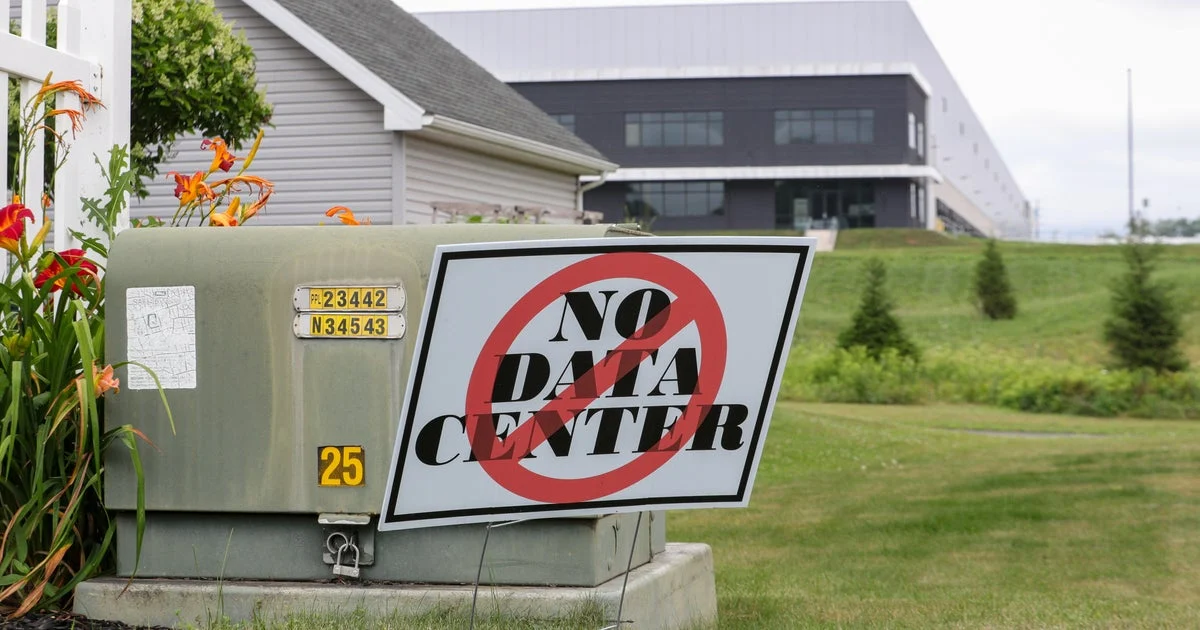
The friction between local residents and digital infrastructure developers manifested forcefully during the midterm cycle. Data compiled by political research firm Redbud Consulting reveals that voters across California, Illinois, Maine, Ohio, New York, and multiple other states approved 37 distinct ballot measures explicitly designed to restrict, delay, or outright ban the establishment of new data centers within their municipal boundaries. By stark contrast, only a single rural community—Harwood, North Dakota—voted in favor of permitting a new data center facility during the election.
This electoral backlash mirrors broader national sentiment. A comprehensive CBS News opinion poll conducted earlier in the summer found that American opposition to data center construction in local neighborhoods outpaces support by a margin of more than two to one. Citizens living adjacent to proposed sites have increasingly organized against the facilities, citing concerns that the massive energy demands of AI data centers will strain local electrical grids, drive up residential utility bills, and compromise local environmental standards without offering proportional economic benefits or job creation for the local workforce.
The election results have successfully elevated a slate of political candidates who seized upon these localized grievances, turning data center regulation into a central plank of their legislative and executive platforms. Financial analysts note that the political viability of halting tech expansion has transformed from a niche local issue into a potent statewide movement.
Key Battlegrounds: Texas and Georgia in the Crosshairs
Nowhere are the potential ramifications of the midterm elections more pronounced than in Texas, a jurisdiction that currently accounts for an estimated 25% to 30% of all data center capacity scheduled to come online nationwide by the year 2030. Texas has long served as the foundational bedrock for the domestic artificial intelligence infrastructure buildout, prized by developers for its deregulated energy market and pro-business environment.
However, the political topography of the Lone Star State shifted dramatically on Tuesday. Democratic challenger Gina Hinojosa secured a major victory by defeating incumbent Republican Governor Greg Abbott. During her vigorous campaign, Hinojosa explicitly proposed a temporary statewide ban on new data center construction to allow regulators time to evaluate the long-term impact on the state’s power grid, which is still recovering from historic vulnerabilities exposed in prior winters.
Stephen Dover, chief market strategist at Franklin Templeton, predicted that the collective midterm outcomes will inevitably lead to a noticeable slowdown in data center construction, bringing fresh layers of regulatory oversight and increased operational costs for developers. Echoing this sentiment, Dan Ives, a technology analyst at Yorkville Ives & Co., posed a critical question to tech investors in a post-election research note: "Will these midterm elections slow the pace of the planned 800 to 1,000 data centers across the U.S. fueling the AI Revolution?" His definitive answer: "The answer in our view is a clear YES."
Ives emphasized the critical vulnerability of the Texas market, describing the state as the absolute linchpin for the national AI infrastructure strategy. According to Gordon Johnson, CEO and founder of GLJ Research, Hinojosa’s gubernatorial win could immediately stall the integration of approximately 13 gigawatts of data center power currently planned for the state. Ironically, Johnson noted that outgoing Governor Abbott had already quietly suspended certain data center approvals, meaning Hinojosa can effortlessly maintain and extend the moratorium without necessarily having to navigate a contentious new piece of legislation through the state legislature.
Beyond Texas, the state of Georgia—widely recognized as the third-largest data center market in the United States—also experienced a seismic political shift. Keisha Lance Bottoms captured the Georgia governorship, running on an aggressive platform that promised an immediate pause on new data center developments across the state. In a post-election interview on Wednesday, Bottoms confirmed her immediate policy agenda, stating she intends to sign an executive order enforcing the pause while administrators evaluate the situation and review the lucrative tax incentives that previously attracted tech conglomerates to the region.
"So, of course, we are going to have to take a look at what those agreements entail and determine what our remedies are to enact that pause, but I don’t think we’re going to get a lot of pushback across the state," Bottoms remarked during her media appearance, highlighting that numerous local governments in Georgia had already initiated similar restrictive measures independently.
Evaluating the Broader Economic Implications
For years, the massive capital expenditures poured into data centers and artificial intelligence hardware have served as a primary engine for U.S. economic expansion and a dominant catalyst for record-shattering stock market gains. The sudden political resistance and potential construction moratoriums raise valid questions regarding the medium- and long-term trajectory of the broader technology sector.
However, mainstream macroeconomic analysts and market strategists suggest that a cooling period in the data center sector may not necessarily spell disaster for the broader economy. Instead, many view the electoral pushback as a natural and potentially healthy correction for an industry that was rapidly showing signs of speculative overheating.
Stephen Dover of Franklin Templeton argued that while growth will undeniably be tempered, the macroeconomic impact will likely remain manageable. "It’s possible to argue that the AI trade and data center buildout was getting overheated, and this could dampen some of the excessive investment that might not have a good return on capital, which investors have questioned anyway," Dover explained. He added that unbridled expansion will be reined in, but capital expenditures are unlikely to dry up completely.
A recent research report published by Oxford Economics reached a similar conclusion, suggesting that while local moratoriums and state-level restrictions will inevitably stretch the timelines of future infrastructure projects, a slower construction pace could ultimately benefit the wider macroeconomy by preventing severe strain on regional utilities and municipal resources.
"A more restrictive stance toward data centers would stretch the timelines of future projects, and slower construction in the medium to long term wouldn’t necessarily be a bad outcome for the macroeconomy," the Oxford Economics analysts noted.
Chronology and Context of the Regulatory Wave
The tensions surrounding data center proliferation have evolved rapidly over the past three years. The genesis of the current boom began in earnest following the public launch of advanced generative artificial intelligence models in late 2022, which triggered an unprecedented corporate gold rush for computing power. Tech giants including Microsoft, Google, Amazon, and Meta scrambled to acquire vast tracts of land—frequently in suburban and rural areas—to construct million-square-foot server farms capable of housing hundreds of thousands of specialized graphics processing units.
By 2024 and 2025, the initial wave of local enthusiasm for job creation gave way to widespread alarm. Communities realized that modern AI data centers consume vast quantities of water for cooling systems and draw electrical loads equivalent to mid-sized cities. Municipalities across the Rust Belt, the Sunbelt, and the Pacific Northwest began introducing localized zoning ordinances and temporary building freezes.
The November 2026 midterm elections represent the first major national referendum on this technological transformation. By translating grassroots local opposition into statewide executive power—particularly through the electoral victories of figures like Gina Hinojosa in Texas and Keisha Lance Bottoms in Georgia—voters have effectively shifted the debate from local zoning boards to state capitals.
Looking Ahead: The Future of AI Infrastructure
As the newly elected governors prepare to take office and municipal ordinances take effect, the technology sector faces a period of strategic recalibration. Industry leaders will likely be forced to pivot toward more sustainable engineering practices, such as investing in dedicated nuclear or renewable micro-grids, closed-loop water cooling technologies, and locating facilities in remote, unpopulated areas where community friction is minimized.
While the unprecedented pace of the initial AI buildout is undoubtedly facing a legislative and electoral speed bump, the underlying commercial demand for artificial intelligence capabilities remains robust. The coming months will test the adaptability of Silicon Valley as it navigates a newly skeptical American electorate determined to balance technological progress with environmental preservation and community welfare.