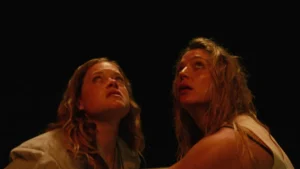
The landscape of reality television and influencer culture has experienced a seismic shift as Mikayla Matthews, a breakout star of Hulu’s hit docuseries The Secret Lives of Mormon Wives, formally announced her departure from the program. The announcement arrives amidst a backdrop of intense behind-the-scenes turmoil, deepening fractures within the viral Utah-based influencer collective known as MomTok, and mounting concerns regarding ethics, accountability, and the normalization of toxic behavior on mainstream platforms.
Matthews revealed her decision to step away from the series via a comprehensive social media statement released while her co-stars were actively filming footage for the sixth season of the popular reality program in Italy. Her exit underscores a growing tension within the unscripted television industry regarding the boundaries of reality stardom, the monetization of personal trauma, and the responsibilities production networks hold toward their cast members, families, and viewers.
Background and Context of the MomTok Phenomenon
To understand the weight of Matthews’ departure, one must examine the meteoric rise of MomTok. Originally a loose collective of Mormon and former-Mormon content creators on TikTok who documented their suburban Utah lifestyles, fashion, family dynamics, and religious deconstruction, the group captured national attention following a series of public scandals. The massive online following eventually translated into mainstream television viability, culminating in Hulu greenlighting The Secret Lives of Mormon Wives.
The series quickly established itself as a streaming powerhouse, drawing millions of viewers captivated by the juxtaposition of traditional religious aesthetics with high-drama contemporary lifestyles. However, the transition from short-form social media videos to long-form documentary television brought intense scrutiny, laying bare deep-seated personal conflicts, marital strains, and legal entanglements among the core cast.
While the show provided unprecedented financial opportunities and massive platforms for its participants, it also magnified real-world controversies, transforming private disputes into public entertainment. For individuals like Matthews, who have openly shared their journeys of personal healing and overcoming adverse childhood environments, the line between reality television entertainment and the exploitation of toxic cycles became increasingly blurred.
Chronology of Conflict and Production Turmoil
The friction culminating in Matthews’ departure is rooted in a timeline of escalating legal and personal controversies involving fellow cast member Taylor Frankie Paul. Paul’s personal life has served as the narrative anchor for The Secret Lives of Mormon Wives since its inaugural season, consistently drawing both massive viewership and severe public criticism.
The tension reached a critical juncture prior to the production of the show’s fifth season, when filming was abruptly paused. The hiatus followed severe domestic violence allegations involving Paul and her ex-partner, Dakota Mortensen, with whom she shares a child. The situation intensified exponentially when legal proceedings, contentious custody battles, and a previously unreleased video showing Paul physically assaulting Mortensen surfaced publicly. The timing of the leaked footage coincided awkwardly with promotional rollouts for major network programming, prompting widespread media scrutiny and industry discussions regarding the platforming of individuals involved in domestic incidents.
During the most recent broadcast season of The Secret Lives of Mormon Wives, viewers witnessed direct confrontations between Matthews and Paul. The friction stemmed largely from Paul’s resistance to public criticism and accountability regarding her turbulent lifestyle. Although the on-camera narrative suggested a tentative reconciliation between the two women, the off-camera reality proved to be vastly different, culminating in Matthews’ refusal to continue participating in the enterprise.
The Breaking Point: Ethics, Morality, and Financial Choices
In her public statement, Matthews articulated a clear, unyielding stance regarding her refusal to prioritize financial compensation over personal integrity.
“I made my decision over a week ago, after hearing some news, that I will not be continuing the show at this moment,” Matthews shared with her followers on Instagram. Drawing a direct line between her professional choices and her personal history, she added, “I’ve said from the beginning of this that I’m not comfortable being a part of something that continues to platform behavior I don’t agree with, especially given my own experience growing up in a home with multiple forms of abuse.”
Matthews elaborated on the ethical dilemma of profiting from environments characterized by ongoing toxicity, noting that the financial incentives tied to the show were no longer justifiable to her conscience.
“There’s no amount of money worth going against my morals or changing the stance I’ve had since I first saw and heard the things that made me feel this strongly,” she continued. “And for me personally, continuing to directly profit from this behavior feels wrong and unethical. It feels like a disservice to the children, everyone’s healing, and the millions of people watching.”
Broader Implications for Hulu and Unscripted Television
Matthews’ departure raises critical questions regarding the future direction of The Secret Lives of Mormon Wives and Hulu’s broader strategy for unscripted content. As production units continue filming Season 6 on location in international settings such as Italy, the absence of a grounded, vocal cast member who actively challenges problematic behavior leaves a noticeable vacuum in the show’s dynamic.
Industry analysts note that reality television programming frequently walks a fine line between capitalizing on authentic interpersonal conflict and enabling harmful behaviors for ratings. By publicly calling out what she termed an “enabling cycle,” Matthews has brought this industry-wide debate to the forefront.
Her critique centers heavily on the impact such environments have on the most vulnerable participants: the children connected to the cast members. Matthews argued that normalizing volatility and offering unconditional sympathy without demands for genuine accountability ultimately harms the younger generation and sets a detrimental example for the millions tuning in.
“Supporting an adult doesn’t mean constantly making excuses for toxic behavior while giving unconditional sympathy and grace with zero accountability or change,” Matthews emphasized. “I was in that enabling cycle for years, and I’m not going to be a part of that again.”
Fan Reactions and Public Discourse
The response to Matthews’ announcement has been swift and polarized, reflecting the deeply engaged yet divided nature of the show’s fanbase. Thousands of social media users, mental health advocates, and fellow content creators have flooded her comments section, offering praise for her boundary-setting and ethical clarity. Many pointed out the courage required to walk away from a lucrative streaming contract and a high-profile platform at the height of its commercial success.
Conversely, some segments of the audience have expressed disappointment at the loss of a major voice on the program, speculating on how the remaining cast members will navigate the power vacuum and whether other participants might follow Matthews’ lead. Media commentators have also raised questions about how Hulu and the production company behind the series will address the narrative void left by her exit, particularly given the ongoing legal and personal storylines involving Taylor Frankie Paul and other members of the ensemble.
Future Outlook for Mikayla Matthews
Despite stepping away from The Secret Lives of Mormon Wives, Matthews has made it clear that her presence in the public eye is far from over. Acknowledging the platform the show provided her to support her family, she expressed gratitude for the experience while pivoting toward independent content creation centered on health, advocacy, and personal growth.
“This show has been a huge part of my life and has helped me provide for my family,” Matthews reflected. “I’m so grateful for the experience, and will continue sharing my story, my health, and advocating for myself and others. This shouldn’t be ‘relatable’ or entertainment in any way.”
As the reality television landscape continues to evolve under the relentless gaze of social media and changing societal standards regarding accountability, Mikayla Matthews’ departure serves as a watershed moment. It highlights a growing generational shift among digital creators who are increasingly willing to sacrifice institutional backing and financial rewards to protect their mental health, uphold personal morals, and reject the glorification of toxicity disguised as entertainment.