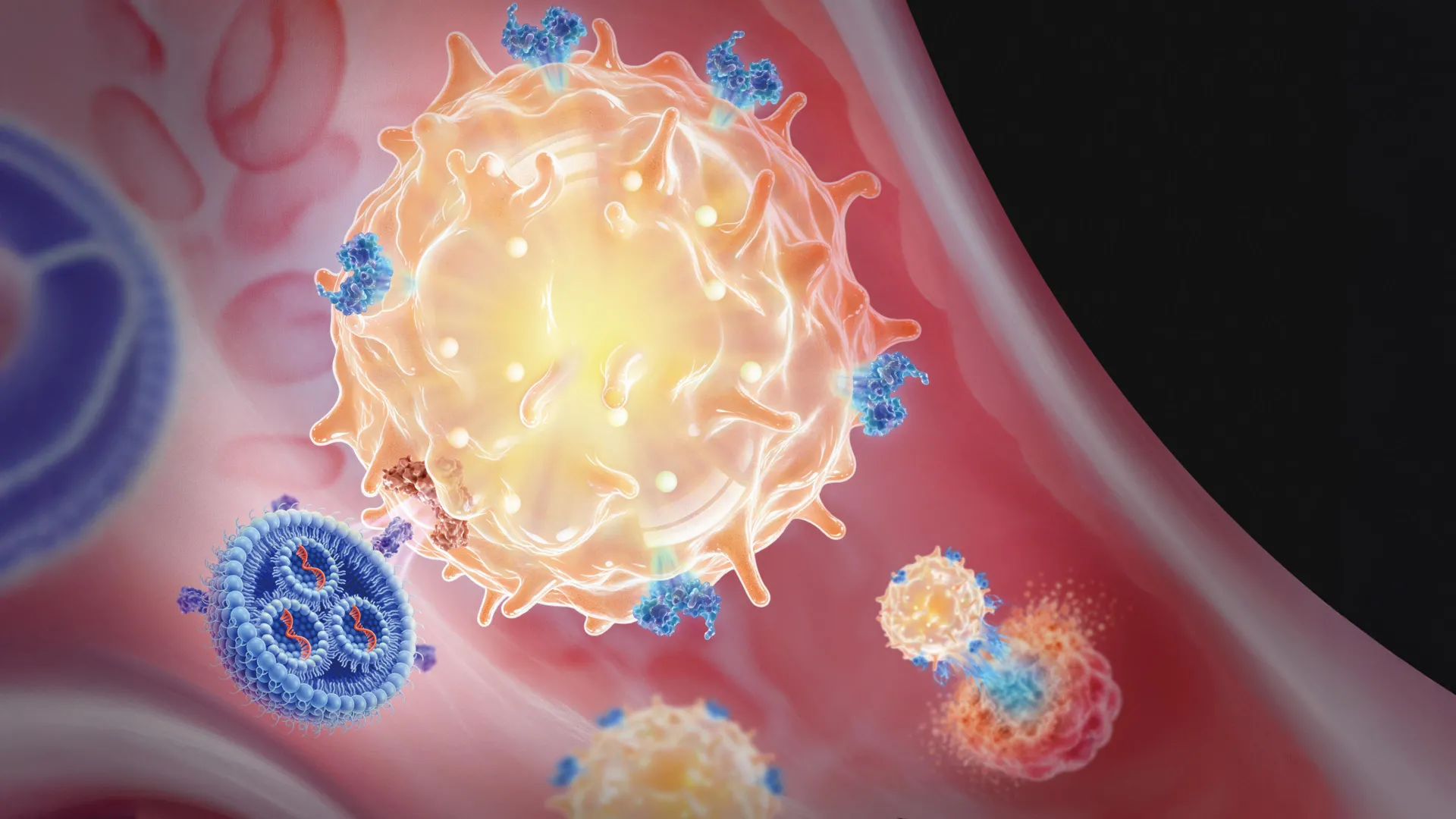
The landscape of modern medicine has taken a significant evolutionary step forward as bioengineers at the Massachusetts Institute of Technology (MIT) unveil a revolutionary technique designed to reprogram the body’s immune cells directly inside a patient. Published in the esteemed journal Nature Biotechnology, the breakthrough centers on harnessing natural killer (NK) cells through targeted lipid nanoparticles carrying messenger RNA (mRNA). By bypassing the arduous
, expensive, and complex laboratory manufacturing processes that have historically bottlenecked personalized cell therapies, this methodology opens the door to a new era of accessible, streamlined treatments for both aggressive malignancies and debilitating autoimmune disorders.
The Traditional Paradigm of Cell Therapy and Its Bottlenecks
To understand the magnitude of the MIT discovery, one must examine the baseline of modern immunotherapy. Over the past decade, chimeric antigen receptor (CAR) T cell therapies have fundamentally transformed oncology. Since the U.S. Food and Drug Administration (FDA) approved the first CAR-T treatments in 2017, seven distinct therapies have entered the market, primarily targeting liquid tumors such as B cell leukemias, specific lymphomas, and multiple myeloma.
These conventional interventions rely on a complex, multi-week logistical chain. Clinicians must first extract a patient’s blood, isolate the T cells, and transport them to specialized, sterile manufacturing facilities. Inside these cleanrooms, technicians utilize viral vectors to genetically modify the T cells, inserting synthetic genes that code for chimeric antigen receptors. These receptors empower the T cells to home in on specific surface antigens, such as CD19, found on malignant B cells. Once a sufficient quantity of these modified cells is cultivated, they are shipped back to the medical center and infused back into the patient.
While undeniably lifesaving for thousands of patients who had exhausted all other options, this conventional paradigm suffers from severe limitations. The manufacturing process is notoriously labor-intensive, taking weeks to complete and costing hundreds of thousands of dollars per patient. Furthermore, the specialized infrastructure required restricts these treatments to major medical hubs, leaving many patients unable to access them due to geographical or financial constraints. Moreover, conventional CAR-T therapies face intrinsic biological roadblocks when applied to certain diseases, particularly those involving aberrant T cells. Because both the therapeutic CAR-T cell and the target cell share the same cellular lineage, engineered T cells frequently attack one another—a phenomenon known as fratricide—which severely compromises the efficacy of the treatment.
The Advent of Natural Killer Cells and In Vivo Engineering
Seeking to circumvent the biological limitations of T cells and the logistical nightmares of ex vivo manufacturing, the MIT research team turned their attention to natural killer cells. NK cells are a distinct component of the innate immune system, functioning as frontline defenders capable of identifying and destroying virus-infected or malignant cells without prior sensitization.
Crucially, NK cells offer a distinct advantage over T cells when targeting T cell-derived malignancies and T cell-driven autoimmune conditions. Because NK cells are a different lineage of immune cells, they can be engineered to hunt and destroy pathological T cells—such as those driving T cell lymphoma or autoimmune hepatitis—without triggering the self-destructive fratricide that plagues CAR-T approaches.
However, producing CAR NK cells outside the body traditionally encountered the same manufacturing hurdles as CAR-T cells, requiring complex laboratory processing, specialized equipment, and substantial financial investment. To solve this, the MIT researchers pivoted to an in vivo strategy: engineering the NK cells directly inside the patient’s body through a simple injection.
"The manufacturing challenges with CAR NK cells are significant," explains Daniel Anderson, a professor in MIT’s Department of Chemical Engineering, a member of the Koch Institute for Integrative Cancer Research and the Institute for Medical Engineering and Science, and the senior author of the study. "The idea here is you can deliver a nanoparticle that will modify your own NK cells with a CAR construct and teach them to attack tumor cells."
Ancillary contributions to this pivotal study came from an elite team of MIT researchers. Yuang Chen, a postdoctoral researcher, and graduate students Julia Monkovic and Haseeb Mughal served as co-lead authors. The project also benefited from the guidance and expertise of Robert Langer, MIT’s renowned David H. Koch Institute Professor, whose pioneering work in drug delivery systems has laid the groundwork for numerous biotechnology breakthroughs over the past four decades.
Mechanics of mRNA Nanoparticle Delivery
The core innovation of the MIT research lies in the sophisticated design of lipid nanoparticles (LNPs) engineered to safely transport messenger RNA directly into endogenous natural killer cells. Messenger RNA acts as a temporary molecular blueprint, instructing the host’s cellular machinery to manufacture specific proteins—in this case, the chimeric antigen receptors that grant NK cells their enhanced targeting capabilities.
To ensure that these fragile mRNA payloads reach their intended destinations without degrading in the bloodstream, the researchers encapsulated them within biocompatible fatty molecules. Furthermore, to achieve cellular precision, the surfaces of the lipid nanoparticles were decorated with specialized antibody fragments. These fragments act as molecular homing beacons, specifically recognizing and binding to receptors on the surface of natural killer cells.
Once the nanoparticle attaches to an NK cell, it is internalized, and the mRNA is released into the cell’s cytoplasm. The cell then translates the genetic instructions, assembling the custom CAR proteins and displaying them on its surface. This transformation equips the NK cell with the precise coordinates needed to locate and eliminate diseased tissue. The modular nature of the mRNA platform means that the nanoparticles can be rapidly redesigned to target different surface proteins depending on the clinical indication—whether that is CD19 on B cells, CD3 on T cells, or other disease-specific markers.
Preclinical Success in Oncology: Eradicating Tumors in Murine Models
To validate the safety and efficacy of this in vivo reprogramming technique, the MIT team conducted rigorous preclinical trials using murine models of cancer and autoimmune disease. The initial biodistribution and cellular uptake experiments yielded extraordinary results: following a targeted injection, the lipid nanoparticles successfully modified approximately 80 percent of the targeted natural killer cell population within the subjects.
Building upon this high efficiency, the researchers tested the therapeutic potential of the engineered cells against aggressive malignancies. In one set of experiments, mice bearing an aggressive form of melanoma were treated with nanoparticles designed to instruct their NK cells to attack the tumor. Remarkably, three out of the five animals in the treatment group experienced complete tumor remission.
In a separate experiment, the team evaluated the technology against human T cell lymphoma utilizing humanized mouse models—animals engineered to possess functional human immune cells. Following a regimen of five nanoparticle injections, the targeted lymphomas were completely eradicated. Comparative analyses revealed that the therapeutic outcomes achieved via the in vivo nanoparticle injections were on par with those achieved using traditional ex vivo-manufactured CAR NK cells, proving that direct internal reprogramming can match the potency of conventional cell therapies while entirely bypassing laboratory manufacturing phases.
Reversing Autoimmune Pathology with a Single Dose
Beyond oncology, the MIT researchers investigated whether the in vivo nanoparticle platform could be successfully deployed against autoimmune diseases, where a malfunctioning immune system attacks healthy host tissues. They focused their efforts on autoimmune hepatitis, a chronic and potentially fatal condition characterized by autoreactive T cells attacking hepatocytes, the primary functional cells of the liver.
By formulating lipid nanoparticles that directed host NK cells to eliminate these pathogenic T cells, the researchers sought to halt the underlying autoimmune cascade. The results exceeded expectations. Following a single nanoparticle injection, the treatment completely eliminated the autoreactive T cells in the murine models. Consequently, the targeted intervention not only stopped the immune-mediated destruction but also allowed the damaged liver tissue to naturally heal and regenerate.
"This study is an excellent example of the power of nano delivery systems and their ability to potentially treat cancer and other diseases," remarks Robert Langer, emphasizing the broad therapeutic versatility of the platform.
Broader Implications and Future Horizons in Translational Medicine
The successful preclinical demonstration of in vivo immune cell reprogramming marks a monumental shift in translational nanomedicine. If subsequent clinical trials in humans yield similar safety and efficacy profiles, the implications for global healthcare will be profound. By replacing lengthy, decentralized laboratory processing with a standardized, shelf-stable intravenous infusion of targeted nanoparticles, the cost of advanced cell therapies could plummet by orders of magnitude.
Moreover, scaling back manufacturing complexities would democratize access to cutting-edge treatments, allowing community hospitals and clinics in resource-limited settings to administer therapies that currently require specialized tertiary care centers. The research team is already looking toward expanding the scope of the technology beyond melanoma, lymphoma, and autoimmune hepatitis. Future preclinical investigations will aim to adapt the lipid nanoparticle platform for the treatment of other debilitating autoimmune and neurodegenerative conditions driven by dysfunctional T cell activity, including multiple sclerosis and rheumatoid arthritis.
Despite the profound optimism surrounding the discovery, the researchers emphasize that significant milestones remain before clinical deployment. All current efficacy and safety data have been derived from animal models; rigorous phase clinical trials in human patients will be mandatory to determine appropriate dosing, assess potential immunogenicity or off-target effects, and confirm therapeutic durability.
Financial backing for the foundational research was provided by Sanofi, the Marble Center for Cancer Nanomedicine, and a Koch Institute Support (core) Grant from the National Cancer Institute. As these institutional partnerships continue to fuel ongoing optimization, the scientific community moves steadily closer to a future where advanced immunotherapy is as simple to administer as a routine intravenous injection, fundamentally altering the prognosis for patients worldwide.