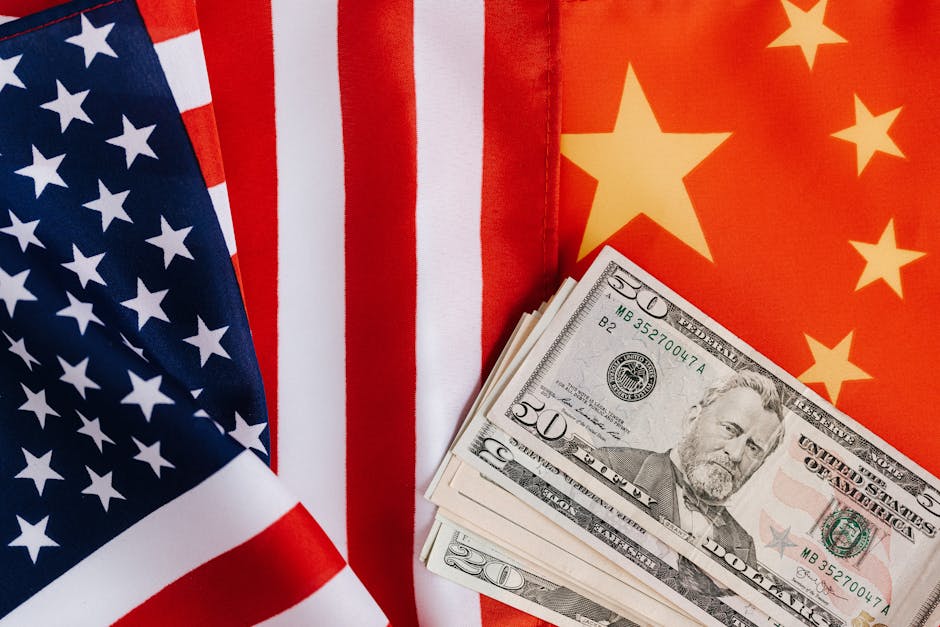
Gulf Markets Capture Investor Attention Amidst US-China Trade Dialogue
The Persian Gulf’s financial markets are increasingly attracting investor interest, a trend amplified by the ongoing diplomatic and economic dialogues between the United States and China. This heightened attention is not merely cyclical; it is underpinned by a confluence of strategic factors, including the Gulf Cooperation Council (GCC) states’ ambitious economic diversification agendas, their significant sovereign wealth fund firepower, and their evolving geopolitical positioning. As global economic powers navigate complex trade relations, the Gulf region emerges as a compelling alternative and a crucial nexus for international capital. The recent uptick in investor sentiment towards GCC equities and fixed income is directly correlated with the perceived stability and long-term growth prospects offered by these economies, particularly as they seek to reduce reliance on hydrocarbon revenues and embrace new sectors. This article will delve into the specific drivers behind this phenomenon, examining how the US-China dynamic influences investor perceptions of Gulf markets, the sectors within the Gulf that are most appealing, and the strategies investors are employing to capitalize on these burgeoning opportunities.
The intricate dance between the US and China, the world’s two largest economies, casts a long shadow over global investment flows. When trade tensions escalate, or conversely, when signs of de-escalation emerge, capital tends to reallocate. The Gulf, strategically positioned geographically and economically, often benefits from this reallocation. Investors, seeking havens from volatility in major Western and Asian markets, frequently turn to the stable currencies and relatively high yields offered by GCC countries. Furthermore, the ongoing negotiations between Washington and Beijing can influence global commodity prices, particularly oil, which remains a significant revenue source for many Gulf nations. Positive outcomes in US-China talks that lead to greater global economic stability and increased demand for energy can directly boost Gulf economies, making their markets more attractive. Conversely, even heightened tensions can, in certain scenarios, lead to increased investment in the Gulf if it’s perceived as a stable region less directly exposed to the immediate fallout of such disputes, especially if it can leverage its position to facilitate trade or investment flows. The GCC’s proactive approach to economic reform, spearheaded by initiatives like Saudi Arabia’s Vision 2030 and the UAE’s Centennial 2071, further bolsters investor confidence, signaling a commitment to long-term structural changes that transcend geopolitical fluctuations. These reforms are designed to foster private sector growth, attract foreign direct investment, and develop non-oil sectors, creating a more resilient and diversified economic landscape.
Several key sectors within the Gulf are drawing significant investor attention. The technology and digital transformation sphere is a prime example. Countries like the UAE and Saudi Arabia are heavily investing in smart city initiatives, artificial intelligence, fintech, and e-commerce. This aligns with global trends and presents opportunities for venture capital and private equity firms looking for high-growth potential. The development of robust digital infrastructure and a burgeoning young, tech-savvy population are key enablers. Renewable energy is another area of immense focus. With ambitious targets for solar and wind power generation, the GCC is becoming a hub for green energy projects. International investors are drawn to the scale of these projects and the supportive regulatory environments being established. Furthermore, the ongoing infrastructure development across the region, from new transportation networks to large-scale entertainment and tourism projects, continues to present opportunities in construction, real estate, and related services. The liberalization of foreign ownership rules in many Gulf countries has made direct investment in these sectors more accessible and attractive to international players.
The role of sovereign wealth funds (SWFs) in the Gulf cannot be overstated in its influence on investor sentiment. These massive funds, managing trillions of dollars, are not only major investors in global markets but also active participants in domestic economic development. As they increasingly seek diversified and sustainable returns, they are channeling capital into innovative sectors and infrastructure projects within their own regions. This domestic anchor investment provides a crucial layer of stability and validation for external investors. Moreover, the strategic partnerships forged by these SWFs with international financial institutions and corporations often create pathways for broader foreign investment. Their commitment to long-term strategic goals, often aligned with national economic visions, signals a sustained commitment to growth and development, which is highly reassuring for the investment community. The transparency and governance standards of these SWFs are also improving, further enhancing their credibility as investment partners.
The geopolitical calculus surrounding US-China relations also plays a role in how Gulf markets are perceived. As both superpowers vie for influence in various regions, the Gulf finds itself in a unique position of leverage. Its ability to maintain diplomatic and economic ties with both nations, while pursuing its own independent foreign policy and economic objectives, makes it a relatively stable and predictable environment. This balancing act is attractive to investors who seek to avoid being caught in the crossfire of superpower rivalries. The region’s commitment to regional stability and its role in facilitating global trade routes, particularly through its ports and logistics hubs, further solidifies its appeal. The growing emphasis on non-alignment and strategic autonomy by many Gulf states reinforces their attractiveness as a less politically charged investment destination compared to regions more directly embroiled in US-China competition. This allows for a more focused assessment of economic fundamentals.
Foreign direct investment (FDI) into the GCC has been on an upward trajectory, bolstered by these factors. Governments have implemented policies to attract and retain FDI, including tax incentives, streamlined regulatory processes, and the establishment of special economic zones. The privatization of state-owned enterprises and the opening up of previously restricted sectors have created new avenues for foreign participation. The growing consumer markets within the GCC, driven by a young and affluent population, also contribute to the attractiveness of these markets for companies looking for growth opportunities. The emphasis on creating a business-friendly environment, with a focus on ease of doing business, is a continuous effort by GCC governments.
The financial instruments available to investors are also expanding. Beyond traditional equities and bonds, the development of new exchange-traded funds (ETFs) focused on specific GCC sectors or countries, as well as the increasing accessibility of sukuk (Islamic bonds), offers a wider range of investment options. The ongoing efforts to deepen capital markets, including the listing of more companies on regional stock exchanges and the development of derivatives markets, are further enhancing liquidity and investment opportunities. The digitalization of financial services within the Gulf is also improving accessibility for both retail and institutional investors.
However, challenges and risks remain. Global economic slowdowns, fluctuations in oil prices, and regional security concerns can still impact investor sentiment. Regulatory uncertainties, while diminishing, can also be a factor. Investors need to conduct thorough due diligence and understand the specific risk profiles of each GCC market. The varying degrees of economic diversification and reform across different GCC countries necessitate a nuanced approach to investment. For instance, while Saudi Arabia and the UAE are leading the charge in diversification, other nations may still be heavily reliant on oil revenues, making them more susceptible to price volatility.
In conclusion, the confluence of ambitious economic diversification strategies, substantial sovereign wealth, and a strategic geopolitical positioning makes Gulf markets increasingly attractive to investors, especially in the context of evolving US-China trade relations. The region’s proactive approach to reforms, coupled with its commitment to technological advancement, renewable energy, and infrastructure development, is creating a compelling investment landscape. As global economic powers navigate complex dialogues, the Gulf offers a relatively stable and growth-oriented environment for capital, making it a key market to watch for discerning investors seeking to capitalize on long-term opportunities. The continuous efforts by GCC nations to improve their business environments and deepen their capital markets further solidify their position as emerging global investment destinations.
