Chery, the Chinese automotive powerhouse that has rapidly gained a foothold in the European passenger car market through its Omoda and Jaecoo brands, has officially announced its expansion into the commercial sector with the launch of an all-new light commercial vehicle (LCV) brand. Named Delivan, the new venture is positioned to disrupt the long-standing dominance of legacy manufacturers, specifically targeting the market share currently held by industry stalwarts such as the Ford Transit and the Volkswagen Transporter. By leveraging the same high-tech, high-value strategy that has propelled its passenger vehicle sales, Chery intends to redefine the expectations of commercial fleet operators and independent tradespeople alike.
The formal introduction of Delivan is scheduled to take place at the upcoming Commercial Vehicle Show at the Birmingham NEC. This event, a cornerstone of the European logistics and transport calendar, will serve as the platform for the brand’s global debut. While the initial showcase will focus on a series of concept vehicles designed to signal the brand’s design direction and technological capabilities, the company has confirmed that production-ready models are slated to begin arriving on European shores in early 2027.

Strategic Market Entry and Design Philosophy
The emergence of Delivan represents a significant shift in the competitive landscape of the UK and European van markets. For decades, the Ford Transit has remained the "backbone of Britain," while the Volkswagen Transporter has carved out a premium niche in the medium-van segment. Chery’s decision to enter this space is not merely a peripheral expansion but a calculated attempt to capture the lucrative "last-mile" delivery sector and the growing demand for versatile, multi-purpose commercial platforms.
Early teaser images released by Delivan provide a glimpse into the brand’s aesthetic and functional priorities. The silhouettes reveal a commitment to a "mono-volume" shape—a design language that prioritizes aerodynamic efficiency and internal volume over the traditional "two-box" design. Unlike the Ford Transit or VW Transporter, which feature clearly defined bonnets, the Delivan concepts appear to utilize a nearly straight line from the leading edge of the front bumper through to the top of the windscreen. This architecture typically allows for a more forward-seated driving position, maximizing the available cargo length relative to the vehicle’s total footprint.
The initial lineup is expected to include a mid-size panel van offered with variable roof heights to accommodate different volumetric requirements. Additionally, silhouettes suggest the development of a double-cab flatbed model, indicating that Delivan intends to cater to the construction and maintenance sectors alongside the traditional courier and logistics markets.

Leadership and Vision for the European Market
The launch of Delivan is being overseen by Jolly Yang, who serves as the Vice President of Chery Commercial Vehicle and the CEO of the newly formed Delivan brand. Yang has emphasized that the choice of the Birmingham NEC for the brand’s debut was intentional, reflecting the importance of the UK market as a testing ground for commercial vehicle innovation.
"This is a defining moment for Chery Commercial Vehicle as we take our first step into the European market," Yang stated in a recent briefing. "Europe represents one of the most advanced and demanding commercial vehicle environments in the world, and it is exactly where we want to demonstrate the strength of our vision, our technology, and our long-term commitment."
Yang further clarified that the Birmingham appearance is intended to be more than a simple product display. It is designed to be a networking catalyst, allowing the brand to engage with potential fleet partners, distribution networks, and the media. The goal is to build a robust infrastructure before the first units are delivered to customers, ensuring that the aftersales support and parts availability—often a concern for new entrants in the commercial sector—are established from day one.

The Chronology of Chery’s European Expansion
To understand the potential impact of Delivan, one must look at the broader timeline of Chery’s activities in the United Kingdom and Europe. The company’s trajectory has been characterized by rapid scaling and strategic partnerships.
- 2023-2024: Chery launches the Omoda and Jaecoo brands in the UK, focusing on SUVs with competitive pricing and long warranties.
- Late 2025: Chery confirms the establishment of a new headquarters in Liverpool. This move is accompanied by intensifying negotiations with Jaguar Land Rover (JLR) regarding the potential for Chery models to be manufactured using spare capacity at JLR’s UK facilities.
- April 2026: The Delivan brand is officially announced, with concept reveals set for the Commercial Vehicle Show in Birmingham.
- Late 2026: Initial pilot programs for Delivan vehicles are expected to begin with select large-scale logistics partners in the UK.
- 2027: Full production-ready models of the Delivan medium van and flatbed variants are scheduled for official market launch and customer delivery.
This timeline suggests a methodical approach to market penetration, moving from the consumer-facing SUV market into the more specialized and demanding commercial vehicle sector.
Technological Integration and the Push for Electrification
While Delivan has not yet released specific technical data regarding its powertrains, the brand has made it clear that electrification is a cornerstone of its strategy. The shift toward Zero-Emission Vehicles (ZEV) is no longer a choice but a regulatory necessity in the UK, where the ZEV mandate requires an increasing percentage of new van sales to be electric each year leading up to 2035.

Industry analysts expect Delivan to offer a range of battery-electric vehicle (BEV) options with competitive ranges, likely exceeding 200 miles on a single charge to satisfy the needs of regional delivery fleets. However, given Chery’s recent advancements in hybrid technology—such as the self-charging hybrid system found in the new Tiggo 4—there is significant speculation that Delivan may also offer plug-in hybrid (PHEV) or range-extender options. These would serve as a bridge for operators who are not yet ready to transition fully to electric power due to charging infrastructure limitations or high-mileage requirements.
The "high-tech" promise of the brand is expected to manifest in the cabin. Modern commercial drivers increasingly demand the same level of connectivity and comfort found in passenger cars. Delivan is likely to feature advanced driver-assistance systems (ADAS), large touchscreen interfaces with integrated fleet management software, and over-the-air (OTA) update capabilities, allowing the vehicles to improve and adapt over their operational lifespan.
Competitive Landscape and Economic Implications
The entry of a new Chinese player into the LCV market comes at a time of significant transition. While Ford and Volkswagen have established reputations for reliability and high residual values, they have also faced challenges related to rising production costs and supply chain disruptions.
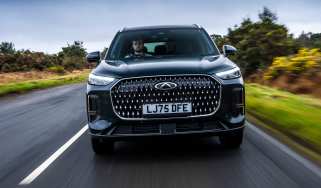
Delivan’s primary advantage will likely be its price-to-specification ratio. By utilizing Chery’s massive economies of scale in China, Delivan can offer features as standard that are often expensive options on European-built vans. This "value-first" approach has already proven successful for other Chinese commercial brands like Maxus (formerly LDV), which has seen steady growth in the UK’s electric van segment.
Furthermore, the potential partnership between Chery and Jaguar Land Rover adds a layer of domestic credibility. If Delivan vehicles—or components thereof—end up being assembled or supported through UK-based facilities, it could alleviate concerns regarding long-term serviceability. The establishment of a Liverpool HQ also signals a commitment to local job creation and economic integration, which may factor into the purchasing decisions of public sector fleets and large corporations with social responsibility mandates.
Broader Impact on the Logistics Industry
The arrival of Delivan is poised to accelerate the modernization of the UK’s van fleet. For small and medium-sized enterprises (SMEs), the availability of a lower-cost entry point into the electric van market could significantly lower the barrier to sustainable operations. For larger fleets, the introduction of a new, tech-heavy competitor forces legacy brands to innovate faster and perhaps reconsider their pricing structures.
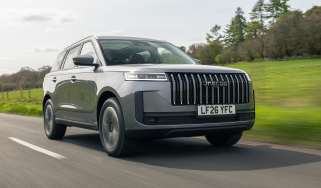
The "mono-volume" design mentioned in the teaser also points toward a future of autonomous or semi-autonomous delivery. Such shapes are often easier to equip with the sensor suites required for Level 2 and Level 3 autonomy. As the "last-mile" delivery sector continues to grow, driven by the enduring popularity of e-commerce, the efficiency gains promised by Delivan’s design and technology could provide a tangible competitive edge for its adopters.
In conclusion, the launch of Delivan represents more than just the arrival of another van brand; it is a signal of the shifting power dynamics in the global automotive industry. As Chery moves to replicate its passenger car success in the commercial arena, the established leaders in the segment must prepare for a challenge that combines aggressive pricing with cutting-edge technology. The eyes of the industry will undoubtedly be on the Birmingham NEC next week to see if Delivan can truly deliver on its ambitious promises.