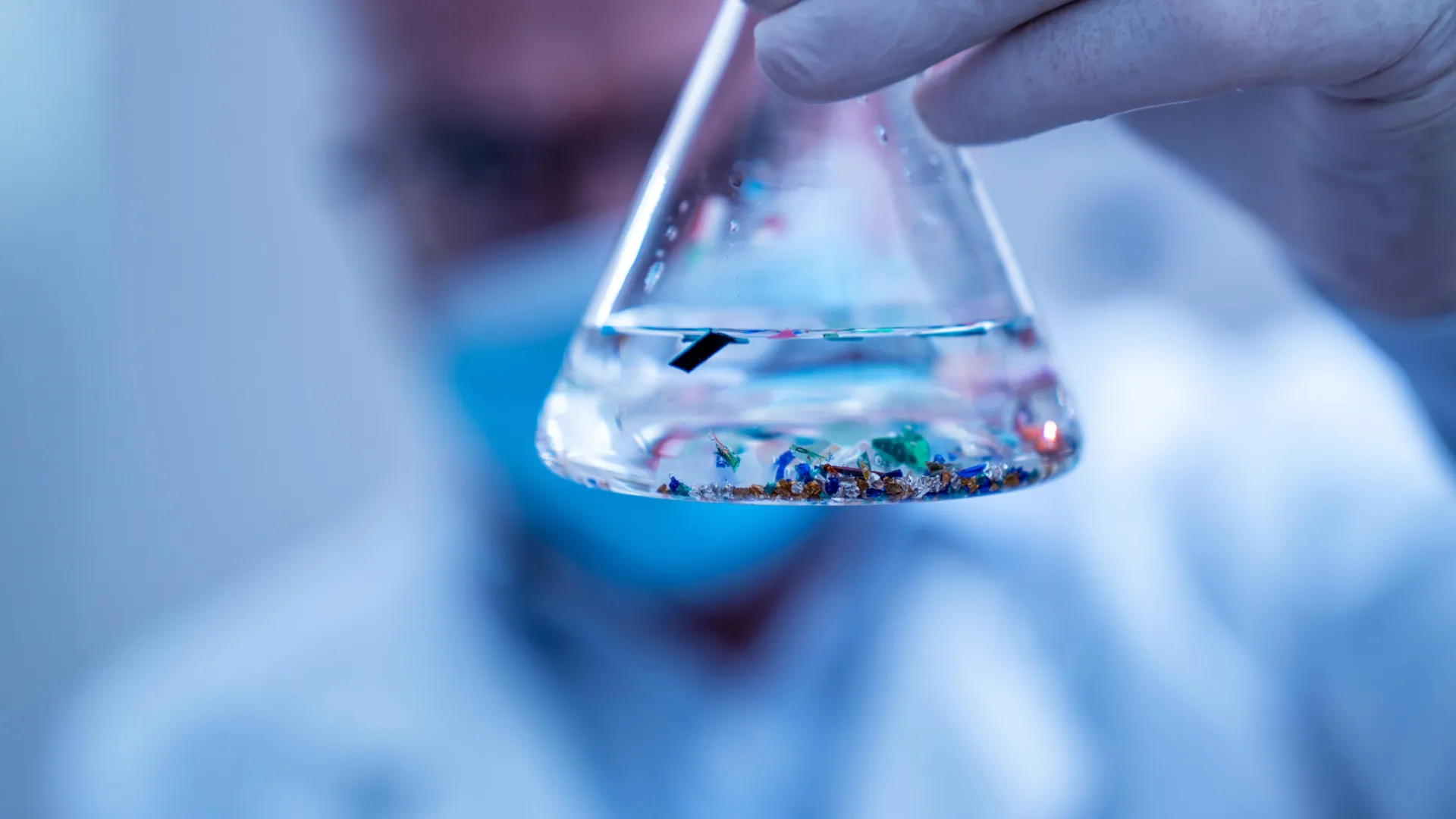
In a significant advancement for circular economy initiatives and energy production, researchers at the U.S. Department of Energy’s (DOE) Oak Ridge National Laboratory (ORNL) have pioneered a novel chemical process capable of converting polyethylene—the world’s most ubiquitous plastic—into gasoline- and diesel-like liquid fuels. This breakthrough, recently detailed in the Journal of the American Chemical Society, offers a potential solution to the escalating global plastic waste crisis while simultaneously providing a pathway to bolster industrial energy security.
Polyethylene, which constitutes the bulk of consumer plastics such as grocery bags, storage containers, and kitchen cutting boards, represents one of the most stubborn environmental pollutants. Because of its durable molecular structure, polyethylene does not degrade easily in landfills, leading to centuries of environmental accumulation. The ORNL team’s methodology circumvents the energy-intensive limitations of traditional recycling by utilizing molten salts impregnated with aluminum chloride, which function simultaneously as a chemical reaction medium and a potent catalyst.
The Chemistry of Conversion: A New Frontier
The core innovation of the ORNL process lies in its ability to manipulate the long-chain hydrocarbon polymers that form polyethylene. By subjecting these polymers to a molten salt bath at temperatures below 200 degrees Celsius, the researchers can effectively "crack" the plastic into smaller, high-value hydrocarbon molecules.
Unlike conventional pyrolysis—a thermal degradation process that typically requires extreme temperatures ranging from 450 to 500 degrees Celsius—the ORNL method achieves a gasoline yield of approximately 60 percent under conditions comparable to a domestic kitchen oven. This dramatic reduction in thermal requirements is made possible by the unique properties of the aluminum-based catalytic sites.
When the polyethylene interacts with the aluminum, it generates highly acidic sites that aggressively target the polymer’s backbone. Through the use of soft X-ray spectroscopy and nuclear magnetic resonance (NMR), the research team observed that charged aluminum atoms bind to specific molecular sites, initiating the cleavage of the long chains. By utilizing isotopic labeling and neutron scattering techniques, the scientists were able to track the precise evolution of these molecules, discovering that simpler polymer chains yielded gasoline-like compounds, while more complex, branched chains were more likely to produce diesel-like fuels.
A Chronology of Innovation
The development of this technology is not an isolated event but the culmination of decades of specialized expertise in molten salt chemistry at ORNL. The institution’s history with this medium dates back to the 1960s, most notably through the Molten Salt Reactor Experiment (MSRE), which explored the use of molten salts as both nuclear fuel and reactor coolant.
By leveraging this institutional knowledge, the research team—led by ORNL Corporate Fellow Sheng Dai, postdoctoral researcher Liqi Qiu, and staff scientist Zhenzhen Yang—repurposed these stable, inorganic compounds for polymer recycling.
The project timeline saw a multi-disciplinary effort, integrating expertise from the University of Tennessee, Knoxville (UTK), and various national user facilities:
- Initial Conceptualization: Drawing on the stability of molten salts in harsh chemical environments, the team identified the potential for these salts to act as a reaction medium that eliminates the need for expensive noble-metal catalysts or external hydrogen.
- Experimental Phase: Using ORNL’s advanced analytical infrastructure, the team mapped the reaction mechanism atom-by-atom.
- Atomic Analysis: Researchers utilized the Spallation Neutron Source to monitor hydrogen isotope movement, while the Advanced Light Source at Lawrence Berkeley National Laboratory provided critical insights into the electronic shifts occurring at the aluminum catalytic sites.
- Computational Modeling: The Center for Nanophase Materials Sciences at ORNL utilized high-performance computing to simulate the energy states of the carbon ions during the transformation, providing a theoretical framework that matched the physical experimental results.
Comparative Advantages and Economic Implications
The technical requirements for conventional plastic-to-fuel conversion have historically acted as a barrier to industrial adoption. Most existing methods rely on noble-metal catalysts—which are prohibitively expensive—or high-pressure hydrogen, which adds significant cost and safety complexity.
"The ORNL system solves two fundamental issues," Dr. Sheng Dai explained during a press briefing regarding the publication. "First, it eliminates the need for a separate chemical initiator, which was required in previous systems to kick off the reaction. Second, by using readily available inorganic salts, the process is far more scalable and economically viable."
The absence of organic solvents and the ability to operate at temperatures below 200 degrees Celsius significantly lower the "energy penalty" of the process. In the context of industrial chemical manufacturing, lower energy input correlates directly to lower operational expenditure and a reduced carbon footprint, potentially making the conversion of plastic waste to fuel a competitive, value-added commercial enterprise.
Technical Hurdles and Future Research
Despite the success in the laboratory setting, the research team acknowledges that further refinements are necessary before the technology can be deployed at an industrial scale. A primary challenge involves the hygroscopic nature of the aluminum-based molten salts, which tend to absorb moisture from the atmosphere. This moisture can compromise the long-term stability of the catalyst, potentially leading to a degradation in yield over time.
"We are currently investigating methods to confine the molten salts within carbon-based materials or halogen matrices," said Zhenzhen Yang. "The goal is to improve the stability of the salt while ensuring it remains easy to separate and recycle within the system."
If these stability issues are resolved, the implications for the U.S. energy sector could be profound. By creating a closed-loop system where waste plastics are viewed as a feedstock rather than a burden, the industry could reduce its reliance on fossil-based hydrocarbon extraction. Furthermore, the ability to tailor the resulting fuel—producing either gasoline or diesel—based on the specific structure of the input polymer offers a level of flexibility that is currently absent in waste management streams.
Broader Impact and Sustainability
The research, which was primarily supported by the DOE Office of Science, reflects a broader national shift toward sustainable manufacturing and "green" chemistry. By tackling the conversion of polyethylene—a commodity material found in virtually every sector of the global economy—the ORNL project addresses a high-volume waste stream.
For local municipalities and waste management companies, this technology provides a compelling alternative to landfilling or incineration. Incineration, while effective at volume reduction, often results in the release of carbon dioxide and other pollutants without recovering the energy density inherent in the plastic’s molecular bonds. The ORNL chemical conversion process preserves that value, effectively "upcycling" waste into a usable energy product.
Furthermore, the study highlights the importance of multi-disciplinary scientific cooperation. The success of the project relied on the integration of polymer science, nuclear chemistry, computational modeling, and advanced spectroscopy. As the team moves toward the next stage of development—focusing on scalability and long-term catalytic stability—the project serves as a model for how basic research can be translated into tangible solutions for global environmental and economic challenges.
As the world continues to grapple with the long-term consequences of plastic dependency, the development of efficient, low-energy conversion technologies like the one pioneered at ORNL provides a critical, science-based path toward a more sustainable future. While the transition from bench-scale success to industrial-scale implementation remains a formidable task, the fundamental chemistry established by this team provides a robust foundation for future innovations in the field of circular materials science.