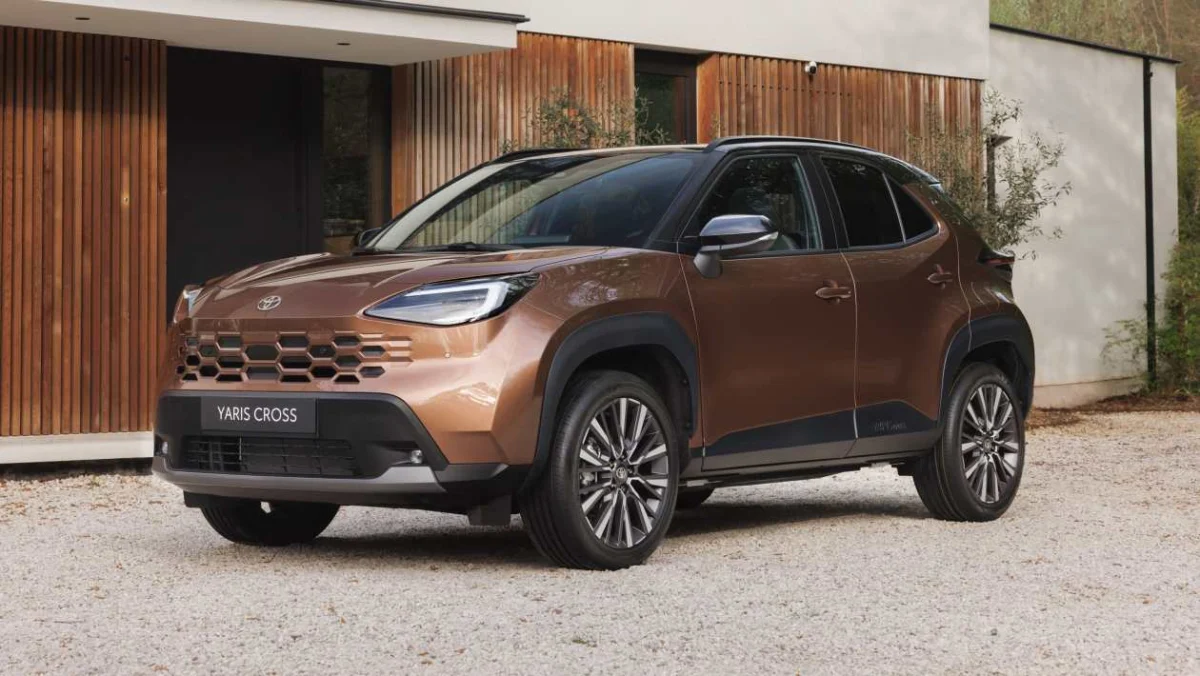
The Toyota Yaris Cross, a cornerstone of the Japanese manufacturer’s European success, has undergone a comprehensive mid-cycle refresh designed to solidify its position as a dominant force in the highly competitive B-SUV segment. Following its initial global launch in 2021, the Yaris Cross quickly ascended the sales charts, frequently appearing as the best-selling vehicle in its class across major European markets. The 2026 update, revealed through a series of official images and technical briefings, introduces a more aggressive aesthetic, enhanced interior refinement, and significant technological upgrades aimed at maintaining its edge over traditional rivals and a growing wave of new competitors from both established European brands and emerging global players.
Aesthetic Evolution: A Sharper and More Assertive Design
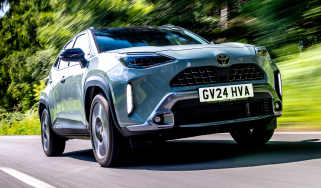
The visual updates to the Toyota Yaris Cross are described by the manufacturer as "feisty," a term that reflects a shift toward a more rugged and assertive road presence. While the fundamental silhouette of the vehicle remains unchanged—relying on the proven TNGA-B platform—the detailing has been sharpened to provide a more premium and contemporary feel. The most notable changes are concentrated at the front fascia, where a redesigned grille features a more intricate mesh pattern, flanked by updated LED headlight signatures that offer improved illumination and a more distinct "gaze."
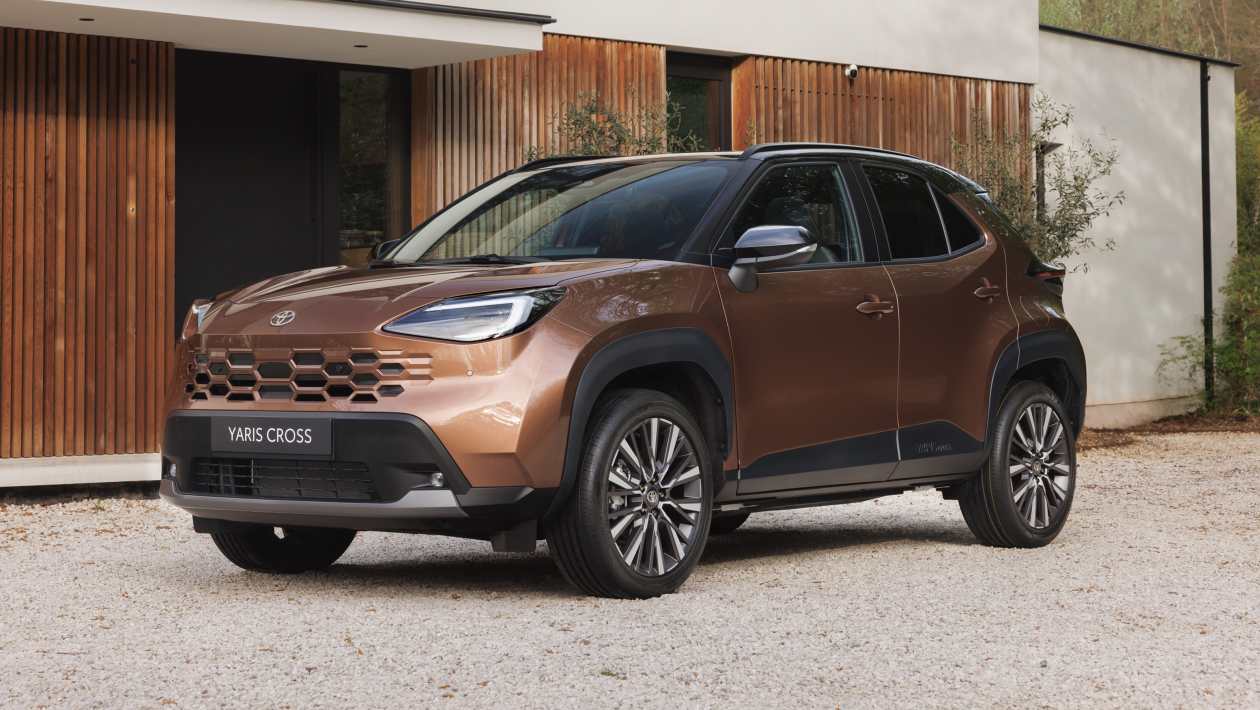
Toyota designers have also introduced a new palette of exterior colors, including a signature "Urban Khaki" and a revised bi-tone execution that contrasts the body color with a "Night Sky Black" roof. The "Adventure" and "GR Sport" trims receive specific attention; the former gains more robust underbody protection and silver roof rails, while the latter benefits from a more aerodynamic lower bumper and bespoke 18-inch alloy wheels with a machined finish. These changes are not merely cosmetic but are intended to better differentiate the various personalities within the Yaris Cross lineup, catering to both urban commuters and those with more active lifestyles.
Interior Refinement and Material Quality
Inside the cabin, Toyota has addressed one of the few criticisms of the pre-facelift model: the perceived quality of certain interior plastics. The 2026 Yaris Cross introduces a suite of new materials, including soft-touch surfaces on the dashboard and door cards, and updated upholstery options that utilize recycled textiles—a move aligned with Toyota’s broader sustainability goals.
The ergonomics of the cabin have been subtly refined to improve driver engagement and comfort. A new digital instrument cluster, available in sizes up to 12.3 inches depending on the trim level, offers customizable layouts that allow drivers to prioritize navigation, hybrid system data, or safety alerts. This is complemented by a larger, high-definition central touchscreen housing the latest iteration of the Toyota Smart Connect infotainment system. This system features enhanced processing power, wireless Apple CarPlay and Android Auto compatibility, and over-the-air (OTA) software update capabilities, ensuring the vehicle’s technology remains current throughout its lifecycle.
The 5th Generation Hybrid Powertrain
Under the hood, the 2026 Yaris Cross continues to champion Toyota’s "multi-pathway" approach to electrification. The heart of the vehicle remains the 1.5-liter three-cylinder hybrid system, but it has been upgraded to the 5th generation of Toyota’s hybrid technology. This update includes a more powerful electric motor and a redesigned power control unit, resulting in a modest increase in total system output while simultaneously reducing CO2 emissions and improving fuel efficiency.
The "Hybrid 130" powertrain, which debuted in the Yaris hatchback, is now more widely available across the Yaris Cross range. This system delivers 130hp (96kW) and an increased torque output from 141Nm to 185Nm. The result is a more responsive driving experience, particularly in urban environments where the electric motor provides immediate torque for standing starts. Toyota engineers have also focused on noise, vibration, and harshness (NVH) levels, adding extra insulation around the engine bay and a thicker windshield to create a quieter cabin environment during highway cruising.
Chronology of the Yaris Cross Development
The journey of the Yaris Cross represents a strategic pivot for Toyota in the European market.

- April 2020: The Yaris Cross was originally scheduled to debut at the Geneva Motor Show, but the reveal was moved online due to the global pandemic.
- Late 2021: Production commenced at the Toyota Motor Manufacturing France (TMMF) plant in Onnaing, near Valenciennes.
- 2022-2023: The Yaris Cross became a runaway success, accounting for a significant portion of Toyota’s European sales volume and winning the "World Urban Car" award.
- Late 2024: Toyota introduced the "Hybrid 130" powertrain option to high-grade models as a precursor to the full facelift.
- April 2026: The official reveal of the comprehensive facelift, featuring the new exterior design and upgraded interior technology detailed in the current release.
Market Data and Competitive Landscape
The B-SUV segment is currently the most contested arena in the European automotive market. According to industry data, compact crossovers now account for nearly 20% of all new car registrations in Europe. The Yaris Cross has historically performed exceptionally well, often outperforming the Ford Puma, Renault Captur, and Volkswagen T-Roc in key territories.
In 2025, Toyota reported that the Yaris Cross maintained a market share of approximately 12% within its segment. However, the landscape is shifting. The 2026 facelift arrives just as the Nissan Juke has been reimagined with an "origami-inspired" design and a heavy focus on EV power. Simultaneously, the Volkswagen ID.3 Neo is challenging the segment with a tech-heavy, buttons-forward approach to electric mobility. The emergence of the Jaecoo 5, a compact SUV from Chery’s premium brand, also signals increasing pressure from Chinese manufacturers offering high-specification hybrid powertrains at competitive price points.
By refreshing the Yaris Cross now, Toyota is doubling down on its hybrid-first strategy. While competitors are rushing toward full electrification, Toyota’s data suggests that a significant portion of the B-SUV buyer demographic remains hesitant to transition to battery electric vehicles (BEVs) due to infrastructure concerns and price parity. The Yaris Cross’s ability to deliver 60-70 mpg in real-world driving makes it a pragmatic choice for this transition period.
Safety and Driver Assistance Systems
Safety remains a primary selling point for the Yaris Cross. The 2026 model comes equipped with the latest "Toyota Safety Sense" suite (version 3.0). This package includes a revised Pre-Collision System (PCS) that can now detect motorcyclists and oncoming vehicles in a wider range of scenarios.
New features include:
- Proactive Driving Assist (PDA): This system provides gentle braking and steering support to help maintain a safe distance from other vehicles, cyclists, or pedestrians.
- Emergency Driving Stop System (EDSS): If the system detects that the driver has been inactive for a certain period (potentially due to a medical emergency), it can bring the vehicle to a safe stop, activate the hazard lights, and unlock the doors.
- Safe Exit Assist (SEA): Uses the blind-spot monitors to warn occupants if they are about to open a door into the path of a vehicle or cyclist approaching from the rear.
Official Responses and Strategic Implications
While formal executive statements often accompany the physical launch, Toyota Europe’s regional directors have previously emphasized the importance of the Yaris Cross in achieving the company’s carbon reduction targets. Insiders suggest that the facelift is part of a broader strategy to "democratize high technology," bringing features previously reserved for the RAV4 or Highlander down to the compact segment.
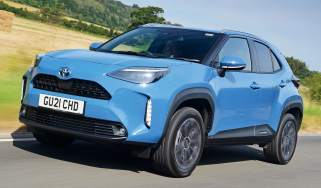
Industry analysts suggest that the 2026 Yaris Cross is a "defensive-offensive" move. It defends Toyota’s existing market share against the Nissan Juke and Renault Captur while going on the offensive against new entrants like Jaecoo and MG. By focusing on perceived quality and hybrid efficiency, Toyota is targeting the "rational buyer" who prioritizes reliability and low running costs over the avant-garde styling of some rivals.
Broader Impact and Future Outlook
The release of the new-look Yaris Cross has implications beyond just sales figures. It represents the continued evolution of the TNGA-B platform, which will likely underpin several upcoming models in Toyota’s global portfolio. Furthermore, the success of the Yaris Cross in Europe has encouraged Toyota to explore similar "Cross" variants for other models, potentially expanding the lineup to include even smaller or more specialized crossovers.
As the automotive industry moves toward 2030 and the looming bans on internal combustion engines in various European nations, the Yaris Cross serves as a vital bridge. Its 5th generation hybrid system is likely the final major iteration of this technology before Toyota shifts its primary focus to solid-state batteries and dedicated EV platforms. For now, however, the new-look Yaris Cross remains a benchmark for efficiency, practicality, and sensible design in the urban SUV market. With its "feisty" new face and refined interior, it appears well-positioned to continue its streak as a European best-seller well into the latter half of the decade.