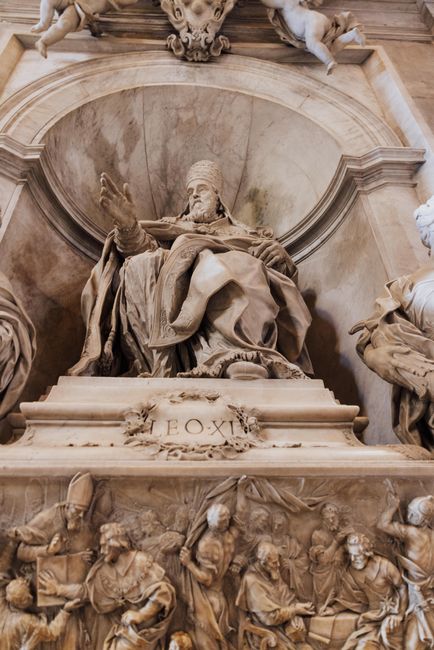
Pope Leo and the United States Catholic Church: Navigating Enduring Challenges
The Catholic Church in the United States, like its global counterpart, has faced a complex tapestry of challenges throughout its history, many of which have been significantly shaped by the pontificates of various Popes, including Leo XIII, Leo XII, and the modern pontificate of Pope Leo the Great. While the specific historical context of each Leo differs, their eras and subsequent papal leadership offer valuable insights into the enduring struggles within the American Catholic landscape. These challenges encompass doctrinal fidelity, adapting to a rapidly changing society, the rise of secularism, internal dissent, financial sustainability, and the pervasive issue of clerical sexual abuse. Understanding these persistent struggles is crucial for comprehending the present state and future trajectory of the Catholic Church in the United States.
One of the most persistent and fundamental challenges for the Catholic Church in the United States has been maintaining doctrinal fidelity in the face of intellectual currents and societal shifts. During the pontificate of Pope Leo XIII (1878-1903), the Church grappled with the rise of modernism, a theological movement that sought to reconcile Catholic doctrine with modern philosophy and science. While Leo XIII vigorously condemned modernist tendencies in his encyclical Pascendi Dominici Gregis, the underlying tensions between faith and reason, tradition and progress, continued to resonate within American Catholicism. American bishops and theologians, often educated in secular universities, found themselves navigating this complex terrain, seeking to uphold the Church’s teachings while engaging with contemporary intellectual discourse. This struggle for doctrinal coherence continues today, with debates surrounding issues like the interpretation of Scripture, the nature of sacraments, and the Church’s moral teachings in light of evolving social norms. The challenge lies in articulating timeless truths in a way that is both faithful to tradition and accessible and relevant to contemporary believers. Furthermore, the decentralized nature of the American Church, with its diverse dioceses and independent educational institutions, can lead to variations in emphasis and interpretation, requiring ongoing dialogue and consistent magisterial guidance to ensure unity of belief.
The adaptation of the Catholic Church to the unique sociopolitical landscape of the United States has been another enduring source of difficulty. From its early days, the Church in America had to contend with a Protestant-dominated society, questions of loyalty to a foreign Pope, and the perceived conflict between Catholic social teaching and American individualism. Pope Leo XII’s pontificate (1823-1829), though preceding significant American Catholic growth, nonetheless reflects a broader historical context of papal authority being viewed with suspicion in a nation founded on separation of church and state. As the Catholic population grew through immigration, the Church had to establish its own institutions – schools, hospitals, and charitable organizations – to serve its members and integrate into American life. This process was not without friction, as evidenced by the “Americanist” controversy of the late 19th century, where some American Catholics advocated for a more accommodative approach to American culture and political life, which was met with apprehension by Rome. Today, the Church continues to grapple with its role in a pluralistic society, balancing its prophetic mission with the need to engage constructively with secular institutions and diverse populations. Issues such as religious freedom, the Church’s stance on political matters, and its participation in public discourse are constant points of negotiation and challenge. The influence of secularism, a growing disregard for religious authority and a prioritization of material well-being, poses a significant challenge to the Church’s evangelizing mission and its ability to shape public morality.
Internal dissent and the management of diverse theological viewpoints within the American Catholic Church represent a perennial challenge, further exacerbated by the era of Pope Leo XIII and continuing into the present day. While Leo XIII sought to reassert papal authority and combat theological liberalism, the seeds of intellectual and spiritual questioning had already been sown. The American Church, with its relatively independent spirit and intellectual ferment, has often been a site of robust theological debate. Issues ranging from the interpretation of Vatican II, the role of the laity, and the Church’s response to social justice concerns have all generated significant internal discussion and, at times, division. The advent of the internet and social media has amplified these voices, allowing for the rapid dissemination of both orthodox and heterodox viewpoints, creating a more complex landscape for bishops and pastors to navigate. The challenge lies in fostering a spirit of charitable dialogue, upholding the authority of the Magisterium while respecting legitimate theological inquiry, and preventing fragmentation along ideological lines. This requires skilled leadership that can unite disparate factions under a common faith and mission, while also acknowledging the legitimate pastoral needs and concerns of all members.
Financial sustainability and the management of Church resources have been ongoing challenges, particularly in the context of the American Church’s extensive institutional infrastructure. From the establishment of schools and seminaries to the maintenance of parish buildings and charitable outreach, the financial demands on the Catholic Church in the United States are substantial. While past Popes, including those in the Leo lineage, relied on traditional forms of Church funding, the modern Church faces evolving economic realities and changing donor demographics. The decline in regular Mass attendance for some demographics, coupled with the significant financial burdens associated with addressing the clerical sexual abuse crisis, has placed immense strain on diocesan budgets. This necessitates careful financial stewardship, innovative fundraising strategies, and a renewed emphasis on the sacrificial giving of the faithful. The challenge is not simply about securing funds but about articulating the value and necessity of the Church’s mission in a way that inspires continued generosity and commitment. Furthermore, transparency and accountability in financial matters are crucial for maintaining the trust of the faithful and demonstrating responsible stewardship of donated resources.
Perhaps the most devastating and enduring challenge that has profoundly impacted the Catholic Church in the United States, and which continues to be addressed under the pontificate of Pope Francis, with echoes of previous papal efforts to confront injustice, is the crisis of clerical sexual abuse. While this crisis has become acutely prominent in recent decades, its roots are deep and its consequences have been catastrophic for victims, the Church’s credibility, and its mission. The pontificates of Leo XIII and Leo XII, predating the widespread public acknowledgment of this issue, would have nonetheless operated within a hierarchical structure that, when abuses occurred, was not equipped for or prioritizing the protection of vulnerable individuals. The challenge for the Church in the United States has been to confront this evil with unflinching honesty, implement robust safeguarding policies, provide genuine healing and justice for survivors, and foster a culture of transparency and accountability. This has involved significant financial settlements, criminal prosecutions, and a fundamental re-evaluation of priestly formation and oversight. The ongoing struggle lies in rebuilding trust, ensuring that such abuses never happen again, and demonstrating a genuine commitment to the safety and well-being of all, particularly children and the vulnerable. This requires sustained effort, ongoing reform, and a deep spiritual conversion within the Church itself, acknowledging past failures and committing to a future marked by integrity and holiness.
In conclusion, the Catholic Church in the United States faces a multifaceted and interconnected set of challenges that have evolved over centuries, influenced by historical papal leadership and the unique American context. From navigating doctrinal complexities and societal shifts to fostering internal unity, ensuring financial stability, and confronting the profound legacy of clerical sexual abuse, these struggles demand constant vigilance, courageous leadership, and a renewed commitment to the Church’s core mission. The legacy of Popes like Leo XIII, with his emphasis on theological fidelity and social justice, and the ongoing efforts of the current pontificate, underscore the enduring need for the Church to adapt, reform, and remain a beacon of faith and hope in an ever-changing world. The strength and resilience of the American Catholic Church will be tested by its ability to confront these challenges with honesty, compassion, and an unwavering dedication to its divine mandate.
