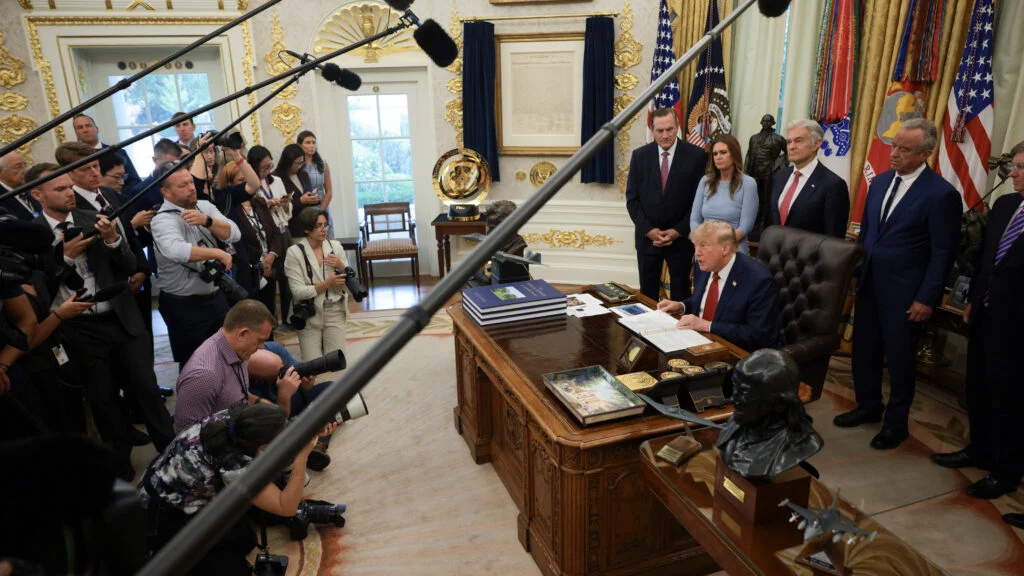
In a significant policy maneuver aimed at addressing the persistent issue of soaring pharmaceutical costs, President Donald Trump announced on Friday the implementation of the GENEROUS model, a nationwide initiative designed to leverage international pricing benchmarks to reduce the cost of prescription drugs for state Medicaid programs. The program, which will encompass all 50 states, the District of Columbia, and Puerto Rico, represents one of the most ambitious attempts to date to restructure how the federal government and state agencies negotiate with pharmaceutical manufacturers. By mandating that drug prices for Medicaid align with those found in peer nations, the administration seeks to curb the long-standing discrepancy between U.S. drug expenditures and global pricing standards.
The Genesis of the GENEROUS Model
The GENEROUS model—an acronym for Global Evaluation and Negotiation of Equitable Rates for Our United States—emerged following months of quiet negotiations between the White House, the Department of Health and Human Services (HHS), and major pharmaceutical entities. The policy architecture rests on a fundamental shift in procurement logic: moving away from the traditional "net price" model, which has often been criticized for lack of transparency and high costs, toward a reference-based pricing system.
Under the terms of the new model, more than two dozen major pharmaceutical companies have entered into voluntary agreements with the administration. These companies have pledged to offer medications to state Medicaid programs at price points consistent with what those same drugs cost in a basket of peer countries. This approach, often referred to as International Reference Pricing (IRP), has been a centerpiece of the administration’s broader "America First" healthcare platform, which posits that U.S. taxpayers and patients have been effectively subsidizing lower drug costs for the rest of the world.
Chronology of Drug Pricing Reform Efforts
The announcement on Friday is the culmination of a multi-year effort to reform the pharmaceutical market. Since early 2017, the Trump administration has signaled its intent to aggressively lower prescription costs, which account for a substantial and growing portion of Medicaid budgets.
- Early 2018: The White House releases the "American Patients First" blueprint, outlining initial strategies to address high drug prices, including the potential for international benchmarking.
- Late 2018: The Centers for Medicare & Medicaid Services (CMS) releases an advance notice of proposed rulemaking regarding an International Pricing Index for Medicare Part B.
- 2019: The administration intensifies pressure on Congress and industry leaders, leading to a series of high-level meetings between HHS Secretary Alex Azar and top pharmaceutical CEOs.
- Mid-2020: Negotiations regarding the GENEROUS model reach a breakthrough as major manufacturers, facing political pressure and the threat of more stringent executive mandates, agree to participate in a pilot-turned-national program.
- October 2020: The official announcement of the GENEROUS model is made, confirming the participation of all states and territories.
The Economic Landscape of Medicaid Spending
Medicaid remains the primary safety net for low-income Americans, and its financial stability is intrinsically tied to the cost of pharmaceuticals. According to data from the Kaiser Family Foundation, Medicaid spending on prescription drugs has risen consistently over the last decade, driven by the introduction of high-cost specialty therapies and the rising prices of existing brand-name drugs.
In 2019, Medicaid spending on outpatient prescription drugs reached nearly $70 billion. When factoring in the federal-state split, the burden of these costs is shared, but state budgets remain particularly vulnerable to sudden spikes in pharmaceutical prices. Proponents of the GENEROUS model argue that if the U.S. can successfully tether its Medicaid pricing to international averages—which are often 30% to 50% lower than domestic prices for the same patented drugs—states could see significant relief in their annual fiscal planning.
However, industry analysts warn that the implementation will be complex. The diversity of healthcare systems globally—ranging from the United Kingdom’s National Health Service to Germany’s multi-payer system—means that establishing a "fair" international price requires sophisticated data modeling to account for differing value assessments and market access negotiations.

Industry and Political Reactions
The pharmaceutical industry’s response to the GENEROUS model has been marked by a blend of cooperation and cautious apprehension. By opting into the program, many companies are seeking to avoid the imposition of more rigid, government-imposed price controls that could have more severe impacts on their bottom lines.
The Pharmaceutical Research and Manufacturers of America (PhRMA) has historically opposed international reference pricing, arguing that such measures discourage innovation and limit patient access to new therapies. In a statement released shortly after the announcement, industry representatives emphasized that while they are committed to affordability, the focus must remain on maintaining the robust research and development ecosystem that defines the U.S. market.
Conversely, patient advocacy groups and public health organizations have offered a more tepid reaction. While many welcome any move that lowers the cost of life-saving medications, there are lingering questions regarding how the GENEROUS model will interact with existing Medicaid rebate statutes. The "Medicaid Drug Rebate Program" (MDRP) already provides deep discounts; there is concern among some policy analysts that the new model might inadvertently complicate existing rebate structures or create confusion regarding pharmacy benefit manager (PBM) involvement.
Broader Implications and Strategic Analysis
The implementation of the GENEROUS model carries profound implications for the future of U.S. healthcare policy. By normalizing the use of international pricing benchmarks in a government-funded program, the Trump administration has set a precedent that will be difficult to reverse, regardless of future political shifts.
- Transparency: One of the most immediate impacts will be the forced transparency regarding what global markets actually pay for U.S.-manufactured drugs. This data will likely be leveraged by private insurers and other purchasers to demand similar pricing parity.
- State Fiscal Relief: For state legislatures, which are often constitutionally mandated to balance their budgets, the GENEROUS model could provide a vital lifeline. By lowering the pharmaceutical component of Medicaid, states may be able to redirect funds toward other essential services, such as long-term care or primary health infrastructure.
- Market Dynamics: The model introduces a significant shift in how manufacturers calculate their "best price." Because Medicaid rebates are often tied to the lowest price offered to any commercial or government purchaser, a change in Medicaid pricing dynamics can have a ripple effect across the entire pharmaceutical marketplace.
However, the lack of granular detail provided in the initial announcement leaves several unanswered questions. Specifically, the administration has yet to detail the "basket" of countries to be used for reference, the methodology for adjusting prices for inflation, and the specific mechanism for how participating states will interface with the new pricing schedules.
Looking Ahead
As the GENEROUS model transitions from a presidential announcement to an operational reality, the role of the Centers for Medicare & Medicaid Services (CMS) will be critical. CMS will need to coordinate with state Medicaid directors to ensure that billing systems are updated to reflect these new, lower prices. Furthermore, legal challenges from various stakeholders remain a distinct possibility, as the pharmaceutical industry often employs litigation to pause or block federal initiatives that significantly alter the market landscape.
The success of the GENEROUS model will ultimately be measured by two metrics: the extent of actual savings achieved by state programs and the continued availability of high-quality medications. If the program succeeds in lowering costs without stifling the pipeline of new drugs, it could be remembered as a landmark achievement in healthcare economics. If, however, it leads to supply chain disruptions or administrative bottlenecks, it may serve as a cautionary tale about the complexities of integrating international pricing models into the unique American healthcare environment.
For now, the policy stands as a bold assertion of executive authority in the drug pricing space. With all 50 states and the territories on board, the initiative represents a unified, if untested, attempt to harmonize U.S. drug costs with the global standard. As the implementation process begins, both patients and taxpayers will be watching closely to see if the promise of lower prices translates into tangible relief at the pharmacy counter.