The landscape of American fashion has undergone radical transformations over the past half-century, yet few figures have maintained their dominance as enduringly as Ralph Lauren. Earlier this week, the Council of Fashion Designers of America (CFDA) honored the iconic designer with the prestigious Menswear Designer of the Year Award. This latest accolade arrives more than four decades after Lauren secured the organization’s inaugural men’s design prize in 1981. To put this remarkable longevity into perspective, the designer has reigned at the absolute pinnacle of American style since long before many of his fellow 2023 and 2024 CFDA winners were even born.
In an industry notoriously driven by rapid turnover and fleeting micro-trends, constructing a viable brand is challenging enough, but renewing and safeguarding that legacy across generations is arguably an even greater feat. As the Ralph Lauren corporation steadily approaches its monumental 60th anniversary, the designer and his eponymous label continue to command the undivided attention of the global fashion community. Recent empirical evidence of this enduring cultural relevance was on full display last month in Tokyo, where the brand organized PoloFest—a meticulously curated vintage marketplace that showcased 5,000 specially selected archival Polo Ralph Lauren pieces and drew upwards of 10,000 enthusiastic visitors. Industry insiders widely predict that the unprecedented success of this experiential retail model will inevitably spawn countless imitators across the international fashion sector.
A Chronology of Innovation: From 1967 to the Present
To understand the weight of Ralph Lauren’s latest industry recognition, one must examine the sprawling timeline of a brand that practically invented the concept of American lifestyle marketing. Founded in 1967 with a modest line of men’s ties, the company quickly expanded into full menswear collections by 1968, followed by its pioneering women’s line in 1971.
1967: Ralph Lauren launches with a collection of wide, European-style ties under the Polo brand name.
1971: The introduction of the first tailored women’s shirts, bearing the now-iconic polo player emblem on the cuff.
1981: Ralph Lauren becomes the first American designer to be awarded the CFDA Menswear Designer of the Year award, cementing his national status.
1986: The flagship store opens in the historic Rhinelander mansion on Madison Avenue in New York City, redefining luxury retail architecture.
2018: The brand celebrates its 50th anniversary with an unprecedented runway show and gala dinner in Central Park, attended by global luminaries and fashion royalty.
2023–2024: Continued global expansion, highlighted by archival activations like PoloFest in Tokyo and renewed critical acclaim from the CFDA.
This chronological trajectory demonstrates a rare, continuous capacity for reinvention while steadfastly preserving core aesthetic codes. While many heritage brands lose their identity in pursuit of algorithmic trends, Lauren has consistently doubled down on the visual vocabulary that made him a household name.
Deconstructing the Pre-Fall Collection: Rootedness Over Trends
While the Tokyo vintage festival was designed to make massive cultural waves, Ralph Lauren’s latest pre-fall collection was conceived with a quieter, more introspective confidence. Rather than chasing the ephemeral currents that dictate modern fast fashion cycles, the new lineup remains intensely rooted in the rich iconography that has defined the house for decades.
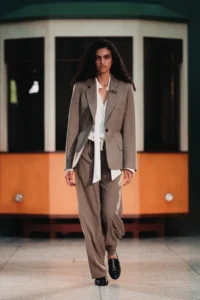
A prime example of this philosophy is found in look three: a masterclass in tailoring featuring a glen plaid pantsuit. This specific garment is not an arbitrary creation; it is modeled directly on a bespoke suit that Lauren himself frequently wears in his daily life. Fabricated by elite artisans in Italy, the garment utilizes specialized construction techniques historically reserved for traditional men’s tailoring, lending the women’s silhouette sharp, architectural lines and unwavering structural integrity.
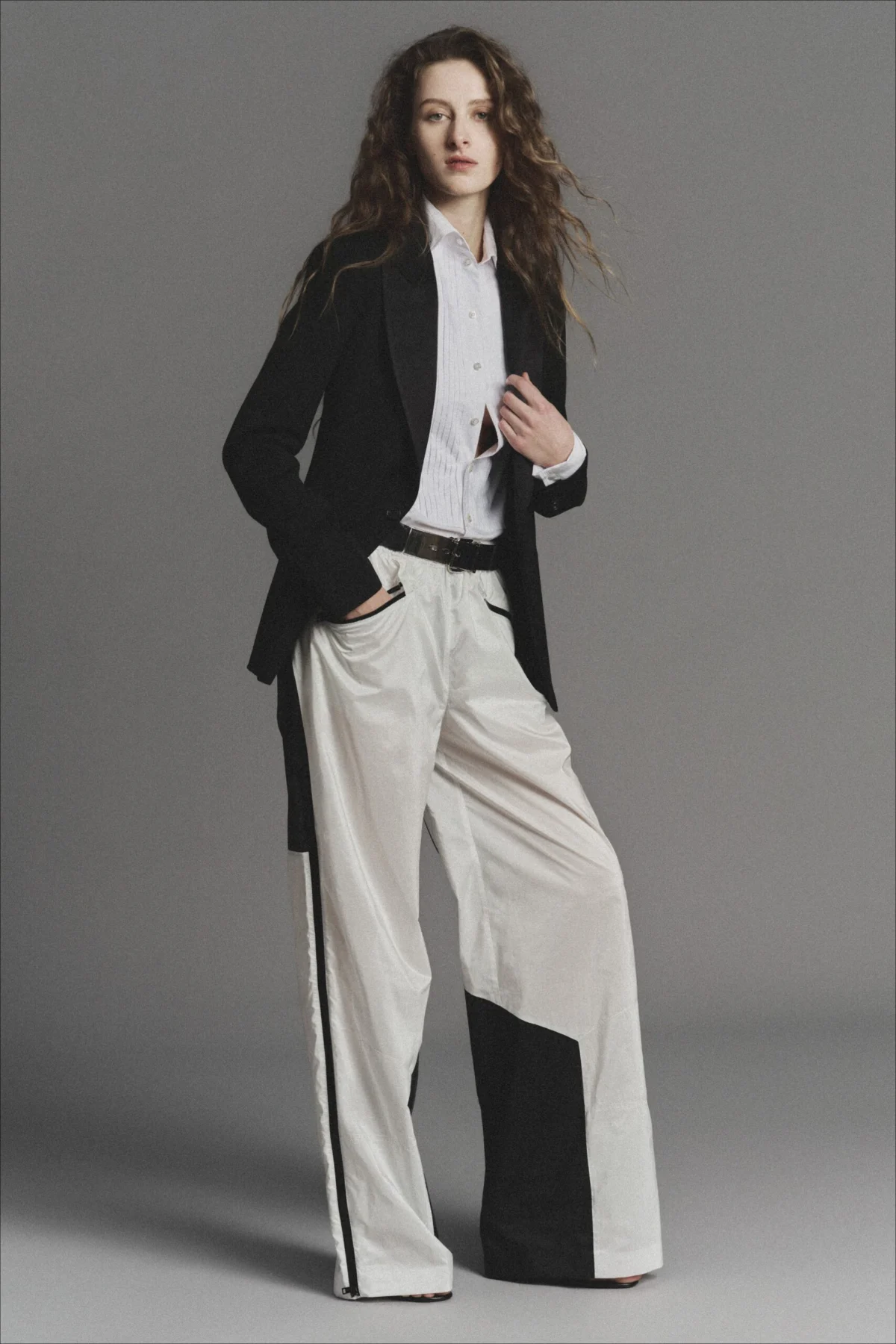
Conversely, look one introduces a classic Ralph Lauren juxtaposition: a pair of luxury track pants paired with more formal elements. The designer has long championed the harmonious collision of the casual and the formal, the high and the low, bridging the gap between comfort and sophistication long before "athleisure" became a dominant market sector.
In terms of palette, rich purple emerges as a commanding accent color for the season, appearing across various silhouettes alongside a crisp minty green. While these hues happen to align with broader color forecasting trends across the global fashion landscape, insiders note that Lauren’s adoption of these shades is entirely incidental. The designer pays virtually no heed to prevailing seasonal dictates. Further proof of this autonomy is visible in a silvery, plunge-front halter top integrated into the collection—a direct, uncompromised lift from the brand’s own extensive archives from the 1990s.
Industry Analysis: The Economic and Cultural Implications
Market analysts and fashion economists have long studied the resilience of the Ralph Lauren business model. In a retail environment currently grappling with economic headwinds and shifting consumer values toward sustainability and vintage curation, Lauren’s approach offers a masterclass in brand equity preservation.
The convergence of historical archives, such as the Tokyo PoloFest, and contemporary pre-fall manufacturing highlights a dual-pronged strategy: engaging younger, nostalgia-driven demographics while satisfying affluent, discerning clientele who demand uncompromised quality and heritage. By leaning into archival revivals like the 1990s halter top and utilizing bespoke Italian tailoring houses for personal-staple replicas like the glen plaid suit, the company reinforces its position as a custodian of authentic American style.
Furthermore, receiving the CFDA Menswear Designer of the Year award at this juncture in Lauren’s career serves a vital signaling function for the broader American fashion industry. It validates the notion that commercial success and profound artistic legacy are not mutually exclusive. As direct-to-consumer digital brands and algorithmic trend-forecasting threaten to homogenize contemporary design, the enduring relevance of Ralph Lauren stands as a bulwark for individualistic, narrative-driven fashion creation.
Official Responses and Institutional Recognition
Reaction from the broader fashion establishment following the CFDA announcement was overwhelmingly positive, reflecting deep institutional respect for Lauren’s contributions to the global economy and cultural footprint. Representatives from the Council of Fashion Designers of America noted that honoring Lauren was both a celebration of past achievements and a recognition of his ongoing influence on contemporary designers.
While Ralph Lauren himself has often characterized his work not as fashion, but as a reflection of timeless living, industry peers frequently cite his pioneering role in lifestyle branding as the blueprint for modern fashion empires. Executives within the company have emphasized that the upcoming 60th-anniversary milestones will not merely look backward, but will serve as a launching pad for integrating cutting-edge retail experiences with the timeless values of quality, tradition, and aspirational storytelling.
Looking Ahead: The Road to the Diamond Anniversary
As the house of Ralph Lauren looks ahead to its 60th anniversary, the strategic implications of its current creative and commercial output are clear. By bridging the gap between archival reverence—exemplified by massive international activations like PoloFest—and deeply personal, masterfully tailored ready-to-wear collections, the brand continues to dictate the terms of its own legacy.
In an era defined by rapid obsolescence, Ralph Lauren’s continued dominance proves that true luxury is not about reinventing the wheel with every passing season, but about perfecting a vision and allowing the rest of the world to catch up.