The landscape of American energy is undergoing a profound transformation, yet for the nation’s Indigenous communities, the transition to a cleaner grid is a matter of survival rather than mere policy. According to the Department of Energy, tribal households in the United States currently carry an energy burden 28% above the national average and endure 6.5 times more power outages annually than non-tribal communities. Most strikingly, roughly 17,000 tribal homes—housing at least 54,000 people—remain entirely without electricity. As the Energy Information Administration (EIA) identifies data center loads as the dominant driver of long-term U.S. electricity growth, these under-resourced communities find themselves at the front lines of a surging demand that threatens to further destabilize an already fragile infrastructure.
In response to these systemic inequities, a movement toward tribal energy sovereignty is gaining momentum, led by figures such as Cody Two Bears, the founder and CEO of Indigenized Energy. A member of the Standing Rock Sioux Tribe and formerly its youngest tribal council representative, Two Bears argues that the solution to the energy crisis in Indian Country is not to wait for outside utility providers or federal interventions, but to build independent infrastructure on tribal terms and at a tribal pace.
The Roots of Energy Sovereignty
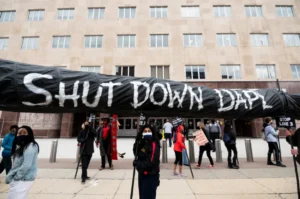
The impetus for this movement is deeply rooted in the 2016-2017 NoDAPL (Dakota Access Pipeline) protests at Standing Rock. Following those events, Two Bears founded Indigenized Energy in 2017 with the goal of shifting the narrative from protesting extractive energy to building regenerative energy. The organization’s first major milestone was the development of North Dakota’s largest solar farm, a project that demonstrated the technical and economic viability of large-scale renewable energy on sovereign land.
By the spring of 2026, Indigenized Energy transitioned into an independent 501(c)(3) nonprofit, allowing it to steward resources directly and form long-term partnerships. The organization’s strategic plan is built upon a "seven generations" philosophy—a traditional Indigenous planning horizon that prioritizes the health and stability of the community centuries into the future, rather than focusing on the quarterly returns or three-year grant cycles common in Western corporate and government sectors.
Addressing the Energy Burden Through Financial Innovation
The high energy burden faced by tribal families is often exacerbated by "end-of-the-line" infrastructure. Because many reservations are located in remote areas at the periphery of the utility grid, they are the first to lose power during outages and the last to have it restored. Furthermore, the aging infrastructure in these areas leads to higher maintenance costs, which are frequently passed down to consumers who are already living in some of the nation’s most impoverished counties.
Indigenized Energy has introduced a "program-over-project" model to address these issues. Rather than simply installing solar panels and leaving, the organization establishes self-sustaining residential programs. A household that participates in an energy makeover—which includes solar arrays, battery storage, and efficiency upgrades—returns a portion of their utility savings to a revolving community fund.
The payment structures are tailored to the specific needs of each tribe:
- Flat Fees: Some reservations utilize a consistent monthly fee to cover operations.
- Shared Savings: Other programs use a 50-50 split, where half the savings stay with the family and half return to the fund.
- Sliding Scales: In some communities, a family with a stable job might contribute 70% of their savings, while an elder on a fixed income might contribute only 10% or 20%.
This revolving fund is critical because conventional lending models often fail on sovereign land. Because tribal land cannot be repossessed in the traditional sense, it does not fit standard credit models. The Indigenized Energy fund provides the necessary collateral to sustain jobs and maintenance without relying on outside banks. As Two Bears describes it, the goal is to provide a "hand up" rather than a handout, ensuring that the first dollar invested is the only one needed to trigger long-term self-sufficiency.
The Intersection of Energy and Food Sovereignty
One of the most innovative aspects of the tribal energy movement is the integration of electricity with other essential systems, specifically food and land management. Indigenized Energy’s work suggests that the clean energy transition is most effective when it is not viewed in isolation.

In 2025, Solar Builder named Indigenized Energy’s off-grid array at the Northern Cheyenne buffalo facility in Montana its "Project of the Year" for systems under 100 kW. The facility, which was too remote for a traditional grid connection, now uses solar power to run electric fences, water stations, and freezers. This allows the tribe to process buffalo meat for local consumption and for donation to regional food banks.
A similar project is currently underway at the Wozu organization on the Standing Rock Reservation. The "Buffalo Sun" project involves an off-grid system designed to support a returning buffalo herd. The solar arrays are elevated to provide shade for the animals during handling, while the power generated supports the infrastructure needed for land regeneration. Because grass-fed buffalo raised on regenerated grasslands command a premium market price, the healing of the land becomes a tangible asset on the community’s balance sheet. This holistic approach treats energy, food, and land as a single, interconnected decision.
Policy Volatility and the Federal Landscape
Despite the success of these models, the political and financial environment remains volatile. The Tribal Renewable Energy Coalition, which Indigenized Energy helped form, was originally awarded $136 million through the Environmental Protection Agency’s (EPA) $7 billion "Solar for All" program. This funding was intended to deploy residential solar across numerous tribal nations, creating a "green economy" within reservation boundaries.
However, the program faced a significant setback when the EPA terminated the initiative in August 2025. According to Indigenized Energy, many of the earliest builds were completed in anticipation of reimbursements that never arrived, forcing the organization to navigate a sudden funding cliff.
Two Bears remains adamant that energy sovereignty should not be a partisan issue. He points to the pragmatism of farmers and ranchers in "red states" like North Dakota, who view solar energy through the same mathematical lens as a truck loan. If the economics of a solar system—paying off a loan in seven years to receive free power for the following twenty—make sense, the political affiliation of the user becomes irrelevant.
Indian Country as an R&D Lab for the Future
The work being done on tribal lands is increasingly being viewed as a Research and Development (R&D) lab for the rest of the country. As major cities like Ann Arbor, Michigan, and Portland, Oregon, begin to stand up residential distributed energy programs, they are looking toward the models that tribes have operated for years.
The rise of Artificial Intelligence (AI) and the subsequent demand for massive data centers have created a new urgency for this work. As these data centers consume vast amounts of regional power, the "end-of-the-line" communities are at risk of increased curtailments and price spikes. By building microgrids and sovereign utility structures, tribes are insulating themselves from the volatility of the national grid.
Chronology of Key Events
- 2016-2017: NoDAPL protests at Standing Rock highlight the need for tribal energy independence.
- 2017: Cody Two Bears founds Indigenized Energy.
- 2019-2023: Development of North Dakota’s largest solar farm and expansion into four tribal communities.
- 2024: The Tribal Renewable Energy Coalition is awarded $136 million via the EPA’s Solar for All program.
- 2025: The Northern Cheyenne buffalo facility is named Project of the Year; the EPA terminates the Solar for All program in August, leading to funding challenges.
- April 2026: Indigenized Energy officially becomes an independent 501(c)(3) nonprofit.
- September 2026: The "People of the Sun" gathering is scheduled at Standing Rock to mark the 10th anniversary of NoDAPL and celebrate a decade of energy innovation.
Broader Implications and Future Outlook
The tribal energy movement represents a shift in power—both literal and figurative. By moving away from a "take, make, and waste" centralized economy and toward a localized, regenerative model, Indigenous communities are providing a blueprint for a distributed electrical grid.
The upcoming "People of the Sun" event, scheduled for September 16–18, 2026, at Standing Rock, will serve as a focal point for this movement. The gathering is expected to bring together tribal leaders, energy practitioners, and musicians to discuss the next decade of sovereignty.
As the national grid strains under the weight of aging infrastructure and new industrial demands, the lessons from Indian Country are clear: resilience is found in localization, and sustainability is achieved when the needs of the seventh generation are placed at the center of today’s decisions. The transition to clean energy will either be built with Indigenous communities as leaders, or it will be built around them; current trends suggest that tribal nations are no longer willing to wait for the rest of the country to decide which path to take.