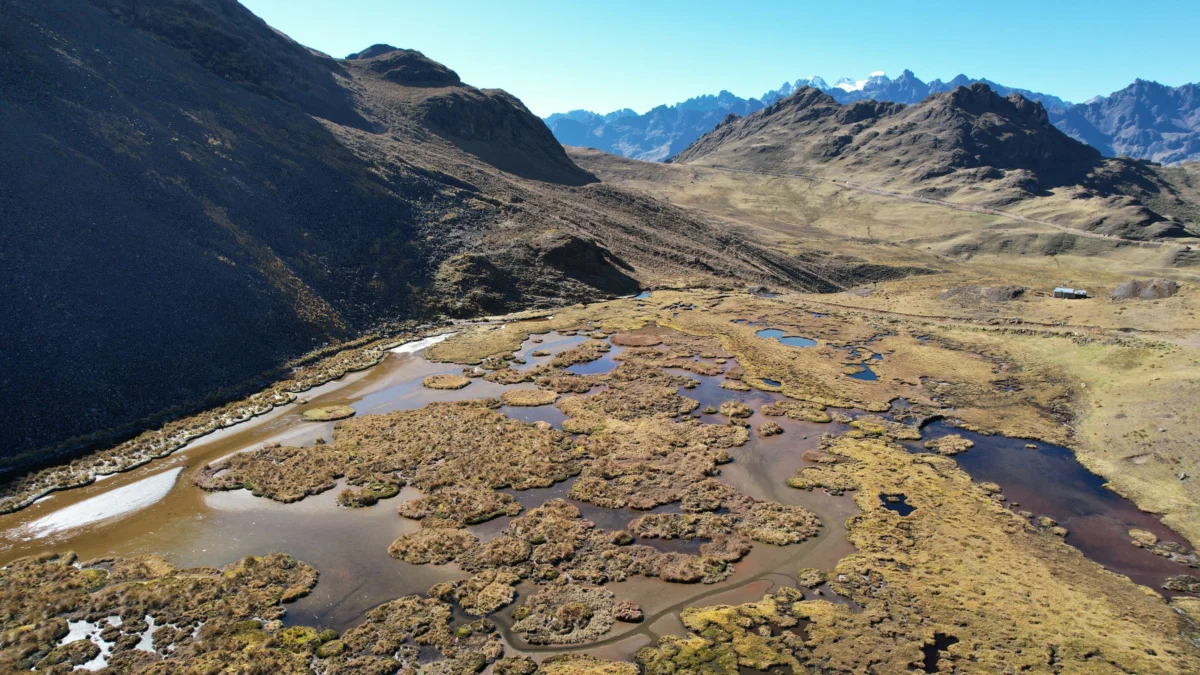
The proposed projects, operated under the Canadian firm American Lithium through its subsidiary Macusani Yellowcake, encompass at least 174 concessions covering over 1,090 square kilometers. At the heart of the controversy is the Falchani lithium project, an open-pit mine that experts and local communities fear will cause irreversible damage to the fragile alpine ecosystem. With construction slated to begin in 2028, the project aims to extract 25,000 tonnes of lithium carbonate annually, promising significant economic returns for the state. Yet, the environmental cost of this extraction is becoming a subject of fierce debate, pitting the economic promise of development against the existential threat to one of the world’s most significant water reservoirs.
A Chronology of Contention and Corporate Expansion
The path to the current standoff has been paved by a series of legal battles and administrative shifts. The area surrounding the Quelccaya glacier was originally explored in the early 2000s primarily for its uranium deposits. The narrative shifted significantly in 2017, when significant lithium reserves were identified, catapulting the region into the center of the global demand for battery-grade minerals.

By 2021, American Lithium had secured the concessions, inheriting a portfolio already mired in regulatory friction. The company’s trajectory has been far from smooth; in 2019, 32 of its concessions were declared invalid by the Peruvian government due to failure to meet payment obligations. Furthermore, in 2020, Macusani Yellowcake faced sanctions from the Peruvian government for conducting unapproved exploration activities.
The turning point occurred in August 2025, when the Supreme Court of Peru ruled in favor of American Lithium, confirming its ownership of the previously disputed concessions. This judicial victory provided the necessary legal bedrock for the current administration to fast-track the mining sector. In June 2026, the Peruvian government formally declared lithium and uranium extraction a matter of "national interest." This was followed by the First International Forum on Lithium and Uranium, where officials signaled a clear intent to prioritize the extraction of these minerals as a cornerstone of the national economy. The inauguration of President Keiko Fujimori further solidified this stance, as she has consistently framed the expansion of the mining sector as the primary engine for poverty alleviation in the Puno region—the nation’s third-poorest department.
The Environmental Stakes: Dust, Radiation, and Deglaciation
The environmental concerns surrounding the Falchani and Macusani projects are multifaceted, ranging from local pollution to global climate impacts. Environmental engineer Bladimir Martínez, who collaborates with the monitoring network Red Muqui, has raised alarms regarding the proximity of the proposed open-pit mines to the glacier. The primary concern is the generation of metal-rich dust, which, if carried by wind onto the surface of the ice, would lower the glacier’s albedo—the measure of its reflectivity. A darker surface absorbs more solar radiation, which significantly accelerates the rate of melting.

"What is at stake here is the very existence of this glacier," Martínez stated. The scientific consensus, supported by data from the National Research Institute for Glaciers and Mountain Ecosystems (INAIGEM), indicates that the Quelccaya ice cap has already lost 58% of its mass over the past four decades. Adding industrial dust and potential chemical runoff from mining activities is viewed by many researchers as a potential death knell for the ice cap.
Furthermore, the presence of uranium in the region adds a layer of radiological concern. While American Lithium has sought to distinguish its lithium projects from its uranium exploration, independent studies—including a 2024 report from the Pontifical Catholic University of Peru—have identified traces of uranium within the lithium-rich rock of the Falchani site. Critics argue that the extraction process, by its very nature, will inevitably disturb radioactive materials, posing a risk to the surrounding fauna, including the endangered Andean mountain cat, and the local human population who rely on the glacier’s meltwater.
Economic Development vs. Ecological Sustainability
The socioeconomic landscape in Puno is deeply divided. For the provincial government and some local community members, the mining project represents a rare opportunity for development. The region suffers from high rates of poverty and limited state infrastructure. Proponents of the mine point to estimates suggesting the creation of up to 5,000 jobs and the generation of more than $6 billion in economic activity over the life of the mine as evidence that the project is a necessity for the region’s survival.

However, this optimism is not shared by those living in the direct shadow of the glacier. For residents like Yolanda Quispe, a park ranger and community leader, the trade-off is unacceptable. "The fauna and flora that exist around it, the people—all of this would be destroyed," she warned. There is a palpable sense of betrayal among those who believe the government is prioritizing corporate profit over the long-term water security of the nation. The glacier provides an estimated 2.43 billion cubic meters of water, a resource essential for the future of Cusco and Puno. If that water supply is contaminated or depleted, the long-term economic cost to agriculture and local livelihoods could far exceed the short-term benefits of mining royalties.
The Role of International Governance and Scientific Advocacy
Lonnie Thompson, a preeminent paleoclimatologist who has been studying the Quelccaya glacier since 1974, serves as a sobering voice in the debate. Having drilled the first ice cores from the glacier decades ago, he has documented its rapid retreat with clinical precision. Thompson views the glacier as a "terminal cancer patient" and argues that the introduction of industrial mining is an act of extreme negligence.
"If these mining concessions were to develop fully, the whole ice cap is at risk," Thompson stated. He is currently advocating for the government to designate the glacier as a national park, a move that would provide the highest level of legal protection and potentially block industrial development in the immediate vicinity. Such a designation would prioritize conservation over extraction, a stance that currently sits in direct opposition to the administration’s "national interest" agenda.

Legal experts, such as Roger Merino of the Universidad del Pacifico, caution that the push for rapid mineral development is bypassing essential regulatory safeguards. The lack of specific laws governing the extraction of uranium—a material that requires stringent handling protocols due to its radioactivity—remains a major gap in Peru’s current legal framework. "The approach is clearly one of lowering social and environmental standards," Merino noted. He fears that without clear, enforceable technical regulations, the projects will proceed with minimal oversight, leading to irreversible ecological damage.
Implications for the Energy Transition
The situation in Puno highlights a broader, global dilemma: how can countries balance the urgent need for minerals required to fight climate change with the need to protect the very environments that are most vulnerable to global warming? Lithium and uranium are indeed essential components of a low-carbon future, but if their extraction requires the destruction of critical alpine water sources, the transition becomes inherently self-defeating.
As Peru aligns itself with Argentina, Chile, and Bolivia in a regional pact to boost strategic mineral production, the eyes of the international community are turning toward the Quelccaya glacier. The outcome of this struggle will likely serve as a benchmark for how the Andean region handles the intersection of resource nationalism and environmental justice. For now, the people of Phinaya and their supporters continue to call for a moratorium on mining near the glacier, arguing that while the world may need lithium for electric vehicle batteries, it cannot afford to sacrifice one of the planet’s most vital sources of fresh water in the process. As the 2028 construction date approaches, the battle for Quelccaya is set to intensify, turning the quiet, snow-capped slopes into a major arena for the future of sustainable development in South America.