The contemporary fashion landscape has long operated under a rigid dichotomy: daytime practicality versus nocturnal transformation. For decades, the ritual of dressing for evening events has been anchored in an outdated paradigm of theatrical metamorphosis, compelling wearers to adopt entirely different personas once the sun sets. However, designer Sharon Wauchob is systematically dismantling this convention. With the debut of her highly anticipated spring collection, Wauchob has introduced a sophisticated sartorial philosophy that prioritizes personal continuity over dramatic alter egos, offering a fresh blueprint for after-dark attire that resonates with the modern, autonomous consumer.
Background and Evolution of Eveningwear Norms
To understand the weight of Wauchob’s latest intervention, one must examine the historical trajectory of eveningwear. Traditionally, the category has stood as the most static segment of the fashion industry. Rooted in mid-century couture traditions and fairy-tale tropes—often colloquially referenced as the Cinderella effect—evening dress demanded a suspension of daytime identity. Heavy fabrics, constrictive structures, and ornate embellishments signaled a deliberate break from reality.
In recent years, shifting societal values, accelerated by hybrid work models and a post-pandemic recalibration of social life, have rendered these restrictive codes obsolete. Consumers increasingly demand versatility, comfort, and authenticity from their wardrobes. Wauchob’s spring collection arrives precisely at this cultural intersection. By refusing to treat eveningwear as a costume change, the designer addresses a glaring market gap: the desire to remain fundamentally oneself while navigating formal or nocturnal environments.
Deconstructing the Collection: Identity Meets Innovation
At the core of Wauchob’s spring lineup is a seamless fusion of identity and style. The designer has engineered a wardrobe that accommodates those whose daytime aesthetic relies on understated staples such as trousers, tanks, and T-shirts. Rather than forcing these individuals into conventional gowns, Wauchob elevates everyday silhouettes into the realm of evening elegance.
Among the standout pieces are ultra-fine mesh T-shirts and tank tops, meticulously finished with hand-rolled edges reminiscent of luxury foulards. These garments bridge the gap between casual wear and high-end sophistication. Similarly, a sleeveless top crafted from sheer French résille (fishnet) is dramatically fringed with hand-dyed and applied beads. Wauchob envisions this piece worn layered beneath a sharp blazer or a classic tuxedo, describing the intricate texturing as functioning almost, but not quite, like jewelry.
This concept of "almost" serves as the foundational design principle for the entire collection. Framed around the transitional temporal space of dusk—an in-between hour that marks both an ending and a beginning—the garments play with the notions of revelation and concealment. Tapping into a growing consumer confidence regarding bodily autonomy, Wauchob embraces transparency without sacrificing refinement.
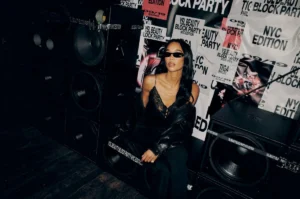
A caviar-black slip dress, edged with delicate scalloped lace, features a daring thigh-high slash that reveals built-in tap pants, balancing audacity with structural integrity. Peekaboo lace recurs as a dominant motif throughout the line. A striking metallic lace paneled skirt is paired with a crisp, structured white shirt, while another romantic skirt is lightly embellished with feathers, rendering the garment as weightless as a sigh.
Tailoring and Craftsmanship: The London Studio Approach
Beyond surface aesthetics, the collection showcases Wauchob’s rigorous training and commitment to artisanal production. Having honed her craft in Paris, the designer operates with a hands-on methodology based in her London studio, where every single piece is manufactured. This localized production model allows for uncompromising quality control and an intimate engagement with materials.
Illustrating her dedication to traditional craftsmanship over industrial shortcuts, Wauchob shared an anecdote regarding the creation of her pleated garments. Rather than utilizing pre-pleated fabrics—a common cost- and time-saving measure in modern commercial manufacturing—she and an artisan spent two grueling days manually pleating the textiles in-house.
This painstaking approach is vividly manifested in silk-satin crinkled trousers, where hand-layered sequins are meticulously integrated into the folds, as well as in an elongated skirt that drapes with architectural precision. Wauchob’s process frequently requires taking garments apart and reconstructing them if the initial energy fails to meet her exacting standards.
Official Insights and Design Philosophy
In interviews surrounding the collection’s launch, Wauchob elaborated on the psychological dimensions of her creative process. "I think it’s not great when you’re dressing up at night and you’re totally changing your personality, because I want to keep my personality when I dress up," the designer explained, summarizing the personal ethos driving her brand.
Addressing her unorthodox techniques, Wauchob emphasized the necessity of preserving traditional artisanal methods to maintain the emotional resonance of the clothing. "If you take any of the processes away from that, it totally changes the energy of the garment, it really does. Maintaining these things is important and it brings a bit of surprise to the customer," she noted.
Furthermore, Wauchob acknowledged the inherent risks of subverting luxury expectations. "Being quite irreverent with something that’s precious, I like doing that. I mean, it makes you nervous, but it’s quite interesting to see how far you can push it," she reflected, positioning her output firmly in the category of "almost couture."
Broader Market Impact and Industry Implications
Wauchob’s spring collection arrives at a critical juncture for the independent luxury sector. As conglomerates increasingly dominate the global fashion conversation through mass-market luxury and predictable commercial lines, independent designers operating at the near-couture level must offer distinct value propositions to capture consumer loyalty.
By championing slow fashion, localized London-based production, and deeply personal styling narratives, Wauchob provides a viable template for the future of high-end independent labels. Market analysts note a rising consumer preference for transparency, craftsmanship, and garments that tell a verifiable story of human labor. Wauchob’s refusal to compromise on artisanal techniques—such as hand-pleating and individual sequin placement—positions her brand favorably among discerning buyers who view clothing as an investment in art rather than disposable trend consumption.
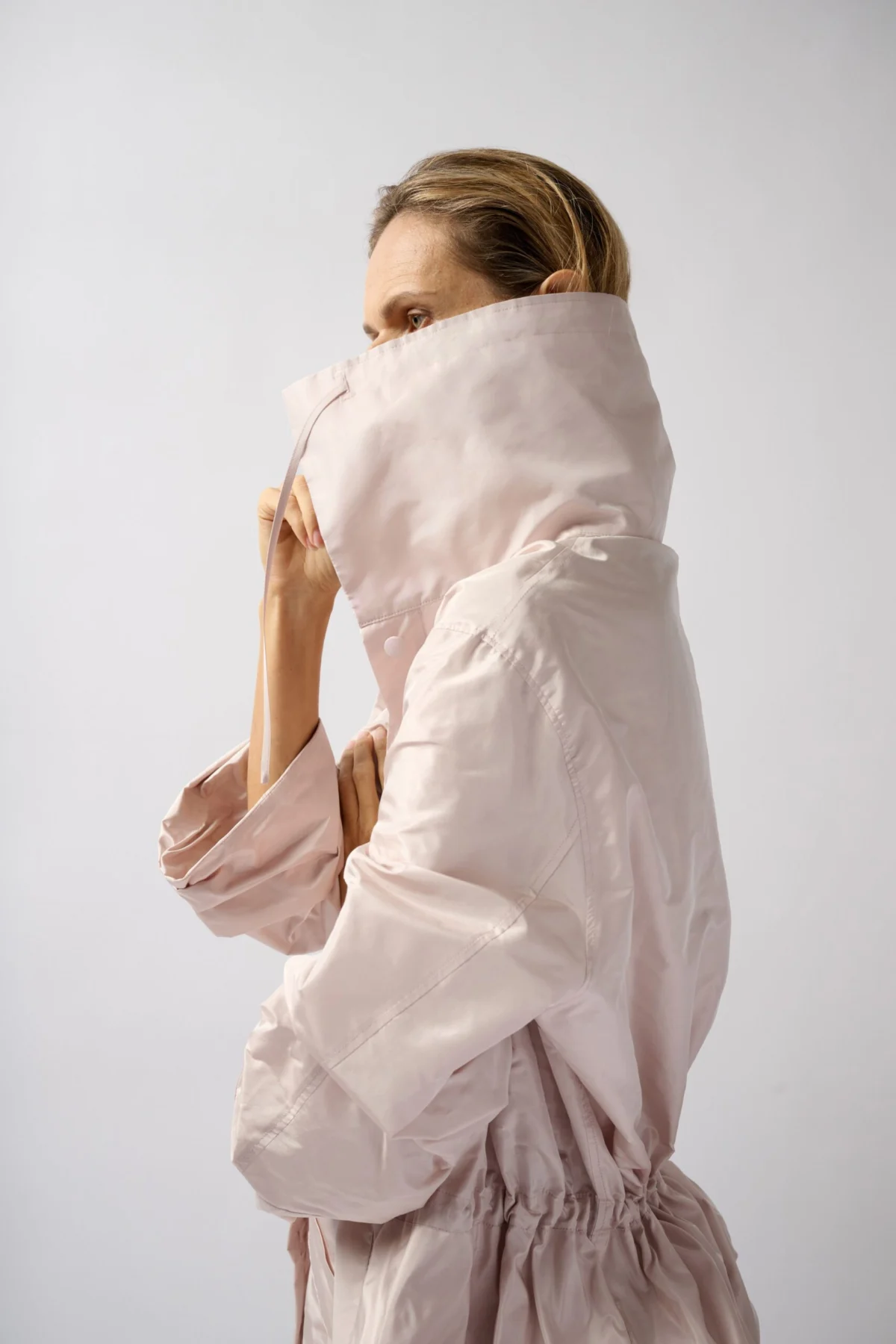
Moreover, the conceptual repositioning of eveningwear has significant commercial implications. By validating the desire for comfort and personal continuity during nocturnal events, Wauchob opens up new avenues for retail growth. Department stores and luxury boutiques seeking to diversify their eveningwear offerings away from traditional ballgowns will likely find high demand for hybrid pieces like tailored trousers with integrated cummerbunds, rococo pink parkas that transform into subtle bustles, and sheer mesh layering tops.
Conclusion
Sharon Wauchob’s spring collection does more than present a visually captivating array of garments; it successfully challenges the psychological architecture of how society dresses for the evening. By rejecting the archaic pressure to transform into an alter ego after dark, Wauchob empowers the modern consumer to project their authentic identity across all hours of the day. Through meticulous London-based craftsmanship, an uncompromising dedication to artisanal processes, and a delicate balance of reveal and conceal, the designer has delivered a collection that is not only timely but profoundly enduring, cementing her status as a vital voice in contemporary fashion.