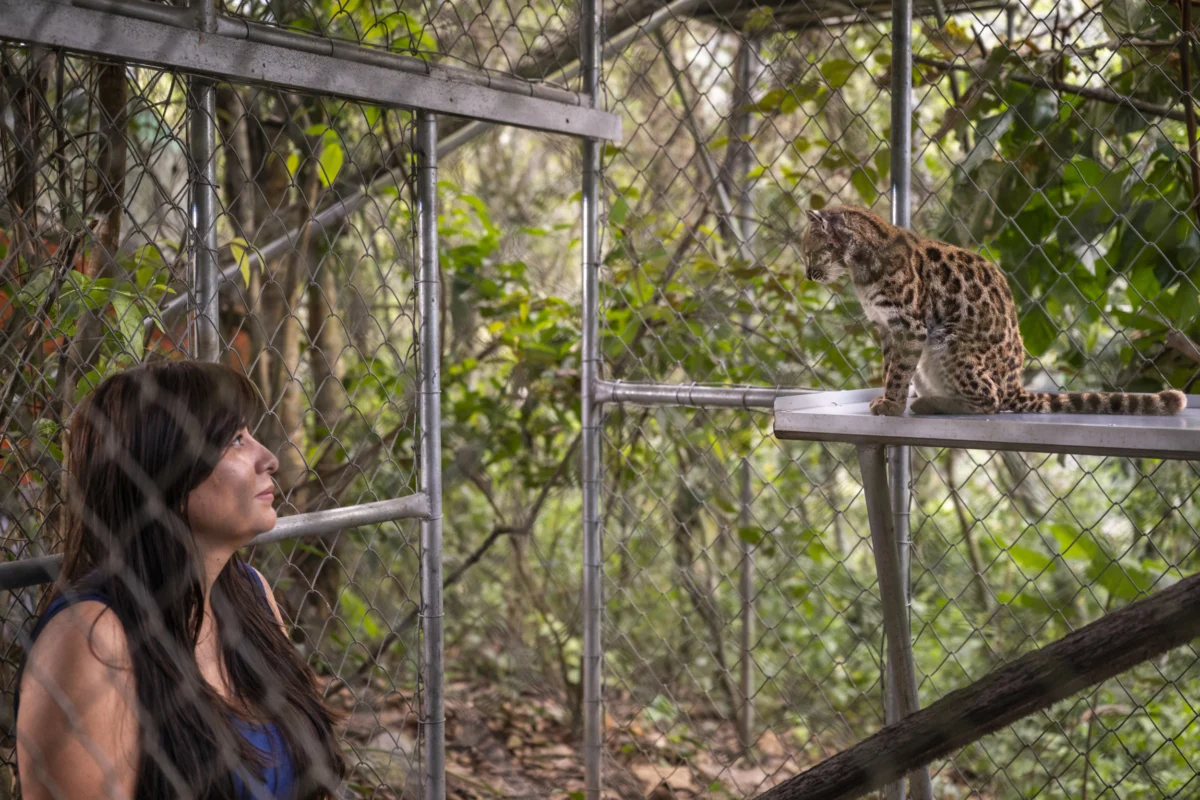
In a landmark discovery that has reshaped the taxonomy of South American felids, researchers have officially identified a new species of tiger cat, the tilcayo (Leopardus tilcayo). This finding, published in the journal Current Biology, marks the first time a new living cat species has been formally described in more than a century. The discovery provides a profound look into the hidden biodiversity of Bolivia’s Yungas cloud forests, a region known for its ecological complexity and high levels of endemism.
The Taxonomic Breakthrough
For decades, the scientific community categorized small, spotted felines across South America under the broad umbrella of Leopardus tigrinus, commonly referred to as the tiger cat. This “lumping” approach often masked significant genetic and physical variations between populations inhabiting disparate ecosystems, from the dry scrublands of Brazil to the dense, high-altitude cloud forests of the Andes.
The recent study, which involved an extensive genetic audit of the Leopardus genus, successfully unwound this complex web of classification. By analyzing mitochondrial DNA and genomic samples, researchers confirmed that what was previously considered a single, wide-ranging species is, in fact, a collection of at least four distinct lineages. Among these, the tilcayo stands out as a unique evolutionary branch, having diverged from its closest relatives approximately 1.4 million years ago. To put this timeline in perspective, this evolutionary separation predates the divergence between modern humans and Neanderthals by several hundred thousand years.
A Journey from Domestic Pet to Scientific Discovery
The story of the tilcayo’s identification is as much a testament to the importance of community science as it is to formal genetic research. In 2017, a Bolivian family living near the Yungas region arrived at the Senda Verde Wildlife Sanctuary with an animal they had raised since it was a kitten. The family had originally rescued the feline, assuming it was a domestic house cat that had been abandoned.

However, as the animal matured, its behavior and physical characteristics began to diverge sharply from those of a typical pet. The creature exhibited intense predatory instincts, eventually moving from simple curiosity to actively stalking the family’s chickens. Recognizing that the animal was clearly a wild predator, the family sought professional assistance.
Paola Nogales-Ascarrunz, a National Geographic explorer and researcher at the Universidad Mayor de San Andrés in La Paz, led the effort to classify the animal. When Nogales-Ascarrunz and her team examined the individual—now known as "Tigrino"—and compared its genetic markers with existing data, they were stunned. The DNA did not match any known species. The researchers subsequently analyzed a hair sample from a second individual that had been rehabilitated and released back into the wild. Both samples confirmed that the tilcayo represents a previously unrecognized lineage, formally cementing its status as a distinct species in the global catalog of life.
Physical Characteristics and Ecological Niche
The tilcayo is a compact, elusive feline, perfectly adapted to the rugged, misty terrain of the Yungas. Weighing approximately 1.4 kilograms (roughly 3 pounds), the cat is smaller than the average domestic feline. Its morphology is marked by a slender, agile body, rounded ears that help it navigate the dense undergrowth, and a coat adorned with large, distinct spots.
Its habitat, the cloud forests of the Andes, is one of the most fragile and biodiverse environments on the planet. These forests serve as a "sky island" ecosystem, where high moisture levels and altitude create a unique microclimate. The tilcayo’s evolution in isolation within these mountains likely contributed to its distinct genetic profile, as the mountainous terrain acted as a natural barrier to gene flow with other tiger cat populations.
Historical Context of Felid Discovery
The discovery of Leopardus tilcayo is a significant milestone in mammalogy. The last time a new living cat species was described was in 1923, with the classification of the Uruguayan pampas cat (Leopardus fasciatus). The century-long gap highlights the immense difficulty of identifying new species within the Felidae family, a group that is notoriously well-studied yet surprisingly full of hidden mysteries.

Recent trends in biology have seen an increase in the number of recognized species due to advances in genomic sequencing. Technologies that allow researchers to look beyond physical traits—which can be deceivingly similar—have enabled a "taxonomic reshuffling." This process has frequently resulted in subspecies being elevated to full species status or, conversely, in the splitting of species that were previously incorrectly lumped together. While the tilcayo represents a more traditional discovery of a previously undocumented species, it sits within a broader movement to refine the tree of life using molecular data.
Implications for Conservation and Biodiversity
The formal recognition of the tilcayo carries immediate implications for conservation policy in Bolivia. Now that the species is officially identified, local and international conservation organizations can prioritize the protection of its habitat. The Yungas region is currently under pressure from agricultural expansion, deforestation, and climate-induced shifts in cloud cover.
"I have the honor of naming a cat, and that is a really big thing," said Nogales-Ascarrunz. By adopting the name "tilcayo," which reflects the traditional knowledge held by the local inhabitants of the region, the scientific team has sought to bridge the gap between indigenous heritage and modern biological science. This naming convention acknowledges that local communities have long recognized the presence of a distinct feline, even if the formal scientific world had yet to catch up.
The fact that the only known captive individual of this species is currently residing at the Senda Verde Wildlife Sanctuary underscores the urgent need for further field studies. Researchers are now looking to determine the current population density of the tilcayo, its home range, and its specific dietary requirements. Because it is a top-level predator—albeit a small one—its presence is a critical indicator of the health of the entire Yungas forest ecosystem.
Future Research Directions
The identification of Leopardus tilcayo serves as a powerful reminder of how much remains to be discovered within the world’s remaining wildernesses. The researchers involved in the study emphasize that this is only the beginning. Future efforts will focus on:

- Field Surveys: Using camera traps and non-invasive DNA sampling (such as scat analysis) to estimate the population size of the tilcayo in the wild.
- Threat Assessment: Evaluating the impact of human encroachment and habitat fragmentation on the species’ long-term viability.
- Regional Cooperation: Working with neighboring countries to determine if the species’ range extends beyond the borders of Bolivia, which would require cross-border conservation agreements.
The discovery has also prompted a renewed interest in the "tiger cat" complex. Scientists now suspect that there may be other, as-yet-undescribed species lurking within the forests of South America. The case of the tilcayo provides a template for future research: combining traditional community knowledge with state-of-the-art genomic analysis to solve long-standing biological puzzles.
As the scientific community celebrates this addition to the list of Earth’s creatures, the primary focus remains on ensuring that this newly "found" species does not disappear before it is fully understood. The tilcayo is a symbol of the resilience of nature in one of the world’s most complex environments, and its story is a poignant reminder that even in the 21st century, the natural world still holds the capacity to surprise and humble us. The work of Nogales-Ascarrunz and her colleagues in the Yungas will continue to serve as a cornerstone for future biodiversity studies, ensuring that the legacy of the tilcayo is one of protection and scientific enlightenment rather than lost opportunity.