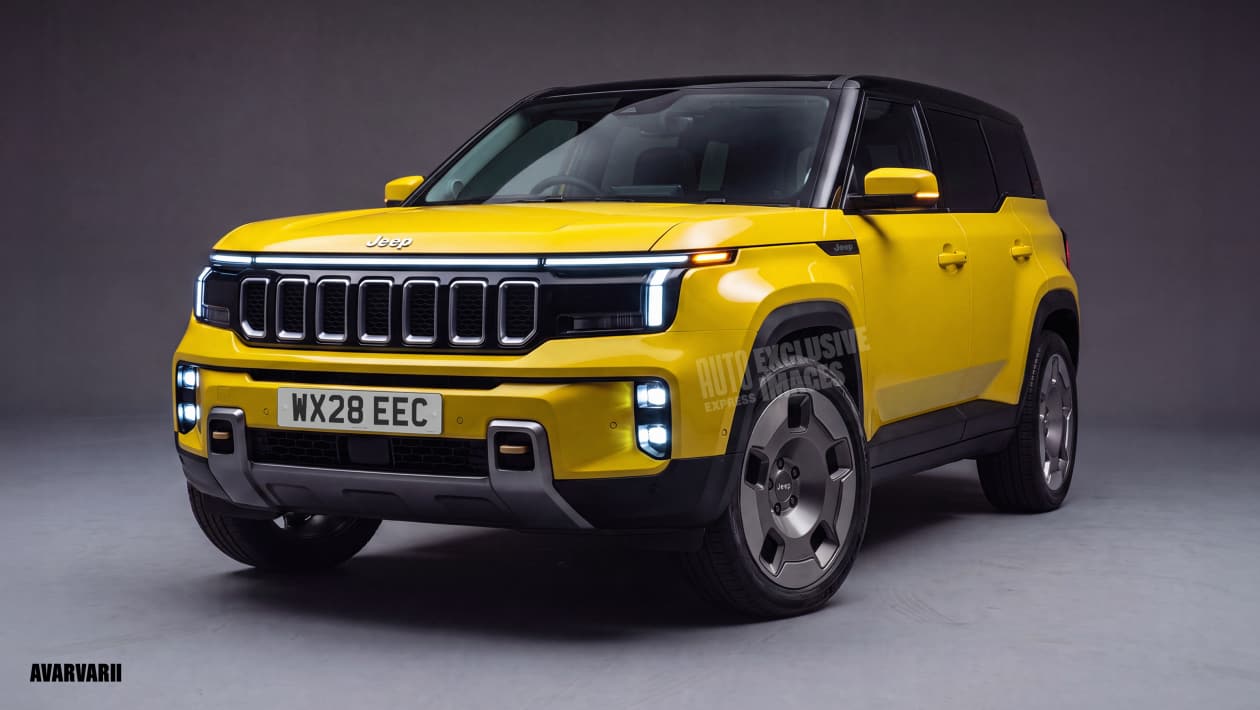
Jeep has officially unveiled a comprehensive strategic masterplan aimed at revitalizing its sales performance across European markets, anchored by a new flagship D-segment SUV designed to challenge the dominance of the Land Rover Defender. This upcoming model, which remains unnamed at this stage, represents a significant shift in Jeep’s operational philosophy, prioritizing the specific demands of European consumers while leveraging international manufacturing synergies. By combining iconic American design with the rapid engineering cycles of Chinese automotive giant Dongfeng, Jeep intends to deliver a rugged, family-oriented vehicle that is both high-performing and significantly more affordable than its premium British rivals.
The announcement comes at a critical juncture for Jeep, which is currently navigating a complex transition toward electrification under the broader Stellantis umbrella. The new SUV is expected to arrive in showrooms within the next 24 to 36 months, with a projected launch window between 2027 and 2028. Unlike previous efforts to bring American-market vehicles like the Wagoneer-S and the Recon to Europe—projects that were ultimately shelved due to prohibitive shipping and type-approval costs—this new model is being developed from the ground up as a "global-local" product.
Strategic Partnership: The Dongfeng Connection
Central to Jeep’s new European offensive is a joint venture with Dongfeng, one of China’s "Big Four" state-owned automobile manufacturers. This partnership is designed to address one of the traditional Western automotive industry’s greatest hurdles: development speed. By utilizing Dongfeng’s established manufacturing infrastructure and supply chains, Jeep aims to compress the typical five-to-seven-year development cycle for a new vehicle into a mere two to three years.
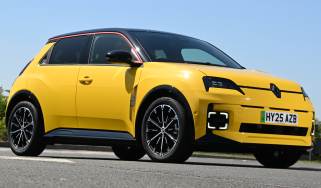
This approach mirrors recent moves by other European manufacturers, such as Renault’s collaboration on the new Twingo, to remain competitive against a wave of low-cost, high-tech Chinese imports. However, Jeep leadership is quick to dismiss concerns that the brand’s identity might be diluted by Chinese engineering. Fabio Carlo, a key figure in Jeep’s global project management, emphasized that while the manufacturing scale of Dongfeng is being utilized, the vehicle’s soul remains American.
"This is a global Jeep project for this vehicle that will be sold in China and in other regions, Europe included. It is a vehicle fully designed by Jeep," Carlo stated. He further noted that the brand maintains four design centers worldwide, including a major facility in Europe, to ensure that the aesthetic and functional requirements of the brand are upheld. Technical features, particularly those related to off-road capability and chassis dynamics, are being developed specifically by Jeep engineers to "protect the identity of the vehicle."

Bridging the Gap: Hybrid and Electric Powertrains
While technical specifications remain under wraps, the new SUV will feature a diverse array of powertrains, including full Battery Electric Vehicle (BEV) options and sophisticated hybrid setups. Industry analysts suggest that the hybrid variants will likely employ a range-extender (EREV) configuration, a technology that has seen explosive growth in the Chinese market.
In an EREV system, a small internal combustion engine acts as a generator to charge the battery while on the move, rather than driving the wheels directly. This setup offers the smooth torque delivery of an electric motor—essential for off-road crawling—while eliminating the range anxiety associated with pure BEVs, especially for owners who intend to use the vehicle for long-distance family expeditions or rural adventures.
A non-negotiable aspect of the new SUV’s development is its off-road prowess. Jeep’s reputation is built on the "Trail Rated" philosophy, and the company is working to ensure that the Dongfeng-partnered platform can meet these rigorous standards. "Here we are working on something new," Carlo explained. "We have the opportunity to create the car from scratch. So we can implement all of our requirements expected of a Jeep. That’s why we are very, very confident that we will be able to deliver a true Jeep experience."
Design and Market Positioning
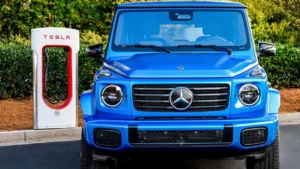
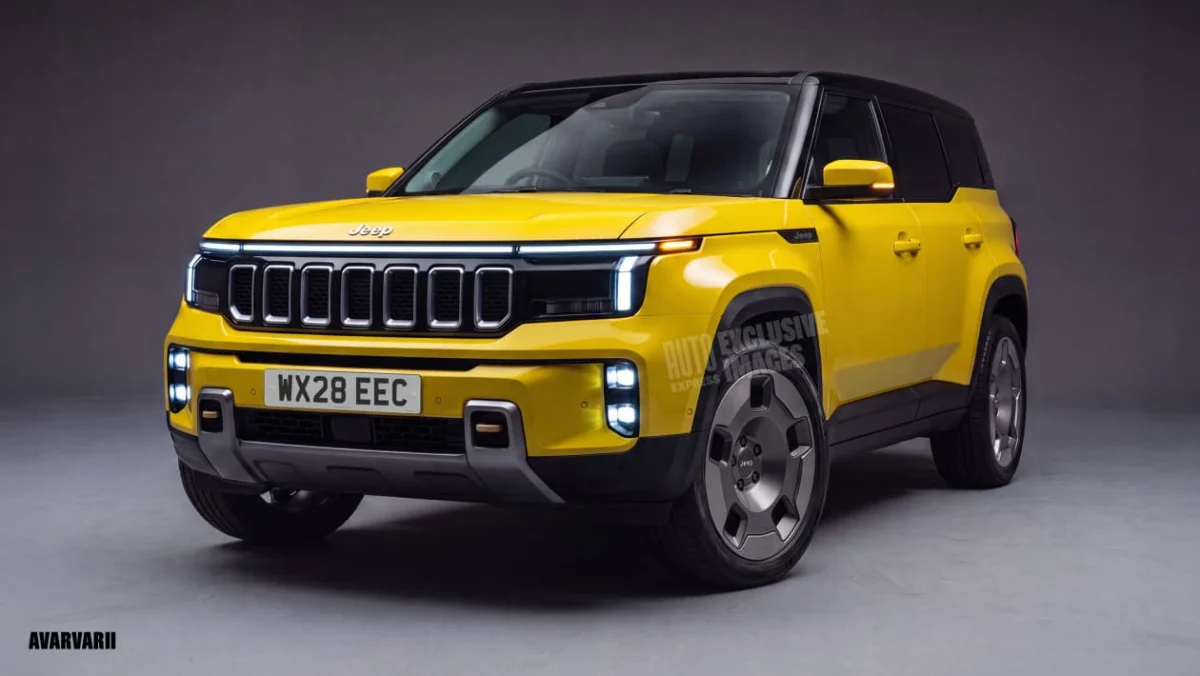
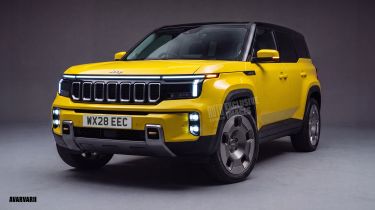
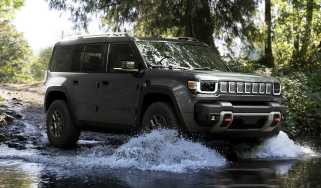
Exclusive early renders of the D-segment SUV reveal a design language that is unapologetically "boxy" and rugged. With an upright stance, aggressive wheel arches, and the signature seven-slot grille, the vehicle is clearly intended to mirror the "presence" of the Land Rover Defender and the Mercedes-Benz G-Class. However, Jeep’s primary advantage will be its price point.
The Land Rover Defender 110 currently commands a premium price, often exceeding £65,000 to £80,000 depending on the specification. In contrast, Jeep is targeting a starting price of less than £50,000 for its new flagship. This aggressive pricing strategy is intended to undercut not only the Defender but also the forthcoming European version of the Ford Bronco, which is expected to occupy a similar niche of "lifestyle-rugged" SUVs.
The decision to develop this bespoke model for Europe follows the realization that US-built models like the Jeep Recon and Wagoneer-S would simply be too expensive for the UK and European markets once logistics and local taxes were applied. By localized production and utilizing the Dongfeng partnership, Jeep can bypass these costs, offering a vehicle that is "cut-priced" in comparison to its luxury rivals but "premium" in its capability.
Chronology of Development and Future Rollout
The timeline for Jeep’s European expansion is ambitious. The brand’s "Masterplan for Europe" includes three all-new models to be launched by 2030.
- 2024-2025: Finalization of the Dongfeng joint venture and commencement of the prototype testing phase for the D-segment SUV.
- 2026: Official unveiling of the production-ready model and naming ceremony.
- 2027-2028: Market launch of the hybrid and BEV variants in Europe and the UK.
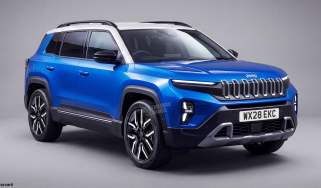
- 2028-2030: Introduction of two additional models, including a smaller B-segment SUV designed to compete with the Ford Puma and an updated mid-sized crossover.
This rapid-fire release schedule is part of Stellantis’s broader "Dare Forward 2030" strategy, which aims for 100% of its passenger car sales in Europe to be battery-electric by the end of the decade.
Implications for the European SUV Market
The entry of a rugged, sub-£50,000 Jeep SUV could significantly disrupt the current market hierarchy. For years, Land Rover has enjoyed a near-monopoly on the "premium-rugged" family segment in Europe. While the Defender has been a massive commercial success, its upward movement in price has left a vacuum in the market for buyers who want the aesthetic and capability of a 4×4 without the luxury-tax price tag.
Furthermore, the involvement of Dongfeng highlights a growing trend of "co-opetition" in the automotive world. Western brands are increasingly turning to Chinese partners not just for battery tech, but for entire vehicle platforms. This allows established brands like Jeep to focus on brand-specific attributes—such as interior ergonomics, exterior styling, and off-road tuning—while utilizing the cost-efficient manufacturing and software integration expertise of Chinese firms.
However, Jeep faces a significant challenge in convincing traditionalists that a vehicle developed with Chinese help can truly embody the American spirit of the brand. The company’s emphasis on its four global design centers and the frequent "technical identity" meetings mentioned by Carlo suggests that Jeep is acutely aware of this branding hurdle.
Industry Analysis: The Path Forward
From a factual standpoint, the success of this new model will depend on three factors: price, reliability, and capability. If Jeep can indeed bring a Defender-sized, hybrid-powered SUV to market for under £50,000, it will likely see a surge in interest from "lifestyle" buyers who currently opt for smaller crossovers like the Volvo XC40 or BMW X3 but desire a more adventurous image.
The use of EREV technology could also be a masterstroke. As European infrastructure for pure BEVs remains uneven, a range-extender provides a pragmatic middle ground. It allows for zero-emission city driving—crucial for Europe’s growing number of Low Emission Zones—while providing the unlimited range required for the off-grid use cases that Jeep markets so heavily.
As the automotive industry looks toward 2030, Jeep’s pivot toward a more agile, collaborative, and Europe-centric model represents a necessary evolution. By abandoning the "one-size-fits-all" approach that saw large, thirsty American models fail to gain traction in Europe, and instead embracing a partnership that offers speed and value, Jeep is positioning itself to reclaim its status as the world’s premier SUV brand.
The coming two years will be pivotal as the first test mules of this "Chinese-American" hybrid hit European roads. If they can survive the rigorous testing standards of Jeep’s engineers and the skeptical eyes of European journalists, the Land Rover Defender may finally have a rival that matches its muscle without matching its price.