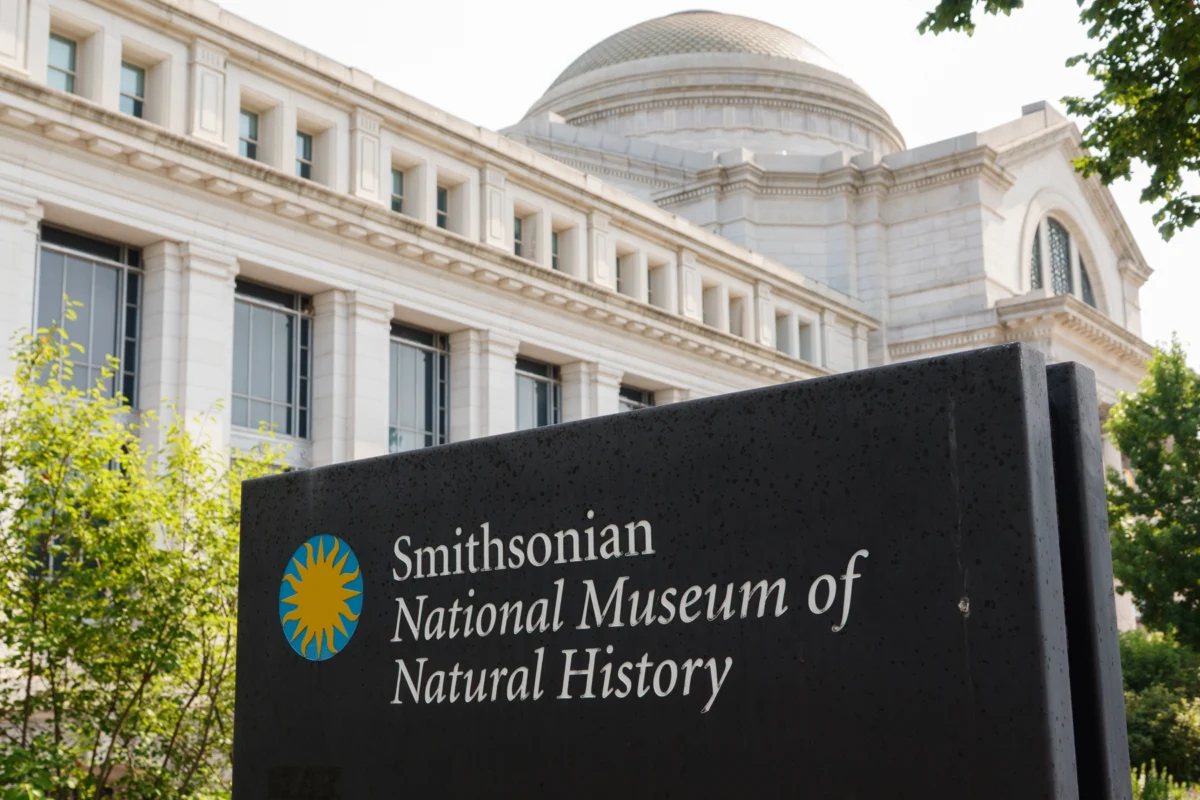
The United States government is set to deploy $84,000 in taxpayer funds toward the installation of large-scale signage at the exterior of the Smithsonian National Museum of American History. This initiative, directed by the current administration, aims to alert visitors to what officials describe as the "ideological biases" inherent in the institution’s current curatorial approach. The move marks a significant escalation in the ongoing tension between the executive branch and the Smithsonian Institution, one of the world’s largest and most venerated museum and research complexes.
The Scope and Cost of the Project
According to documentation obtained by The Atlantic and corroborated by reporting from The New York Times, the Department of the Interior, led by Secretary Doug Burgum, has finalized plans for these physical interventions. The signs are intended to frame the museum’s exhibits not as neutral historical records, but as reflections of the personal viewpoints of the curators. The expenditure, totaling $84,000, covers the design, production, and installation of these displays, which will be positioned in high-traffic areas outside the National Mall landmark.
In correspondence from the Interior Department, officials stated that the signage is intended to "ensure parents bringing young children to the museum are equipped to protect the well-being of their children." The administration’s stated rationale focuses on warning the public about exhibits that address gender identity and biological sex, particularly those that challenge traditional binary frameworks. The signs are expected to explicitly caution visitors regarding materials that discuss topics such as gender non-conformity and the inclusion of transgender individuals in sports, which the administration characterizes as "ideological viewpoints inconsistent with biology."
Chronology of the Executive Intervention
The placement of these signs is the latest development in a multi-year effort by the administration to exert influence over the content presented at federally funded cultural institutions. The trajectory of this conflict can be traced through several key executive actions:
- March 2025: President Trump signed an executive order titled "Restoring Truth and Sanity to American History." This mandate called for a comprehensive review of Smithsonian properties, specifically tasking administrators with the removal of what the order termed "improper ideology."
- July 2026: A follow-up executive order was signed, which formally authorized the installation of "temporary signage" at Smithsonian locations. This order explicitly asserted that the institution had drifted from its mission as a symbol of American excellence toward a "divisive, race-centered ideology."
- September 2026: The Department of the Interior confirmed the specific plans to utilize federal funds for the signage installation, citing the need to provide "context" for visitors regarding what the administration labels as biased historical interpretations.
Contextualizing the Dispute: History and Ideology
The Smithsonian Institution, which oversees nineteen museums, the National Zoo, and nine research facilities, has long operated under a mandate of public service and historical scholarship. The current dispute centers on the shifting methodologies of public history over the last decade.
The administration’s critique of the Smithsonian focuses on two primary areas: the presentation of racial history and the interpretation of gender politics. Regarding racial history, the administration argues that exhibits—particularly those at the National Museum of African American History and Culture—present a version of the past that is overly focused on systemic inequality, thereby portraying Western values as "inherently harmful and oppressive."
Conversely, museum professionals argue that the Smithsonian’s role is to reflect the complexities of the American experience, including chapters of history that involve social conflict, racial injustice, and the evolution of civil rights. The curators maintain that their exhibits are grounded in rigorous academic peer review and historical documentation. The administration’s move to place warning signs outside the building represents a departure from traditional administrative oversight, as it moves the executive branch from a role of oversight and funding to one of direct editorial commentary on museum content.
Supporting Data and Institutional Funding
The Smithsonian Institution is a unique hybrid entity. While it receives a significant portion of its operating budget—approximately $1 billion annually—from federal appropriations, it also relies heavily on private donations, grants, and endowment revenue. The use of $84,000 in federal funds to critique a portion of the institution that the government itself helps to fund has raised questions regarding the administrative precedent being set.
Historically, the Smithsonian’s Board of Regents, which includes the Chief Justice of the Supreme Court and members of the U.S. Congress, has served as the primary governing body to address concerns regarding the institution’s mission. The current administration’s decision to bypass traditional oversight channels in favor of external signage suggests a new, more aggressive approach to the federal government’s relationship with cultural institutions.
Official Responses and Academic Perspectives
The Smithsonian has largely maintained a policy of defending its scholarly independence. While the institution has not issued a formal rebuttal to the specific $84,000 expenditure, past statements from museum leadership have emphasized the commitment to "inclusive, accurate, and multifaceted" history.
External observers, including museum historians and civil liberties advocates, have expressed concerns that the signage could undermine the credibility of the museum as a neutral arbiter of history. "When a government begins to label the scholarly work of a national institution as ‘biased’ through physical signage, it creates a precedent where public history is treated as a political tool," says one historian familiar with the museum’s governance.
Conversely, proponents of the administration’s action argue that the signs provide necessary transparency. They assert that the public has a right to know the ideological leanings of those who curate the nation’s cultural narrative, particularly when those narratives diverge from traditionalist interpretations of American history.
Broader Implications for Cultural Institutions
The move to install signage at the Smithsonian is part of a larger, ongoing "culture war" that has increasingly targeted public-facing entities such as libraries, schools, and museums. By turning the museum into a battleground for ideological grievances, the administration is effectively changing the nature of the tourist experience in the nation’s capital.
If the signage is installed as planned, it will likely serve as a permanent marker of the administration’s skepticism toward academic institutions. The long-term impact on the Smithsonian’s attendance, public perception, and internal morale remains to be seen. However, the move signals that the administration intends to prioritize its interpretation of history and culture, ensuring that its perspective is visible to every visitor who walks through the museum doors.
As the installation date approaches, the situation highlights a profound shift in how the federal government interacts with its own historical archives. Whether these signs will serve as a lasting legacy of the current administration’s influence or be viewed as an anomaly in the history of the Smithsonian remains a subject of intense debate among policymakers, historians, and the public. Regardless of the outcome, the $84,000 expenditure serves as a tangible metric of the current administration’s commitment to challenging the perceived cultural hegemony of the nation’s most established historical institutions.