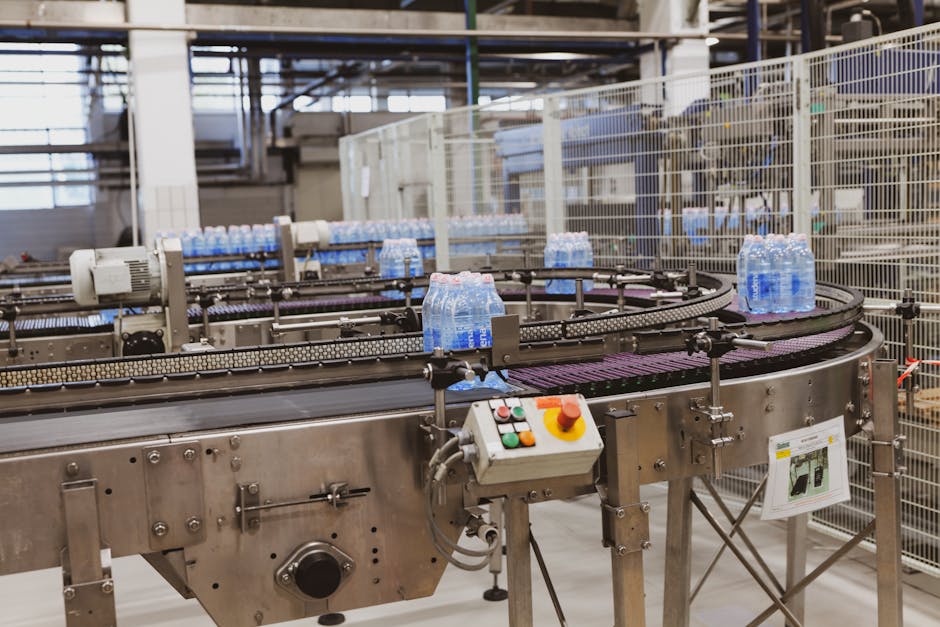
Revolutionizing Food Production: Industry 4.0 and the Future of Food
The food industry, a cornerstone of global economies and human well-being, is undergoing a profound transformation driven by the principles of Industry 4.0. This paradigm shift, characterized by the integration of digital technologies, automation, and data-driven decision-making, is fundamentally reshaping every facet of the food value chain, from farm to fork. Industry 4.0 in food production encompasses a suite of interconnected technologies, including the Internet of Things (IoT), artificial intelligence (AI), machine learning (ML), big data analytics, cloud computing, robotics, and advanced manufacturing techniques. These innovations are not merely incremental improvements; they represent a paradigm leap, promising enhanced efficiency, unparalleled quality control, improved sustainability, greater traceability, and the development of novel food products and business models. The core objective is to create intelligent, adaptive, and responsive food systems capable of meeting the escalating demands of a growing global population while addressing critical challenges such as food security, resource scarcity, and environmental impact. This article will delve into the key components of Industry 4.0 as applied to the food industry, explore its manifold benefits, examine the challenges to its widespread adoption, and forecast its future trajectory.
At the heart of Industry 4.0 in food is the pervasive application of the Internet of Things (IoT). IoT sensors, embedded across the entire food production ecosystem, collect real-time data on critical parameters. In agriculture, these sensors monitor soil moisture, temperature, nutrient levels, and weather patterns, enabling precision farming practices. Drones equipped with multispectral cameras provide aerial insights into crop health, detecting early signs of disease or stress. In livestock farming, wearable sensors on animals track vital signs, activity levels, and feeding patterns, facilitating proactive health management and optimizing animal welfare. In processing plants, IoT devices monitor equipment performance, product temperature, humidity, and ingredient flow, ensuring adherence to stringent quality and safety standards. Refrigeration units, transport vehicles, and warehousing facilities are all outfitted with sensors to maintain optimal conditions and prevent spoilage, thus minimizing food waste. The sheer volume of data generated by these interconnected devices is then leveraged by other Industry 4.0 technologies to unlock actionable insights. This real-time data flow is the lifeblood of smart food production, enabling immediate interventions and predictive maintenance, thereby preventing costly downtime and product loss. The interconnectivity fostered by IoT creates a transparent and auditable trail of data from origin to consumption.
Artificial intelligence (AI) and machine learning (ML) are the intelligent engines powering Industry 4.0 in the food sector. AI algorithms analyze the vast datasets generated by IoT devices to identify patterns, predict outcomes, and automate complex decision-making processes. In precision agriculture, ML models predict optimal planting and harvesting times, forecast crop yields, and recommend tailored fertilization and irrigation strategies based on historical data and real-time conditions. This not only maximizes output but also minimizes the use of resources like water and fertilizers, contributing to environmental sustainability. In food processing, AI-powered vision systems perform automated quality inspections, identifying defects in produce, detecting foreign contaminants, and ensuring consistent product appearance with greater accuracy and speed than human inspectors. ML algorithms can optimize processing parameters, such as cooking temperatures and times, to achieve desired textures, flavors, and nutritional profiles while minimizing energy consumption. Predictive maintenance, a key application of AI/ML, analyzes sensor data from machinery to anticipate potential failures, allowing for scheduled repairs before breakdowns occur, thereby preventing production disruptions. Furthermore, AI is being used to develop new food formulations, predict consumer preferences, and personalize product offerings based on dietary needs and taste profiles. The ability of AI to learn and adapt over time makes it an indispensable tool for continuous improvement within the food industry.
Big data analytics plays a crucial role in transforming raw data into valuable intelligence. The food industry generates enormous volumes of data from a multitude of sources, including sensor networks, enterprise resource planning (ERP) systems, customer relationship management (CRM) software, and market research reports. Big data analytics platforms enable the processing and analysis of these complex datasets, revealing hidden correlations and trends. This intelligence can inform strategic decisions across the entire value chain. For instance, analyzing sales data alongside production data can optimize inventory management, reducing overstocking and stockouts. Understanding consumer purchasing patterns can inform product development and marketing strategies. Analyzing supply chain data can identify bottlenecks, inefficiencies, and potential risks, leading to improved logistics and resilience. The ability to analyze data in near real-time allows for agile responses to market fluctuations and unexpected events. Furthermore, big data analytics is instrumental in ensuring food safety by tracing the origin of ingredients, monitoring processing conditions, and identifying potential contamination points rapidly in the event of a recall.
Cloud computing provides the scalable and flexible infrastructure necessary to store, process, and manage the massive amounts of data generated by Industry 4.0 food systems. Cloud platforms offer on-demand access to computing power, storage, and analytical tools, eliminating the need for significant upfront investment in on-premises hardware. This democratizes access to advanced technologies for businesses of all sizes. For smaller farms and food businesses, cloud-based solutions provide access to sophisticated analytics and automation tools that were previously only accessible to large corporations. The cloud also facilitates collaboration and data sharing among stakeholders across the food supply chain, from farmers and processors to distributors and retailers. This enhanced transparency and communication are vital for building trust and improving overall system efficiency. Moreover, cloud platforms enable secure data storage and remote access, allowing for continuous monitoring and management of operations from anywhere in the world, which is particularly beneficial for global food businesses.
Robotics and automation are transforming physical tasks within the food industry. Collaborative robots (cobots), designed to work alongside human operators, are increasingly being deployed in tasks such as packaging, sorting, and assembly. Automated guided vehicles (AGVs) and autonomous mobile robots (AMRs) are revolutionizing logistics within processing plants and warehouses, transporting raw materials and finished goods efficiently and safely. Robotic arms equipped with advanced sensors and grippers can perform delicate tasks like fruit picking or intricate food assembly with precision and consistency. In slaughterhouses, robotic systems are improving hygiene and worker safety by automating repetitive and hazardous tasks. The adoption of robotics not only increases throughput and reduces labor costs but also enhances product consistency and minimizes the risk of human error, particularly in high-volume production environments. The ongoing development of more sophisticated AI and sensor technology is enabling robots to perform increasingly complex and nuanced tasks.
The benefits of Industry 4.0 in the food industry are far-reaching and transformative. Enhanced Efficiency and Productivity are primary drivers. Precision agriculture, optimized processing, and automated logistics lead to higher yields, reduced waste, and faster production cycles. Improved Food Safety and Quality Control are significantly bolstered through real-time monitoring, AI-powered inspections, and enhanced traceability, minimizing the risk of contamination and ensuring consistent product quality. Sustainability and Resource Optimization are achieved through reduced water and energy consumption, minimized fertilizer and pesticide use, and decreased food waste. Greater Traceability and Transparency from farm to fork builds consumer trust and facilitates rapid response to any potential issues. Personalized Nutrition and Product Development are enabled by data analytics and AI, allowing for the creation of tailored food options and innovative new products. Reduced Operational Costs through automation, predictive maintenance, and optimized resource allocation contribute to improved profitability. Increased Resilience and Agility in the face of disruptions, such as climate change or global supply chain challenges, is a critical advantage.
Despite the compelling advantages, the widespread adoption of Industry 4.0 in the food industry faces several challenges. High Initial Investment Costs for advanced technologies can be a significant barrier, particularly for small and medium-sized enterprises (SMEs) and farmers in developing regions. Lack of Digital Skills and Workforce Training necessitates significant investment in upskilling and reskilling the existing workforce to operate and maintain these new technologies. Data Security and Privacy Concerns are paramount, given the sensitive nature of food production data. Robust cybersecurity measures are essential to protect against breaches. Interoperability and Standardization issues can arise, where different systems and technologies struggle to communicate with each other, hindering seamless integration. Regulatory Hurdles and Ethical Considerations related to AI in decision-making, data ownership, and potential job displacement need careful consideration and proactive policy development. Resistance to Change from traditional practices and mindsets can also impede adoption.
The future trajectory of Industry 4.0 in the food industry is one of continued innovation and deeper integration. We can anticipate further advancements in AI for predictive food spoilage detection, personalized dietary recommendations delivered through smart devices, and autonomous farming operations. The integration of blockchain technology will further enhance traceability and transparency, creating immutable records of the food supply chain. The development of bio-based sensors and advanced materials will lead to even more sophisticated monitoring capabilities. Vertical farming and controlled environment agriculture, heavily reliant on Industry 4.0 technologies, will play an increasingly important role in urban food production and ensuring food security in challenging environments. The focus will shift towards creating truly autonomous and self-optimizing food systems, where AI and robotics manage entire production processes with minimal human intervention. Collaboration and data sharing across the entire food ecosystem will become more sophisticated, fostering a truly connected and intelligent global food network. The ongoing evolution of Industry 4.0 promises to not only revolutionize how we produce food but also fundamentally reshape our relationship with it, leading to a more sustainable, secure, and nutritious future for all. The ongoing integration of these advanced technologies will undoubtedly address the growing complexities of global food systems, ensuring a more resilient and efficient future.
