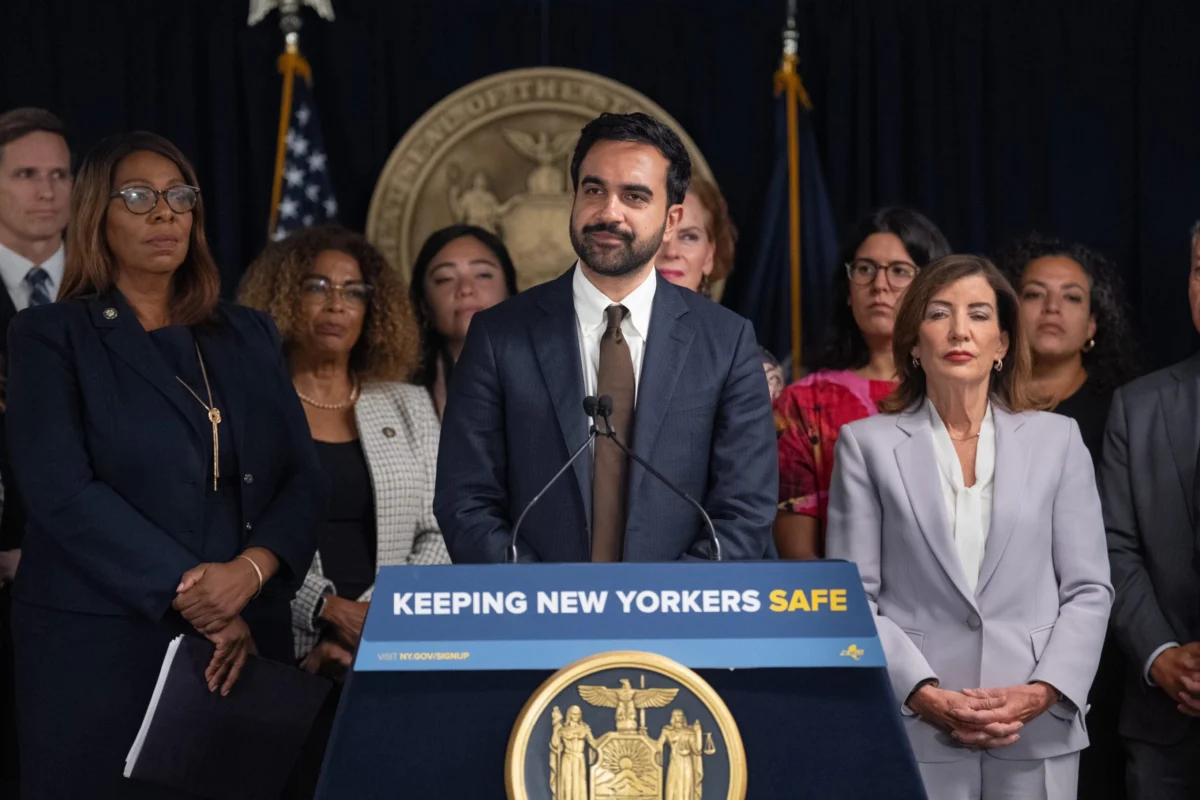
A Staten Island Supreme Court judge has issued a significant legal rebuke to the administration of Mayor Zohran Mamdani, ordering a halt to the implementation of the city’s controversial pied-a-terre tax. In a decision handed down on Tuesday, Justice Wayne Ozzi ruled that the city’s Department of Finance failed to meet its statutory obligations in how it identified and notified property owners potentially subject to the new surcharge. While the ruling does not declare the underlying tax legislation unconstitutional, it effectively nullifies the current enforcement process, forcing the city to scrap its existing notification notices and restart the determination process from the ground up.
The ruling represents a major setback for Mayor Mamdani, who staked a significant portion of his administration’s fiscal agenda on the revenue generated by this tax. The city had projected an annual intake of at least $500 million from the surcharge, funds intended to bolster public school budgets, infrastructure maintenance, and municipal parks. Following the judge’s order, the administration announced its intent to file for an automatic stay of the injunction, signaling a protracted legal battle ahead.
A Chronology of the Pied-a-Terre Tax
The legislative journey of the pied-a-terre tax has been marked by political volatility and rapid-fire legal challenges. The tax, which officially took effect on July 1, targets residential properties that are not the owner’s primary residence. The thresholds for the surcharge are set at $5 million for one-, two-, and three-family homes, and $1 million for condos and co-ops.
The administrative rollout began in earnest throughout July, when the city issued approximately 17,000 notices to property owners flagging them as potentially liable for the tax. However, the process was immediately marred by widespread complaints from residents, including high-profile New Yorkers, who claimed they were incorrectly identified as non-residents. Critics noted that the city’s initial methodology relied on broad sweeps of public property records rather than individual audits, leading to the misclassification of thousands of primary homeowners. By August, the administration was forced to acknowledge that its initial filtering process had bypassed critical reviews of income tax filings—a step that might have verified residency status more accurately before the warning letters were mailed.
The Legal Basis of the Challenge
The lawsuit resulting in Tuesday’s injunction was spearheaded by Randy Mastro, the former deputy mayor under the previous administration and a frequent legal adversary to the current city leadership. Mastro’s suit specifically challenged the methodology employed by the Department of Finance. The legal complaint rested on three primary pillars:
- Failure to Perform Individual Determinations: The plaintiffs argued that the enabling legislation required the city to perform a rigorous, individualized review for every property before sending a notice of liability. The city’s failure to do so, according to the court, violated the procedural requirements of the law.
- Improper Burden of Proof: The lawsuit contended that the city effectively reversed the burden of proof, forcing homeowners to demonstrate they were not subject to the tax rather than the city justifying its initial assessment.
- Privacy and Data Transparency: The plaintiffs also challenged the legality of the city’s decision to publish an online database containing the names and addresses of over 900,000 property owners, arguing that this database exceeded the scope of the administrative powers granted by the legislature.
Justice Ozzi’s ruling validated these concerns, noting that the city must conduct a thorough, fact-based investigation into each property owner’s status before issuing any formal demands for payment.
Official Responses and the Stance of the Administration
The response from City Hall was swift and defiant. Matt Rauschenbach, a spokesperson for Mayor Mamdani, characterized the court’s decision as an impediment to fiscal fairness. In a statement released shortly after the ruling, Rauschenbach framed the tax as an essential tool for social equity. “The pied-a-terre surcharge is about a basic principle of fairness: If you can afford a luxury second home in New York City, you can afford to pay your fair share for the schools, streets, and parks that make this city work,” he said. “Today’s decision is wrong, and we will invoke a stay of the injunction.”
The administration remains steadfast in its ideological commitment to the policy. “New York is a city for the many—not a tax haven for the wealthy few,” Rauschenbach added, asserting that the administration would continue to fight in court to ensure the policy is fully implemented.
Governor Kathy Hochul’s office also weighed in, maintaining a supportive stance toward the principle of the tax, even while distancing the state government from the specific administrative failures at the city level. “While this lawsuit about the administration of the tax is a matter for the city and the courts to work through, the governor continues to believe that people who can afford a multimillion-dollar second home in New York City can afford to pay their fair share,” said Jen Goodman, the governor’s director of rapid response.
Broader Implications and Concurrent Litigation
The legal landscape surrounding the tax is becoming increasingly crowded. While Mastro’s successful challenge focused on the administrative "how-to" of the tax, other lawsuits are attacking the fundamental legality of the surcharge. Former U.S. Commerce Secretary Wilbur Ross, along with his wife, Hilary Geary Ross, and real estate and casino developer Steve Wynn, have launched a separate challenge in state court. Unlike the Mastro suit, this challenge argues that the tax is unconstitutional because it discriminates against non-residents, potentially violating the Equal Protection Clause and other constitutional safeguards.
For the real estate sector and the city’s tax base, the implications are significant. The uncertainty surrounding the tax’s enforcement has created a period of anxiety for luxury property owners. Market analysts suggest that if the tax is upheld, it could influence real estate investment strategies in New York City, potentially impacting transaction volumes in the high-end residential market. Conversely, if the courts eventually find the tax unconstitutional, the city will face a significant budget shortfall, forcing the administration to identify alternative revenue streams to cover the $500 million annual deficit that the pied-a-terre tax was intended to bridge.
Analyzing the Path Forward
As of Tuesday evening, sources close to City Hall indicated that the administration was preparing to file for an automatic stay of the injunction. If granted, this stay would allow the city to continue the enforcement process while the appeals process plays out in higher courts. However, the legal hurdles are substantial. To win on appeal, the city must prove that its initial, mass-notification approach was not only efficient but legally sound under the specific language of the statute.
For now, the thousands of New Yorkers who received notices in July find themselves in a state of administrative limbo. The court’s order requires the city to effectively "restart" the process, implying that the city must reconcile its database with verified tax records before it can again target owners. Whether the administration can successfully pivot to a more granular, individual-based assessment model—without sacrificing the revenue projections that define its fiscal policy—remains the central question of this ongoing dispute.
The case serves as a reminder of the complex intersection between municipal revenue generation and the procedural due process rights of property owners. As the city prepares its next move, the case of the pied-a-terre tax will likely remain a bellwether for the broader political and economic tensions currently shaping the urban landscape of New York City. The outcome will not only determine the fate of the surcharge but will also establish a precedent for how future tax-related initiatives are administered and contested in one of the world’s most high-stakes real estate markets.