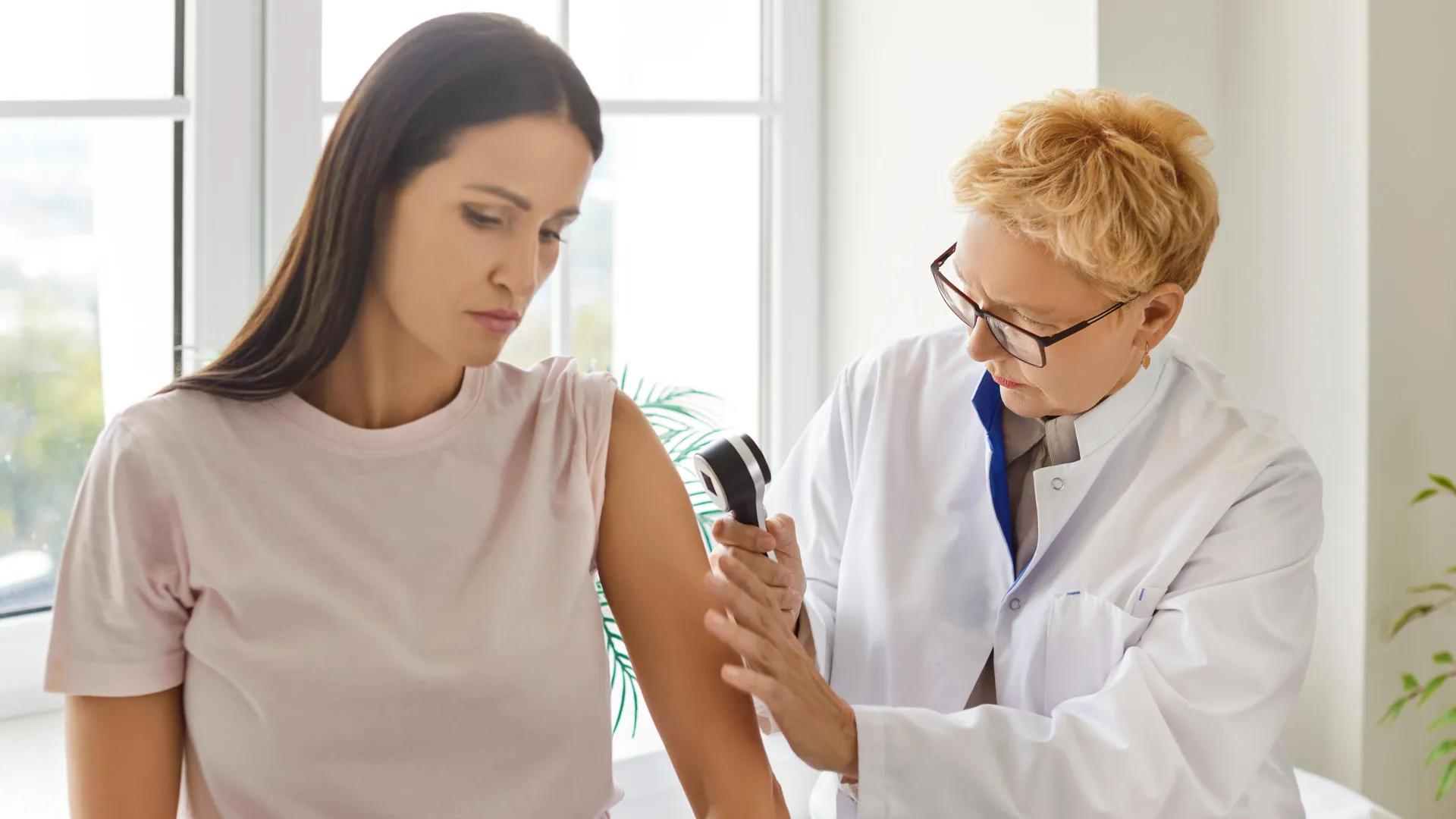
Researchers in Sweden have unveiled a groundbreaking approach to identifying individuals at elevated risk of developing melanoma, the deadliest form of skin cancer. By leveraging the vast trove of information contained within Sweden’s comprehensive national health registries, scientists have demonstrated that existing healthcare data, coupled with advanced artificial intelligence (AI) models, can significantly enhance the accuracy of melanoma risk prediction. This innovative methodology promises to usher in a new era of personalized cancer screening, potentially leading to earlier detection, improved patient outcomes, and more efficient allocation of healthcare resources.
The study, a collaborative effort between the University of Gothenburg and Chalmers University of Technology, analyzed registry data encompassing the entire adult population of Sweden. This ambitious undertaking aimed to explore novel strategies for pinpointing melanoma risk beyond traditional demographic factors. The dataset was exceptionally comprehensive, including granular details on individuals’ age, sex, medical diagnoses, medication history, and socioeconomic status. Over a five-year study period, the researchers meticulously tracked the health trajectories of an astounding 6,036,186 individuals. Within this large cohort, 38,582 individuals, representing 0.64% of the total, were diagnosed with melanoma. This substantial dataset provided a robust foundation for training and validating sophisticated AI algorithms.
Harnessing Existing Data for Enhanced Risk Stratification
The core of this pioneering research lies in the realization that valuable predictive information is already being meticulously collected and stored within existing healthcare systems. Martin Gillstedt, a doctoral student at the University of Gothenburg’s Sahlgrenska Academy and a statistician at Sahlgrenska University Hospital’s Department of Dermatology and Venereology, spearheaded much of the analytical work. He emphasized the immediate applicability of their findings. "Our study shows that data which is already available within healthcare systems can be used to identify individuals at higher risk of melanoma," Gillstedt stated. He further elaborated on the current limitations and future potential of this approach, noting, "This is not a form of decision support that is currently available in routine healthcare, but our results give a clear signal that registry data can be used more strategically in the future." This sentiment underscores a paradigm shift from reactive to proactive healthcare, utilizing readily available data to anticipate and mitigate health risks.
The significance of this research is amplified by the increasing global burden of melanoma. According to the World Health Organization (WHO), skin cancer is the most common form of cancer worldwide, with melanoma accounting for a substantial portion of skin cancer deaths. Early detection remains paramount in improving survival rates, as melanoma caught in its initial stages is highly treatable. However, widespread screening of the entire population is often impractical and resource-intensive. This Swedish study offers a compelling solution by identifying specific subgroups who would benefit most from targeted surveillance.
AI Models Deliver a Leap in Predictive Accuracy
A critical component of the research involved the evaluation of various artificial intelligence models designed to interpret the complex interplay of factors influencing melanoma risk. The researchers found significant variations in the performance of these models, highlighting the importance of sophisticated AI in extracting meaningful patterns from large datasets. The most advanced model achieved an impressive accuracy of approximately 73% in correctly distinguishing between individuals who would later develop melanoma and those who would not. This represents a substantial improvement over simpler predictive methods. For comparison, a model that relied solely on age and sex – commonly used baseline demographic markers – achieved an accuracy of only around 64%.
The true power of the AI models, however, emerged when they incorporated a broader spectrum of data. By integrating information on medical diagnoses, the types of medications individuals were taking, and their sociodemographic characteristics, the AI models were able to identify smaller, more defined groups of individuals at significantly elevated risk. Within these precisely identified high-risk cohorts, the probability of developing melanoma within the five-year study period surged to approximately 33%. This represents a nearly six-fold increase in risk compared to the general population (0.64%), demonstrating the AI’s remarkable ability to stratify risk with unprecedented precision. This level of granularity allows for a more focused and efficient allocation of screening resources.
The ability of AI to process and learn from such diverse data points is a testament to its growing capabilities in the medical field. Machine learning algorithms can identify subtle correlations and patterns that might be imperceptible to human analysis, especially when dealing with millions of data points. This "deep learning" capability is what allows these models to transcend the limitations of traditional statistical approaches and offer a more nuanced understanding of disease risk.
Targeted Screening: A More Efficient Path to Early Detection
The implications of this research extend directly to the realm of clinical practice. Sam Polesie, Associate Professor of Dermatology and Venereology at the University of Gothenburg and a dermatologist at Sahlgrenska University Hospital, led the study. Professor Polesie underscored the potential for targeted screening to revolutionize melanoma detection and resource management. "Our analyses suggest that selective screening of small, high-risk groups could lead to both more accurate monitoring and more efficient use of healthcare resources," Polesie explained. He further articulated the vision for integrating this approach into personalized medicine: "This would involve bringing population data into precision medicine and supplementing clinical assessments."
This vision of "precision medicine" is a cornerstone of modern healthcare, aiming to tailor medical treatment to the individual characteristics of each patient. In the context of melanoma, this means moving away from a one-size-fits-all screening approach and instead focusing on those most likely to benefit. Targeted screening programs can be more effective because they concentrate efforts on individuals with a demonstrably higher risk profile, increasing the likelihood of detecting cancers at their earliest, most treatable stages. Moreover, by avoiding unnecessary screenings for lower-risk individuals, healthcare systems can conserve valuable resources – such as clinician time, diagnostic equipment, and laboratory tests – for those who truly need them. This is particularly relevant in the face of rising healthcare costs and increasing demand for medical services.
A Roadmap Towards Personalized Melanoma Surveillance
While the findings are undeniably promising and represent a significant step forward, the researchers are careful to emphasize that widespread implementation will require further research and policy development. The transition from a research setting to routine clinical practice is a complex process, involving rigorous validation, ethical considerations, and the development of clear guidelines for healthcare providers. "While the findings are promising, the researchers note that additional studies and policy decisions are required before this approach can be used in routine healthcare," the study acknowledges.
However, the potential impact is undeniable. The results strongly suggest that AI, trained on large-scale national registry data, can serve as a powerful tool to support more personalized risk assessments. This can empower clinicians to make more informed decisions about patient management and guide the development of future melanoma screening strategies. The ability to proactively identify individuals at high risk allows for earlier intervention, potentially preventing the progression of melanoma to more advanced and life-threatening stages.
Broader Implications and Future Directions
The success of this Swedish study has far-reaching implications beyond melanoma detection. It provides a compelling proof of concept for leveraging existing health registry data, augmented by AI, to address a wide range of chronic diseases and public health challenges. Many countries maintain extensive health registries, and this research demonstrates a clear pathway for unlocking the predictive power of this data.
Potential future applications of this AI-driven risk stratification approach could include:
- Early identification of individuals at high risk for other cancers: Similar methodologies could be applied to identify those at increased risk for breast, lung, colorectal, and prostate cancers, among others.
- Predicting the risk of chronic diseases: The models could be adapted to forecast the likelihood of developing conditions such as cardiovascular disease, diabetes, or neurodegenerative disorders.
- Optimizing preventative interventions: By identifying high-risk individuals, healthcare systems can implement targeted preventative measures, such as lifestyle counseling, more frequent screenings, or prophylactic treatments.
- Improving drug efficacy and safety: AI could help predict which patients are most likely to respond positively to specific medications or who are at higher risk for adverse drug reactions.
- Enhancing public health surveillance: Large-scale data analysis can provide real-time insights into disease trends and inform public health policy and resource allocation.
The collaboration between the University of Gothenburg and Chalmers University of Technology highlights the interdisciplinary nature of modern scientific advancement, bringing together expertise in medicine, statistics, and artificial intelligence. As AI technology continues to evolve, and as more comprehensive health data becomes available, the potential for personalized and predictive healthcare will only grow. This Swedish study serves as a beacon, illuminating a future where healthcare is not only reactive but also anticipatory, leveraging the power of data and artificial intelligence to safeguard individual and public health. The journey from this research to widespread clinical adoption will undoubtedly involve further scientific inquiry, regulatory review, and thoughtful implementation strategies, but the promise of a more effective, efficient, and personalized approach to melanoma prevention and detection is now closer than ever.