In a strategic pivot that signals a fundamental realignment of Tesla’s manufacturing priorities, Elon Musk announced on Friday that the company will begin phasing out production of the Cybertruck at its Gigafactory Texas facility. The decision, set to take effect around the middle of next year, marks the end of a tumultuous era for the angular, stainless-steel pickup truck that once served as the centerpiece of Tesla’s design-forward aspirations. Musk confirmed that the transition is necessary to reallocate assembly line capacity to increase the output of the Cybercab, the company’s dedicated autonomous vehicle that represents the new core of Tesla’s growth strategy.
The shift arrives at a pivotal juncture for the Austin-based automaker. While Tesla remains the dominant player in the U.S. electric vehicle (EV) market, it faces a landscape transformed by the recent removal of federal EV tax credits under the Trump administration. This policy change, coupled with intensifying competition in the autonomous taxi sector, has compelled Tesla to move away from the niche, high-cost manufacturing of the Cybertruck in favor of a scalable, high-volume model centered on automation and robotics.
A Chronology of the Cybertruck Saga
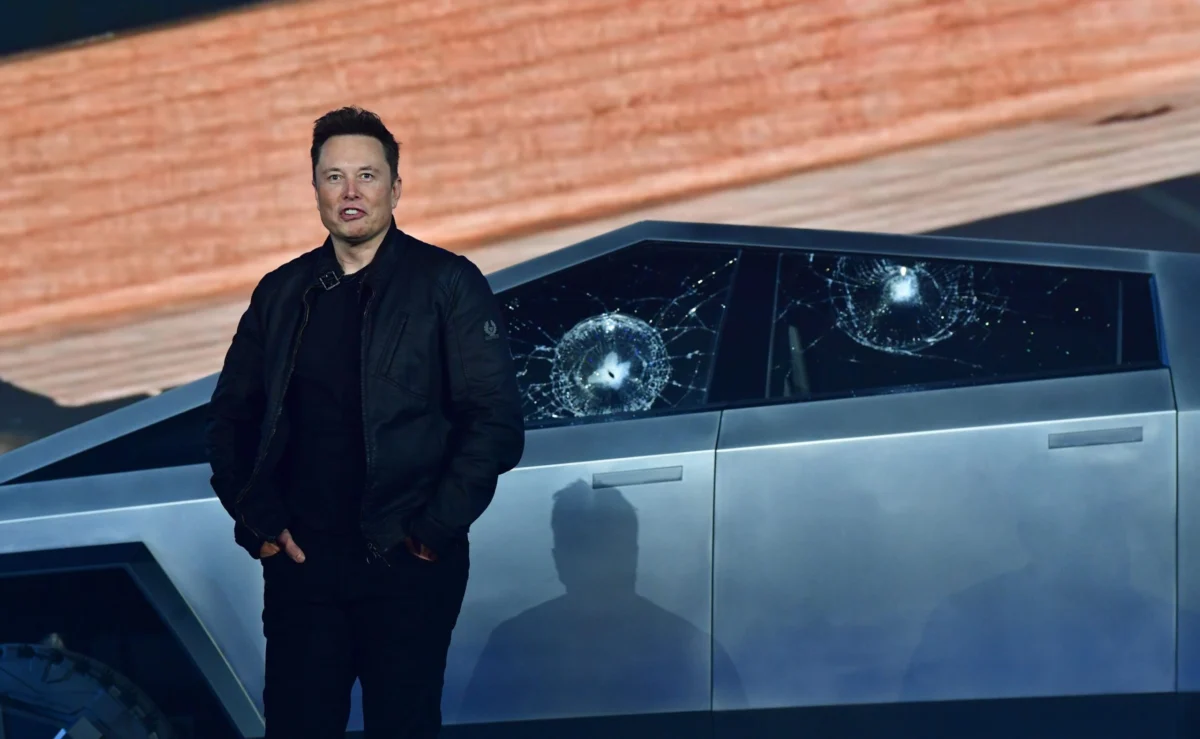
The trajectory of the Cybertruck has been marked by significant spectacle, engineering challenges, and persistent market friction. The vehicle’s journey began in November 2019 at a design studio in Hawthorne, California. During that event, Musk introduced the truck with a theatrical demonstration that went viral for the wrong reasons: the vehicle’s touted "armor glass" shattered during a live test involving a steel ball. Despite this early stumble, Musk remained steadfast in his conviction, calling it the company’s "best product ever" during a subsequent earnings call.
However, the path from prototype to production was plagued by delays. Originally promised for a 2021 launch, the vehicle did not reach the first customers until November 2023. During this interim, the manufacturing process proved significantly more difficult than anticipated due to the truck’s unique stainless-steel exoskeleton and unconventional assembly requirements. The promise of mass-market affordability also vanished; while the 2019 debut teased a starting price of approximately $39,900, the final market reality saw base models priced far higher, severely limiting the vehicle’s appeal to a broader demographic.
The Economics of Declining Sales
Data from industry analysts highlights the growing chasm between Tesla’s production ambitions and consumer demand. According to estimates by Kelley Blue Book and parent company Cox Automotive, the Cybertruck’s momentum stalled shortly after its initial release. Tesla sold approximately 38,965 units in the U.S. in 2024, a figure that plummeted to 20,237 in 2025—a decline of 48%. Projections for the current year, based on first-half sales of just 7,263 units, suggest that the decline is continuing, casting doubt on the long-term commercial viability of the model.
Furthermore, the vehicle has been hampered by a series of operational setbacks, including 11 separate recalls since its launch. These issues, ranging from software glitches to hardware flaws, have exacerbated concerns regarding the truck’s reliability and have likely contributed to the lukewarm reception among mainstream buyers. The decision to discontinue the entry-level Dual Motor AWD trim and raise the starting price to $92,490 effectively turned the Cybertruck into a luxury boutique vehicle, further alienating potential customers who were originally drawn to the brand’s promise of accessible, high-performance EVs.
The Pivot to the Cybercab
With the Cybertruck being sidelined, Tesla is now placing its future entirely on the Cybercab. Unlike the Cybertruck, which was designed as a consumer-owned pickup, the Cybercab is a purpose-built, two-seater vehicle devoid of traditional steering wheels or pedals. It is designed specifically for autonomous ride-hailing services.
The rollout of the Cybercab has been underway since September, when the first vehicles began operating in Austin, Texas. Tesla is currently operating Robotaxi services—using the Model Y—in a network of cities across Texas and Florida, including Houston, Dallas, Fort Worth, Miami, Orlando, and Tampa. This expansion represents a direct challenge to established players in the autonomous space, most notably Alphabet’s Waymo, which currently operates in 15 U.S. cities and reportedly facilitates over 500,000 rides per week.
Regulatory and Market Hurdles
The transition to an autonomous-only model is not without its own significant challenges. The Cybercab is currently under scrutiny by the National Highway Traffic Safety Administration (NHTSA), which launched an investigation in September to determine whether the vehicle’s design meets federal safety standards, particularly given the absence of manual controls. The nature of Tesla’s response to these inquiries remains shielded; in late October, the company submitted its findings to the NHTSA but requested that the documents remain sealed, citing "confidential business information." The regulatory body has yet to rule on this request, and the outcome could have profound implications for the speed and scope of Tesla’s national rollout.
Market analysts suggest that Tesla is entering the autonomous market as a "late-mover." While the company’s data-gathering capabilities through its vast fleet of existing vehicles are unparalleled, it must now compete with entrenched operators who have already built significant consumer trust and operational infrastructure. Investors are currently weighing whether Tesla’s pivot to robotics can compensate for the cooling of the traditional EV market. With federal subsidies gone, the pressure is on for Tesla to prove that its autonomous platform can generate recurring, high-margin revenue that offsets the costs of developing such complex technology.
The Legacy of the Cybertruck
Despite the formal announcement to wind down production, the Cybertruck will remain a fixture on American roads for years to come. In response to a user on X who lamented the end of the "Cybertruck era," Musk acknowledged the situation, stating, "True, but the Cybertruck fleet will be around for a long time."
For existing owners, the cessation of production leaves several questions regarding long-term maintenance and parts availability. While Tesla has not issued a formal service policy, it is standard practice for automotive manufacturers to maintain supply chains for essential components for a defined period following the discontinuation of a model. Nevertheless, the transition marks a stark conclusion to a bold, if flawed, experiment in automotive design.
The Cybertruck was, in many ways, the physical manifestation of Tesla’s identity during the mid-2020s: provocative, uncompromising, and technologically ambitious. Its removal from the production lineup is a pragmatic concession to the realities of a market that has increasingly prioritized utility, affordability, and regulatory compliance over aesthetic disruption. As Tesla retools Gigafactory Texas for the Cybercab, the company is signaling that the era of "disruptive" hardware is being superseded by the era of "disruptive" software and autonomous services.
Ultimately, the failure of the Cybertruck to achieve the mass-market success Musk initially envisioned serves as a case study in the complexities of the modern EV transition. High production costs, a polarizing design, and a shift in consumer demand have effectively closed the chapter on the truck, leaving the company to pin its future on the successful navigation of a crowded, heavily regulated, and technologically demanding autonomous ride-hailing market. Tesla, which did not immediately respond to requests for comment, continues to maintain its status as the nation’s largest EV seller, but the coming years will likely determine if this pivot to autonomy can sustain the growth that the Cybertruck failed to deliver.