The test drive remains the most critical juncture in the automotive acquisition process, serving as the bridge between theoretical interest and financial commitment. For decades, this experience was largely confined to the traditional dealership lot, but the modern landscape has shifted significantly. Today, a substantial portion of the secondary vehicle market operates through private-party transactions, creating two distinct environments for prospective buyers. While the mechanical act of operating the vehicle remains identical, the logistical, legal, and psychological frameworks surrounding the test drive differ fundamentally depending on whether the seller is a corporate entity or an individual.
Data from the Federal Trade Commission (FTC) and various automotive market analysts indicates that approximately one-third of all used-car transactions in the United States occur between private individuals. This "peer-to-peer" market has been bolstered by the rise of digital platforms like Facebook Marketplace and Craigslist, which have replaced traditional newspaper classifieds. Conversely, the dealership model—comprising both franchised new-car dealers and independent used-car lots—continues to dominate the remaining two-thirds of the market, offering a structured, high-volume environment that prioritizes convenience and consumer protection at the cost of higher overhead and sales pressure.
The Dealership Environment: Structure, Liability, and Sales Velocity
Entering a dealership for a test drive is an exercise in professional retail choreography. The business model is designed to minimize friction for the consumer while maximizing the opportunity for the sales staff to convert a "tire kicker" into a "buyer." Dealerships operate with high overhead costs, meaning every minute a car spends on the road without a contract is a minute of depreciation and liability risk.
Logistics and Accessibility
One of the primary advantages of the dealership model is availability. Most dealerships operate six to seven days a week with extended evening hours, allowing consumers to browse and drive vehicles without the need for complex scheduling. Punctual buyers often set appointments to ensure a specific vehicle is fueled and cleaned, but "walk-ins" are a staple of the industry.
Before a key is ever handed over, a dealership will invariably require a valid driver’s license. In the modern era, this is not merely for identification; the license is scanned into a Customer Relationship Management (CRM) system. This serves three purposes: it verifies the legal right to drive, it provides the dealership’s insurance carrier with a record of who was operating the asset, and it creates a digital profile that allows the sales team to follow up with the customer. While reputable dealers do not run credit checks for a simple test drive, the data collection is the "price of admission" for the experience.
The Chaperoned Experience
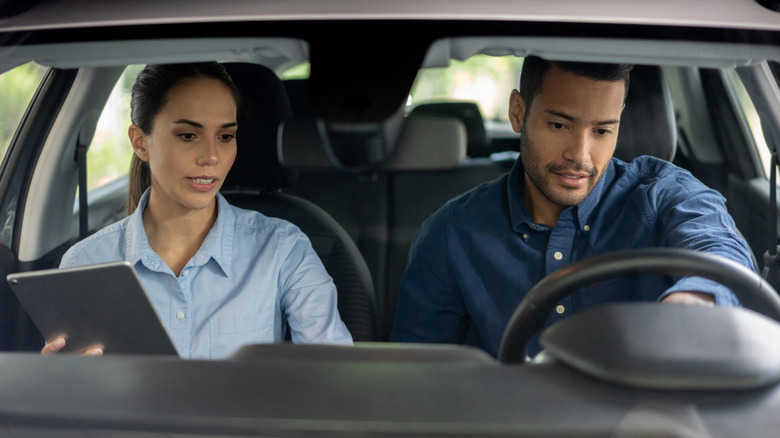
In a dealership setting, the test drive is frequently a chaperoned event. Sales consultants typically ride in the passenger seat, a practice intended to prevent vehicle theft, ensure the car is returned promptly, and provide a "product presentation." During the drive, the salesperson will highlight specific features, such as infotainment capabilities, safety sensors, or engine performance.
However, this structure often comes with limitations. Many dealerships have "prescribed routes"—usually a three-to-five-mile loop that includes a mix of low-speed residential turns and a brief highway stint. While these routes are designed to showcase the car’s best attributes, they may not reflect the buyer’s actual daily commute. Experienced buyers may negotiate for an "overnight test drive," a growing trend among dealerships looking to build trust, though this usually requires a more thorough vetting of the buyer’s insurance and creditworthiness.
The Private Seller Landscape: Autonomy and Risk Management
Test driving a vehicle from a private seller is an entirely different endeavor, characterized by a lack of standardization. In this "anything goes" environment, the buyer and seller must negotiate their own terms of engagement. Because the seller is an individual rather than a business, the emotional stakes are often higher, and the professional guardrails are non-existent.
The Challenge of Scheduling and Trust
Unlike a dealership, a private seller has a life outside of car sales. Scheduling a test drive requires a high degree of coordination and can be prone to "ghosting"—where one party ceases communication without notice. Furthermore, safety is a paramount concern in private transactions. Law enforcement agencies across the country now promote "Safe Exchange Zones," often located in police department parking lots with 24-hour video surveillance, as the gold standard for meeting strangers for high-value transactions.
A savvy private seller will emulate some dealership practices, such as asking to see a driver’s license and proof of insurance before allowing a stranger behind the wheel. From the buyer’s perspective, the private drive offers a unique opportunity to verify the vehicle’s history. If the seller is the long-term owner, they can provide context that a dealership cannot, such as why a certain noise occurs or exactly how often the oil was changed.
Route Flexibility and Technical Evaluation
Private sellers are often more flexible regarding the test drive route, provided the buyer appears trustworthy. Without the pressure of a "sales manager" waiting back at the lot, the buyer can often take the time to drive the vehicle to their own mechanic for a Pre-Purchase Inspection (PPI). This is a critical step in the private market, as almost all private sales are conducted "as-is," meaning the buyer has no legal recourse if the transmission fails ten miles after the purchase.
Comparative Chronology of the Test Drive Process
To understand the divergence between these two paths, one must look at the timeline of the interaction:
- Initial Contact: At a dealership, this is a phone call or a web lead handled by a Business Development Center (BDC). With a private seller, it is often a series of direct messages on a social media platform.
- The "Check-In": Dealers perform a formal intake, scanning IDs. Private sellers perform an informal vibe check, often meeting in a public parking lot.
- The Drive: The dealer drive is a sales pitch; the private drive is a discovery mission.
- Post-Drive Negotiation: After a dealer drive, the customer is usually invited into a "closing room" to discuss financing, trade-ins, and warranties. After a private drive, the negotiation happens on the sidewalk or via text, focusing solely on the "out-the-door" cash price.
- Documentation: Dealers handle the Department of Motor Vehicles (DMV) paperwork, title transfers, and tax collection. In a private sale, the burden of ensuring the title is "clear" (free of liens) and correctly signed over falls entirely on the buyer and seller.
Data and Market Implications
The choice between a dealership and a private seller often boils down to a trade-off between price and security. According to market data from iSeeCars, vehicles sold by private parties are typically priced 10% to 15% lower than comparable models at a dealership. This "discount" accounts for the lack of reconditioning, the absence of a warranty, and the increased legwork required of the buyer.
However, the dealership "premium" covers significant hidden costs. Dealers are required by federal law to display a "Buyers Guide" on every used car, disclosing whether the vehicle comes with a warranty or is being sold "as-is." Additionally, dealerships are subject to state "Lemon Laws" in certain jurisdictions, providing a safety net that is non-existent in the private market.
Broader Impact on the Automotive Industry
The evolution of the test drive is currently facing its greatest disruption since the invention of the franchise system. Direct-to-consumer manufacturers like Tesla, Rivian, and Lucid have pioneered a hybrid model. These companies offer "touchless" test drives where the vehicle is unlocked via an app, allowing the consumer to drive alone without a salesperson. This model combines the professional maintenance of a dealership with the autonomy of a private sale.
Furthermore, the rise of online retailers like Carvana and Vroom has attempted to eliminate the traditional test drive entirely, replacing it with a seven-day "return policy." This shifts the test drive from a pre-purchase ritual to a post-purchase evaluation period. While this offers ultimate convenience, it requires the consumer to commit to financing or payment before ever sitting in the driver’s seat.
Conclusion and Fact-Based Analysis
The differences between dealership and private-seller test drives are rooted in the balance of risk and reward. The dealership offers a controlled, legally compliant, and convenient environment, but the buyer pays for that infrastructure through higher vehicle prices and exposure to sophisticated sales tactics. The private seller offers the potential for a better deal and a more honest look at the vehicle’s daily life, but it requires the buyer to act as their own advocate, mechanic, and legal clerk.
As the used-car market continues to grapple with fluctuating inventory levels and high interest rates, the importance of a thorough test drive cannot be overstated. Regardless of the seller, the physical drive remains the only way to verify that a vehicle’s condition matches its description. Whether navigating a predetermined dealership loop or meeting a stranger at a police station, the prepared buyer—armed with an understanding of these two distinct worlds—is the only one who can truly mitigate the risks inherent in purchasing a pre-owned machine.