In a landmark move that signals a decisive shift in the artificial intelligence landscape, semiconductor giant AMD has announced its intent to acquire World Labs, a two-year-old startup co-founded by pioneering computer scientist Fei-Fei Li. The all-stock transaction, valued at approximately $8.2 billion, represents one of the most significant consolidations in the AI sector to date. By integrating World Labs’ proprietary research into “world models”—AI systems capable of understanding and interacting with three-dimensional physical environments—AMD aims to pivot from its traditional compute-centric business model toward a future defined by autonomous machines, robotics, and advanced spatial intelligence.
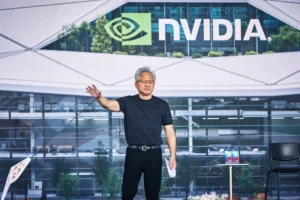
The acquisition serves as a strategic counter-maneuver against Nvidia, which has long dominated the GPU market for large language model (LLM) training. As the industry moves beyond text-based generative AI, the focus is shifting toward "physical AI," a domain that demands specialized hardware capable of processing high-fidelity video and spatial data in real-time. With this acquisition, AMD is not merely buying software; it is securing a technological cornerstone that could define the next decade of edge computing and automation.
The Strategic Evolution of AMD’s AI Roadmap
AMD, under the leadership of CEO Lisa Su, has spent the last several years successfully closing the gap with Nvidia in the data center market. However, the rise of "world models" presents a new frontier that requires deeper integration between hardware architecture and sensory-based AI software. World Labs, which emerged from stealth with significant industry backing, has focused on building models that move beyond the limitations of text-based data.
While LLMs are trained on the vast corpus of human language, world models are trained on spatial data, such as high-resolution video, to understand the causal physics of the world—how objects move, collide, and exist in three-dimensional space. By acquiring World Labs, AMD effectively verticalizes its AI stack. The company will be able to optimize its upcoming GPU architectures specifically for the compute-intensive tasks required to simulate and navigate physical environments, providing a competitive edge in sectors ranging from industrial manufacturing to autonomous transportation.
A Chronology of the Deal and Partnership
The trajectory leading to this $8.2 billion acquisition began long before the formal announcement. The relationship between AMD and World Labs was rooted in a deep technical partnership established last year. According to insiders familiar with the development process, the two firms initially collaborated on optimizing the training and inference pipelines for World Labs’ models on AMD’s Instinct GPU lineup.
As the collaboration deepened, both parties realized that the boundary between hardware and software in physical AI was becoming increasingly porous. The synergy between AMD’s high-bandwidth compute capabilities and World Labs’ architectural breakthroughs in spatial reasoning became the catalyst for the merger. Following months of private discussions and due diligence, the boards of both companies approved the all-stock transaction. The deal is currently pending standard regulatory approvals and is expected to close before the end of the 2026 calendar year.
The Architect of the Future: Fei-Fei Li’s New Role
A central component of this acquisition is the appointment of Fei-Fei Li, often cited as the "godmother of AI," as the executive vice president and chief scientist at AMD. Li’s credentials are foundational to the modern AI era; two decades ago, she spearheaded the creation of ImageNet, the massive visual database that provided the essential training data for the deep learning revolution.
Reporting directly to CEO Lisa Su, Li will oversee the integration of World Labs’ research into AMD’s broader product strategy. In a public statement shared on social media, Li emphasized the necessity of bridging the gap between digital intelligence and physical reality. "Without having a focused hardware effort, AI is hobbled in efficiency and scale," Li noted. "For our purposes, it remains trapped in the digital world. The universe isn’t made of words; it’s made of real things." Her transition to AMD marks a rare move for a top-tier academic and startup founder, underscoring the magnitude of the hardware-software convergence currently underway in Silicon Valley.
Market Implications and the Rise of Physical AI
The market for physical AI is projected to experience explosive growth as the demand for humanoid robots and autonomous systems increases. Industry analysts suggest that current hardware architectures, which were optimized primarily for transformers and natural language processing, may not be sufficient for the latency-sensitive requirements of robotics.
World Labs, having raised roughly $1 billion in private funding prior to the acquisition, stands as a testament to the high valuation placed on spatial intelligence research. The company’s focus on 3D data sets is a direct response to the "data wall" being hit by text-based LLMs. While companies like OpenAI and Google continue to push the boundaries of language, startups like World Labs, as well as competitors like Yann LeCun’s AMI Labs, are racing to develop "World Simulators" that can predict the outcomes of physical interactions.
By bringing World Labs into the fold, AMD is positioning its hardware to be the "engine" for this new era. This strategy is essential for competing with Nvidia, which has similarly invested in its "Omniverse" and Isaac robotics platforms. The competition between these two chip giants is no longer just about TFLOPS (teraflops) or memory bandwidth; it is now about who can provide the most efficient infrastructure for an AI that can navigate the real world.
Financial and Operational Impact
The acquisition is structured as an all-stock deal, a common mechanism in high-value tech mergers that allows AMD to preserve its cash reserves while incentivizing the World Labs team through equity. While the deal’s impact on AMD’s immediate earnings per share (EPS) remains to be seen, the long-term outlook is bullish. AMD has been steadily increasing its AI-related revenue, and the addition of World Labs’ intellectual property is expected to enhance the "moat" around its hardware ecosystem.
Following the announcement, AMD shares remained relatively flat, reflecting a "wait and see" approach from institutional investors who are evaluating the integration risks. However, the move is widely viewed by industry observers as a logical progression for a company that has successfully navigated multiple technological shifts over the past two decades.
Broader Industry Context
The pivot toward physical AI is not occurring in a vacuum. It represents a broader realization across the technology sector that the "LLM era" is merely a prelude to a more integrated, autonomous future. The integration of World Labs’ team into AMD’s R&D division is expected to accelerate the development of "inference at the edge"—the ability for AI models to run locally on robots, cars, and industrial sensors without constant reliance on massive cloud server farms.
This move also highlights the increasing importance of women leaders in shaping the trajectory of the AI industry. With Lisa Su and Fei-Fei Li at the helm of this initiative, AMD is set to leverage a unique blend of operational excellence and deep scientific research. As the industry moves forward, the success of this acquisition will likely be measured by how quickly AMD can translate World Labs’ research into market-ready silicon that powers the next generation of physical intelligence.
Ultimately, the $8.2 billion deal is a high-stakes bet on the physical world being the next frontier for AI. As the lines between the digital and the physical continue to blur, the hardware providers who successfully anticipate these needs—through partnerships, acquisitions, and specialized silicon—will dictate the rules of the future economy. For AMD, the acquisition of World Labs is a clear declaration that they intend to be the primary architect of that future.