The landscape of fine jewelry is currently undergoing a significant evolution, as heritage houses and independent designers alike pivot toward a fusion of historical reverence and contemporary surrealism. This shift is marked by an increasing emphasis on pieces that function not merely as adornment, but as personal talismans, archival revivals, and conceptual art. From the Brooklyn studios of avant-garde artists to the established ateliers of German and Italian masters, the industry is witnessing a trend where the technical mastery of goldsmithing meets the abstract demands of modern identity.

The Rise of Wearable Surrealism and Artistic Expression
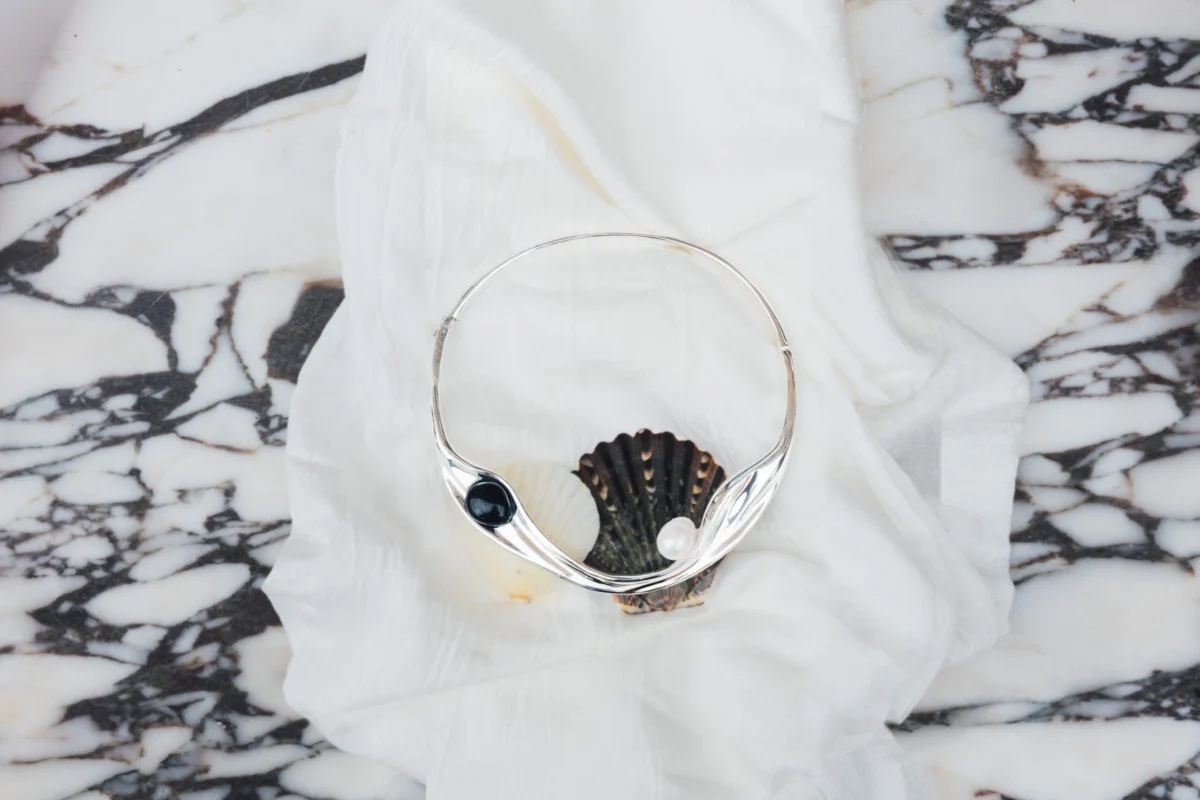
At the forefront of this movement is artist Quentin Jones, whose debut jewelry collection, Nocture, marks a departure from traditional aesthetics. Having previously gained acclaim for her surrealist ceramics and tapestries, Jones is now translating her multidisciplinary visual language into the medium of precious metals. The collection—featuring sculptural collars, cuffs, and pendants—utilizes recurring motifs such as eyes, hands, stars, and celestial bodies. By integrating freshwater pearls, onyx, and opals with gold vermeil, Jones blurs the distinction between fine art and fashion, positioning jewelry as an extension of the body’s own narrative.
This transition from the gallery wall to the human form represents a broader industry appetite for storytelling. Designers are increasingly looking to personal histories and symbolic gestures to imbue their collections with depth. In the case of the collaboration between Hart and Julia Berolzheimer, the design process is rooted in nostalgic memory. By drawing inspiration from the Art Deco minaudières of the 1920s and the landscapes of a California ranch, the collection provides a tactile connection to the past. The inclusion of a modern Perfume Vesta Case—a revival of a Victorian-era accessory—highlights a growing market preference for functional, multipurpose luxury.

Archival Revivals and the Modern Talisman
A significant driver in current market trends is the "Memorie d’Archivio" movement, where brands re-examine their history to capture the imagination of a new generation of collectors. Pomellato’s recent revival of its 1997 Moneta Orientale pendant serves as a prime example of this strategy. The pendant, which centers on the ancient philosophical harmony between the square and the circle, is being reissued in 33 unique gemstone and pavé combinations.
The economic implications of such revivals are substantial. By leveraging existing intellectual property, heritage brands minimize the risks associated with entirely new product launches while simultaneously engaging their core demographic of long-term collectors. Data from the luxury sector suggests that consumers are increasingly seeking "investment-grade" pieces that offer both stylistic longevity and a connection to a brand’s foundational heritage. The use of hard stones like black jade and amazonite, paired with high-value sapphires and rubies, aligns with a shift toward colorful, high-impact jewelry that balances tradition with vibrant, modern expression.

Technical Innovation and the Evolution of Craft
Beyond aesthetics, the industry is seeing a surge in technical ingenuity. Di Volpe’s recent introduction of the "DiSegno" system challenges the static nature of fine jewelry. By utilizing patent-pending concealed connections, the brand allows wearers to swap out diamonds and gemstones, transforming tennis bracelets into necklaces or earrings. This modular approach addresses a critical consumer demand for versatility and sustainability. In an era where "quiet luxury" and minimalism have dominated, the ability to customize a single piece into multiple iterations provides a compelling value proposition.
Similarly, the Wempe "Au:thentic" collection emphasizes the foundational skills of the trade. By centering a design around the jump ring—a basic component of goldsmithing—the collection celebrates the technical labor involved in fine jewelry creation. This move toward transparency in craftsmanship is a reaction to the rise of mass-produced luxury, signaling to the consumer that value is derived from the artisan’s manual labor as much as the precious materials used.

High Jewelry and the Abstracted Motif
The entry of designers like Bibi van der Velden into the high jewelry space with her "Eclipse" collection underscores a shift toward abstract, sculptural design. Van der Velden’s work, which focuses on the transition of light into darkness, utilizes an ombre of diamonds and gray spinels to create a sophisticated, ethereal effect. Her signature alligator motif, previously a literal representation, has been abstracted into fluid silhouettes, with intricate scale engravings hidden on the reverse of the pieces.
This level of detail—hidden to the wearer but known to the owner—is a hallmark of contemporary high jewelry. It suggests an intimacy in luxury, where the value is not just in the visible display but in the secret complexity of the construction. This trend is mirrored by Brent Neale’s "Wrap It Up" collection, which explores the tension between rigid 18-karat gold and the soft, organic movement of ribbons. By capturing the fluidity of fabric in platinum and gold, Neale creates a sense of dynamism that defies the traditionally static nature of precious metals.

Cultural Integration and Holiday Campaigns
The industry’s marketing strategies are also reflecting a desire to ground luxury in recognizable human experience. The David Yurman holiday campaign, featuring Michael B. Jordan, Yerin Ha, and Inde Navarrette, utilizes a narrative approach set in the iconic backdrop of New York City’s Washington Square Park. By positioning the jewelry within a story of connection, gameplay, and urban discovery, the brand successfully contextualizes its products within the lifestyle of the modern consumer.
This storytelling is echoed in the Robinson Pelham "Suite 96" anniversary collection, which draws inspiration from 1990s London nightlife. By presenting jewelry as "the ultimate room service," the brand taps into a sense of decadence and nostalgia. The juxtaposition of bold gold links and cascading diamond drops with the casual aesthetic of a hotel suite reflects the current trend of "high-low" styling, where fine jewelry is no longer reserved solely for gala events but is integrated into everyday life.

Fact-Based Analysis of Industry Implications
The convergence of these diverse trends points to several conclusions about the state of the fine jewelry market heading into the next fiscal year:
- Versatility as Value: As seen in the DiSegno and Hart collections, the ability to restyle or repurpose jewelry is no longer a niche feature but a primary requirement for the modern luxury consumer. This reduces the "cost-per-wear" of high-end items and aligns with a more conscious approach to consumption.
- The Return of Sentimentality: The emphasis on good-luck charms, talismans, and birth-memories indicates that consumers are looking for emotional security in their purchases. Jewelry is being positioned as a grounding force, a trend that typically gains traction during periods of global economic or social uncertainty.
- The Professionalization of "Artisan" Narratives: Brands are moving away from corporate, cold luxury toward narratives of individual craftsmanship. By highlighting techniques—such as the German goldsmithing tradition at Wempe or the Italian-inspired mosaics of Grace Winfrey—brands are building brand loyalty through education.
- Material Contrasts: There is a distinct move away from monochromatic jewelry. The use of contrasting materials—such as Vhernier’s pairing of rose gold with black jet, or Le Vian’s use of Chocolate and Nude Diamonds—creates a visual complexity that stands out in a digital-first marketplace where items must be visually striking even on small screens.
Conclusion: A New Era of Personalization
The current wave of fine jewelry collections suggests that the industry is successfully navigating a transition toward greater personalization and conceptual depth. Whether through the revival of archival designs, the introduction of modular, user-defined systems, or the artistic interpretation of abstract concepts, today’s jewelry is characterized by a desire to bridge the gap between the monumental and the intimate.

As these collections enter the global market, they serve as evidence that the definition of "fine" is expanding. It is no longer defined solely by carat weight or the scarcity of gemstones, but by the ability of a piece to function as an artifact of the wearer’s personal history, a testament to the artisan’s skill, and a flexible tool for self-expression. In this environment, the most successful brands will be those that can continue to balance the weight of their heritage with the fluid, evolving needs of the modern consumer.