The Commonwealth of Massachusetts has officially become a primary testing ground for a transformative energy technology that could redefine the relationship between motorists and the electrical grid. A coalition of prominent energy providers and technology firms, including Eversource, National Grid, EnergyHub, Sunrun, and The Mobility House, announced the launch of an early-stage vehicle-to-grid (V2G) pilot program. This initiative aims to integrate electric vehicle (EV) batteries into the state’s broader demand-response infrastructure, effectively turning parked cars into a massive, distributed battery system capable of stabilizing the grid during periods of peak stress.
While the primary function of an electric vehicle remains transportation, the massive lithium-ion batteries housed within these chassis represent a significantly underutilized resource. For the vast majority of the day, EVs sit idle. Through V2G technology, these vehicles can transition from being mere consumers of electricity to active participants in the energy market. When demand on the grid spikes—such as during extreme summer heatwaves when air conditioning usage surges—utilities can now, with the owner’s permission, tap into these connected batteries to supplement the power supply. In exchange, EV owners receive financial compensation, creating a new revenue stream that could significantly lower the total cost of EV ownership.
The Mechanics of Bidirectional Energy Flow
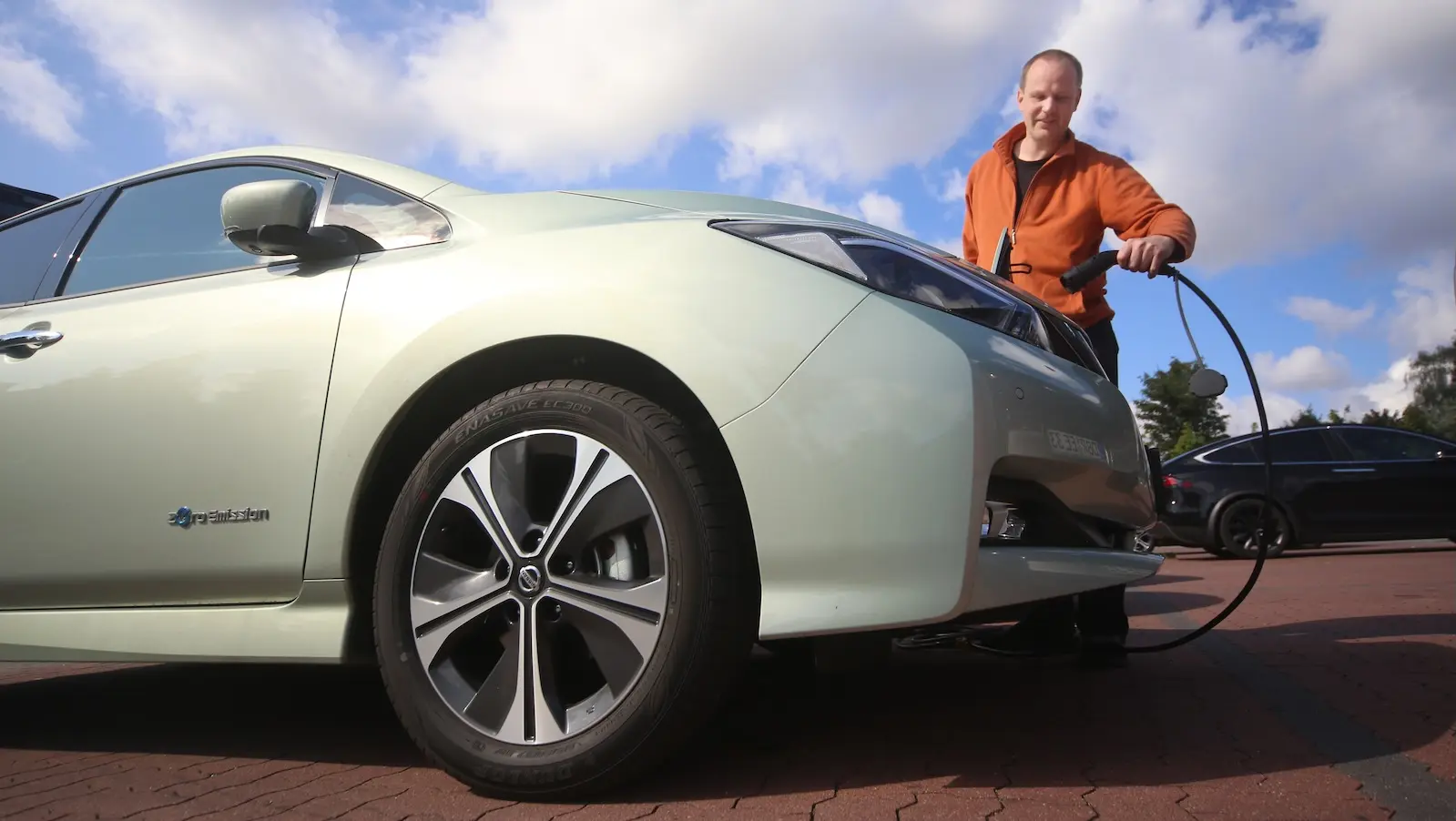
To understand the significance of the Massachusetts pilot, one must first distinguish between standard EV charging and bidirectional charging. Conventional charging is a one-way street: electricity flows from the grid into the vehicle. V2G requires bidirectional hardware, both within the vehicle’s onboard charger and the external charging station, allowing electricity to flow back out of the battery and into the home or the municipal grid.
The Massachusetts program utilizes an existing framework known as ConnectedSolutions. Originally designed to manage residential battery storage systems like the Tesla Powerwall, ConnectedSolutions allows utilities to "call" upon stored energy during peak events. By expanding this program to include EVs, the potential scale of the resource expands exponentially. A typical residential backup battery might hold 10 to 13 kilowatt-hours (kWh) of energy. In contrast, even a standard electric sedan often carries a 60 to 80 kWh battery, while electric pickup trucks and SUVs can exceed 100 kWh. Essentially, one electric vehicle can provide the same grid-support capacity as six to ten dedicated home battery units.
A Chronology of Grid Evolution and V2G Integration
The push for V2G in Massachusetts does not exist in a vacuum; it is the result of a decade-long shift in energy policy and technological advancement.
- 2010–2018: The Early Adoption Phase. During this period, EVs were a niche market. Grid management focused primarily on "smart charging" or V1G, where utilities could pause a vehicle’s charging during peak times to avoid overloading transformers.
- 2019–2022: The Rise of Distributed Energy Resources (DERs). Massachusetts established itself as a leader in DER management through the ConnectedSolutions program. During this window, home solar and stationary battery storage became mainstream, proving that a decentralized grid was feasible.
- 2023–Present: The Shift to Bidirectional Infrastructure. Major automakers began announcing V2G capabilities. Nissan, a pioneer with the Leaf, was joined by Ford (with the F-150 Lightning) and General Motors, which pledged to make its entire Ultium-based EV lineup V2G-compatible by 2026.
- The 2024 Massachusetts Launch. The current pilot represents the convergence of automotive readiness and utility-side software integration. By partnering with The Mobility House and EnergyHub, utilities like National Grid can now communicate directly with vehicles to orchestrate discharge events without manual intervention from the driver.
Addressing the Dual Crisis of Rising Demand and Intermittency
Utilities are turning to V2G because they are currently caught between two escalating challenges: a massive surge in electricity demand and a fundamental shift in how that electricity is generated.
The demand for power is projected to grow at its fastest rate in decades. This is driven by the rapid proliferation of power-hungry data centers—fueled by the artificial intelligence boom—and the state-mandated transition from natural gas furnaces to electric heat pumps. Simultaneously, Massachusetts is working toward its goal of net-zero emissions by 2050, which involves retiring fossil-fuel "peaker" plants in favor of wind and solar.
However, renewable energy is intermittent; the sun does not always shine when demand is highest (usually between 4:00 PM and 9:00 PM when people return home from work). Historically, utilities solved this by burning more gas. V2G offers a cleaner alternative. By storing excess wind and solar power in car batteries during the day and discharging it back to the grid in the evening, EVs act as a bridge, smoothing out the peaks and valleys of renewable generation.
Supporting Data: The Economics of the Virtual Power Plant
The financial implications of V2G are substantial for both the consumer and the utility. According to data from the pilot organizers, the cost of utilizing "virtual" storage from EVs is significantly lower than building new physical infrastructure.
- Infrastructure Savings: For a utility, building a new "peaker" power plant or installing miles of high-voltage transmission lines can cost hundreds of millions of dollars. Tapping into an existing fleet of EVs requires only software integration and minor hardware incentives, representing a fraction of the capital expenditure.
- Consumer Revenue: Participants in demand-response programs can earn several hundred dollars per year. In some advanced V2G markets in Europe, high-usage participants have seen earnings that nearly offset their monthly vehicle financing payments.
- Grid Efficiency: Research suggests that if only 10% of vehicle owners participated in V2G, the grid could handle the total electrification of the transport sector without requiring massive upgrades to the distribution network.
Seth Frader-Thompson, president of EnergyHub, noted that as hardware costs for bidirectional chargers continue to decline, the barrier to entry will vanish. "We expect vehicle-to-grid to become dramatically more accessible over the next several years," Frader-Thompson stated, emphasizing that the maturation of industry standards like ISO 15118 will be a key catalyst.
Stakeholder Perspectives and Industry Reactions
The coalition behind the Massachusetts project represents a rare alignment of interests between traditionally slow-moving utilities and fast-paced tech companies.
Eversource and National Grid, the state’s primary investor-owned utilities, view the project as a vital tool for grid resilience. For them, every kilowatt-hour provided by an EV battery is a kilowatt-hour they don’t have to purchase from expensive, high-emission spot markets during a heatwave.
Sunrun, primarily known for residential solar, sees V2G as the "connective tissue" of the modern home. Chip Silverman, Sunrun’s director of grid services, highlighted the "magic" of aggregation. By patching together thousands of small batteries, Sunrun and its partners can present a single, massive "Virtual Power Plant" (VPP) to the grid operator. This VPP can be dispatched with the same reliability as a traditional coal or gas plant but with zero local emissions.
The Mobility House, which provides the underlying charging infrastructure and software, focuses on the "smart" aspect of the discharge. Russell Vare, vice president of vehicle-grid integration, sought to ease consumer concerns regarding battery degradation. He noted that V2G events are infrequent—occurring only a few dozen hours per year—meaning the impact on the long-term health of the vehicle’s battery is negligible compared to the daily wear and tear of driving.
Broader Implications for Climate Resilience and Social Equity
Beyond the technical and economic benefits, V2G has profound implications for climate adaptation. As the planet warms, extreme weather events are becoming more frequent and severe. During a grid failure caused by a storm, an EV with bidirectional capability can act as a mobile generator, powering a home’s essential medical equipment, refrigeration, and lighting for days.
Furthermore, V2G could help mitigate the skyrocketing energy prices that currently burden Massachusetts residents. Because the technology reduces the need for utilities to invest in expensive new infrastructure, the overall cost of maintaining the grid decreases. These savings can theoretically be passed on to all ratepayers, including those who do not own an EV.
The pilot also looks toward the future of public transportation. While individual passenger cars are the current focus, the real potential lies in "predictable fleets." Electric school buses, for instance, have enormous batteries and follow a strict schedule. They are parked and available during the summer months and the late afternoon—precisely when the grid needs support the most.
Conclusion: From Consumers to Prosumers
The Massachusetts V2G pilot marks a shift in the identity of the American energy consumer. We are entering an era of the "prosumer"—individuals who both consume and produce energy services. By integrating the transport and energy sectors, Massachusetts is providing a blueprint for a more resilient, decentralized, and cost-effective electrical system.
As the pilot progresses, the lessons learned in the Northeast will likely inform federal policy and automotive design across North America. If successful, the project will prove that the electric vehicle is not a burden on the grid, but rather its most versatile and valuable asset. Far from straining the system to the point of collapse, the millions of EVs expected to hit the roads this decade may be the very thing that saves the American power grid from the challenges of the 21st century.