As the 2026 fiscal year approaches, real estate investors are increasingly forced to navigate a complex landscape defined by rising operational costs and shifting demographic trends. In the current economic climate, property taxes and insurance premiums have emerged as the primary "piranhas" of the industry, steadily eroding the net operating income of residential portfolios. While the pursuit of the "Holy Grail"—a market characterized by low taxes, affordable entry prices, and robust rental demand—remains the objective for most small-to-medium landlords, the geographical locations where these factors align are becoming increasingly rare.
The disparity in state-level fiscal policies has created a bifurcated market. On one end of the spectrum, states like New Jersey impose effective property tax rates as high as 2.23%, while Hawaii remains at the bottom with rates near 0.27%. For the modern investor, the challenge lies in identifying "unicorn" markets: regions that offer a low tax burden without the prohibitive acquisition costs found in high-demand coastal enclaves.
The National Property Tax Landscape in 2026
Property taxes remain the bedrock of local government funding, accounting for approximately 27% of all state and local revenue as of the most recent comprehensive data. These levies, determined by local governments based on assessed property values, fund essential services including public education, infrastructure maintenance, and emergency services. Historically, a high tax rate was often viewed as a proxy for high-quality amenities and superior school districts. However, in the 2026 market, these high-tax environments—predominantly in the Northeast and Midwest—are becoming increasingly difficult for cash-flow-heavy strategies.
The national average property tax bill for a U.S. household has stabilized at approximately $3,119 per year. In regions like the "Rust Belt" and the Northeast, effective rates of 1.5% to 2.0% are common, particularly in Illinois, Connecticut, Wisconsin, and Vermont. While these areas may offer stable tenant bases, the "tax bite" often necessitates significantly higher rents to achieve the same cash-on-cash return found in lower-tax jurisdictions. Conversely, investors must remain wary of "paper-low" rates; in high-value markets, a low percentage rate can still result in a substantial dollar-denominated tax bill if the underlying asset value is in the seven-figure range.
The Rise of Insurance as a Secondary Cash Flow Killer
While property taxes have long been a known variable, the 2024–2026 period has seen homeowners insurance emerge as a volatile and often unpredictable expense. Driven by an increase in the frequency and severity of extreme weather events, insurance carriers have significantly raised premiums or, in some cases, exited specific markets entirely. This shift has necessitated a re-evaluation of traditional cash-flow havens.
States such as Florida and California, once the darlings of real estate appreciation, have seen their cash-flow potential decimated by the dual pressures of high acquisition costs and skyrocketing insurance rates. In California, even with strong rental growth, the initial capital outlay and the cost of comprehensive coverage often lead to negative or break-even cash flow for new acquisitions. Consequently, the 2026 investment thesis has shifted toward the "Internal United States," where both tax and insurance risks are perceived to be more manageable.
A Chronology of the Shifting Investment Climate (2020–2026)
To understand the current dominance of states like Alabama and West Virginia in cash-flow rankings, one must look at the trajectory of the market over the last six years:
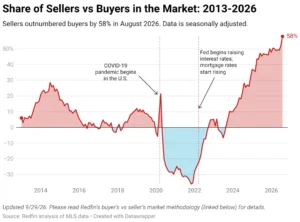
- 2020–2022: The Pandemic Boom. Record-low interest rates led to a surge in home prices nationally. Investors prioritized appreciation over immediate cash flow, leading to a "gold rush" in Sun Belt markets like Phoenix and Tampa.
- 2023–2024: The Correction and Rate Hikes. The Federal Reserve’s aggressive interest rate increases cooled the acquisition market. Investors began feeling the squeeze as mortgage servicing costs rose alongside property taxes and insurance.
- 2025: The Search for Yield. As coastal and primary markets reached a plateau in rental growth, capital began flowing into secondary and tertiary markets. "Landlord-friendliness" became a primary metric for site selection.
- 2026: The Stabilization of the "New Normal." The market has settled into a pattern where operational efficiency is the only way to ensure profitability. States with constitutional limits on property tax increases and moderate climate risks have moved to the top of the "Buy" list.
Identifying the Top 10 Cash-Flow States for 2026
By synthesizing data points including median home prices, effective tax rates, average insurance premiums, and median monthly rents, a clear hierarchy of cash-flow-positive states emerges. These rankings prioritize the "gap" between gross rental income and the recurring "nut" (taxes, insurance, and maintenance) that a landlord must cover.
- West Virginia: Ranked as the top state for cash flow, West Virginia offers some of the lowest acquisition costs in the nation. While appreciation is historically slow, the low tax and insurance burden allows for significant monthly margins.
- Alabama: With an effective property tax rate of roughly 0.38%, Alabama remains a premier destination for yield-hungry investors. The median annual tax bill of approximately $1,249 is among the lowest in the country.
- Arkansas: Similar to Alabama, Arkansas combines low property taxes with a moderate cost of living, providing a stable environment for "Class B" and "Class C" rental strategies.
- South Carolina: South Carolina offers a balance of "Good" rental demand driven by coastal migration and "Low" property taxes for non-owner-occupied residences.
- Tennessee: Despite a "High-moderate" insurance cost due to regional storm patterns, Tennessee’s lack of state income tax and moderate property tax levels make it a strong contender for long-term holds.
- Arizona: Arizona benefits from a low tax environment, though rising acquisition costs in Phoenix and Tucson have pushed it slightly down the list compared to previous years.
- Nevada: Low property taxes and strong demand from California "refugees" keep Nevada’s cash flow scores high, despite moderate insurance costs.
- Idaho: Once a leader in appreciation, Idaho has transitioned into a "Solid" cash-flow state as price growth has cooled, allowing rents to catch up to acquisition costs.
- Utah: Utah maintains a "Low" tax environment and strong job growth, though investors must contend with higher entry prices.
- Colorado: While Colorado boasts some of the lowest property tax rates in the nation, its high median home prices mean that investors must be highly selective to find cash-flowing deals.
The Role of Landlord-Tenant Legislation
Financial metrics do not exist in a vacuum. A state may offer excellent tax advantages, but if the legal framework makes evictions impossible or imposes strict rent controls, the "realized" cash flow may be zero. Industry analysts and legal experts point to a group of states that combine fiscal benefits with landlord-friendly regulations.
According to data from DoorLoop and other legislative tracking services, states like Alabama, Arizona, and Tennessee are frequently cited for their streamlined eviction processes and lack of restrictive rent control measures. Conversely, states with high property taxes often coincide with high tenant protections, creating a "double squeeze" on the landlord’s bottom line. For the 2026 investor, the regulatory environment is now considered a "soft cost" that must be factored into the initial risk assessment.
Broader Implications and Expert Analysis
The movement of capital toward low-tax, high-cash-flow states is more than just a trend; it is a structural shift in the American real estate market. Urban planning experts suggest that this "migration of capital" is mirroring the migration of the workforce. As remote work persists and the cost of living in coastal hubs remains high, the "Internal US" is seeing a revitalization of its rental markets.
However, seasoned analysts warn against "blind" investing based solely on spreadsheets. A market like West Virginia may show an "Excellent" cash-flow score, but if the local job market is tied to a declining industry, the risk of prolonged vacancy or tenant default increases. "The data tells you where the numbers work, but the boots on the ground tell you where the tenants work," notes one industry veteran.
The "war zone" phenomenon remains a significant risk. Properties in high-crime or economically depressed areas often appear to have massive cash-flow potential because they are priced so low. However, these assets frequently suffer from high turnover, physical damage, and the inability to secure traditional financing or insurance, often rendering them "capital traps" rather than investments.
Conclusion: The Strategic Path Forward
As 2026 unfolds, the successful real estate investor will be the one who treats property taxes and insurance not as fixed inconveniences, but as dynamic variables in a larger geographical equation. The "Holy Grail" of investing is still attainable, but it requires a departure from traditional coastal markets in favor of states that have maintained a pro-growth, low-tax environment.
By focusing on states like Alabama, South Carolina, and Tennessee, investors can insulate themselves from the most aggressive "piranhas" of the industry. While the glamour of high-appreciation markets like California or Florida may still entice some, the 2026 market belongs to the disciplined landlord who prioritizes the monthly "gap" over the speculative future. In the end, cash flow is the only metric that pays the bills during periods of economic uncertainty, and the geography of that cash flow has moved firmly into the American heartland.