Friday, July 17, 2026, saw President Donald Trump at the center of a whirlwind of activity, from contentious remarks at a FIFA reception in New York to a doubling down on unsubstantiated election fraud claims, and from escalating international rhetoric regarding Canadian wildfires to expanding military operations against Iran. The day underscored the multifaceted and often polarizing nature of his administration, drawing sharp criticism from Democrats, election experts, and international observers alike.
FIFA Reception: Presidential Grandstanding and Unverified Claims
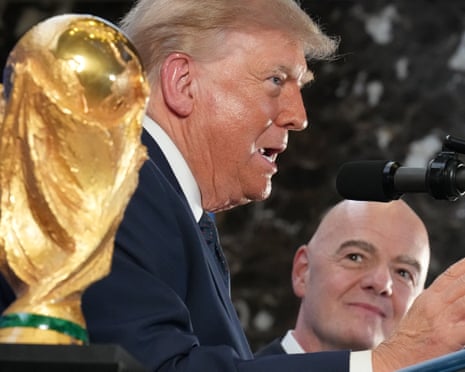
The day’s events kicked off with a notable appearance by President Trump at a FIFA reception in Trump Tower, New York, ahead of the World Cup final. His entrance, accompanied by Lee Greenwood’s "God Bless the USA," a staple of his political rallies, set a distinctly nationalistic tone. In his remarks, Trump initially expressed skepticism about the United States hosting a World Cup, telling FIFA President Gianni Infantino that his first reaction to the "crazy idea" was that Infantino "must be crazy because we’re not a soccer country." This statement notably overlooked the fact that the U.S. successfully hosted the FIFA World Cup in 1994, a significant event in the nation’s soccer history.

Beyond this historical oversight, Trump veered into familiar territory, including a digression to reassert his long-debunked claim that the 2020 election was "rigged" against him. He also lauded the footballing talents of his son, Barron, and his father-in-law. The most striking element of his speech, however, was his boast about intervening in a disciplinary matter concerning U.S. striker Folarin Balogun. Trump claimed he pressured Infantino to suspend a red card issued to Balogun, allowing him to play in an upcoming match against Belgium. "I was forced to call Gianni and just make a recommendation. I said, ‘Gianni, I’d like to make a recommendation: let the guy in the game.’ No, I didn’t say that. I said, ‘I’d like to wage a complaint,’ and actually I didn’t," Trump recounted, before ultimately praising Infantino for making "yet another of his many good decisions." Such claims of presidential interference in international sports governance raise questions about the autonomy of global sporting bodies and the appropriate boundaries of political influence.
FIFA President Gianni Infantino, speaking before Trump, offered effusive praise for the U.S. president, thanking him for fostering a "safe and secure" environment for the World Cup. However, Infantino’s comments conspicuously omitted any mention of recent immigration crackdowns by the Trump administration, which reportedly denied entry to a FIFA referee from Somalia and prevented numerous fans from traveling to the U.S. for the tournament, highlighting a tension between the celebratory rhetoric and practical realities for international participants.
Homeland Security’s Election Integrity Offensive
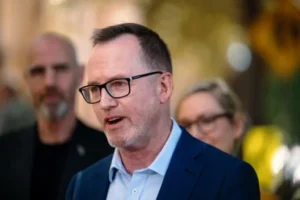
A significant portion of the day’s political narrative was dominated by the Department of Homeland Security (DHS) Secretary Markwayne Mullin, who held a press conference to amplify President Trump’s unsubstantiated claims regarding election security. Mullin’s briefing followed Trump’s televised address on Thursday, where the president presented a heavily criticized "review" from DHS as the basis for his allegations that the U.S. election system was "catastrophically short" of "greatness."
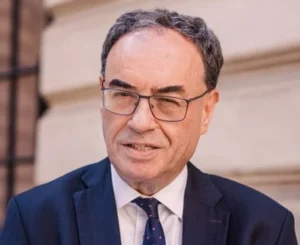
Mullin asserted that DHS had identified "250,000 non-citizens registered to vote in California, in Pennsylvania, New Jersey, and Nevada," and a further "28,000 non-citizens" on voter rolls across more than 20 states actively collaborating with the administration’s "Save program" – a tool designed to verify citizenship status. However, election experts quickly challenged these figures. David Becker, executive director of the non-partisan Center for Election Innovation and Research, highlighted the administration’s lack of transparency regarding its methodology. Becker pointed out that even if the 28,000 figure were accurate, it represents a minuscule 0.04% of the 68 million eligible voters in those states, rendering it statistically insignificant in altering election outcomes.
State officials from the mentioned states vehemently pushed back. Pennsylvania’s Republican Secretary of State, Al Schmidt, stressed that his state requires rigorous identity verification for voter registration and balloting, stating, "All evidence has shown that noncitizen voting is extremely rare across the country, including in Pennsylvania." California’s Democratic Governor Gavin Newsom echoed this, asserting via social media that "California law is clear: You MUST be a U.S. citizen to vote state and federal elections," and that "Voter fraud is EXTREMELY RARE – and almost always committed by U.S. citizens." In a particularly sharp rebuke, Jena Griswold, Colorado’s Democratic Secretary of State, told reporters that for the 2026 elections, "our biggest threat is not foreign adversaries, it’s a federal adversary. It’s the White House, it’s the weaponization of the federal government against us."
Mullin also reiterated the president’s baseless conspiracy theories about voting machines being "vulnerable" and "easily compromised." This flies in the face of consistent expert consensus: election officials and cybersecurity specialists routinely confirm that these machines are not connected to the internet, are subjected to rigorous security protocols, and undergo scrupulous testing before each election. Becker emphasized that nearly all U.S. voters use paper ballots (with Louisiana as a notable exception), which are subject to transparent, public hand-audits to verify machine counts. The DHS’s declassified documents, intended to support Trump’s claims, even indicated that a noted vulnerability in a Venezuelan voting system did not extend to U.S. election technology, further undermining the administration’s narrative.
Adding to the pressure, Mullin repeated a threat to withhold Federal Emergency Management Agency (FEMA) grant funding from states unwilling to comply with the administration’s election security demands. "If they’re not willing to do it, it should raise serious questions. It’s not that hard. This isn’t a partisan issue," Mullin stated. This threat marks a concerning escalation, as the federal government has previously lost multiple lawsuits when attempting to compel states to surrender their voter rolls, which contain sensitive personal data. Critics view this tactic as an attempt to coerce states into adopting policies that could disenfranchise eligible voters and further undermine faith in democratic processes.
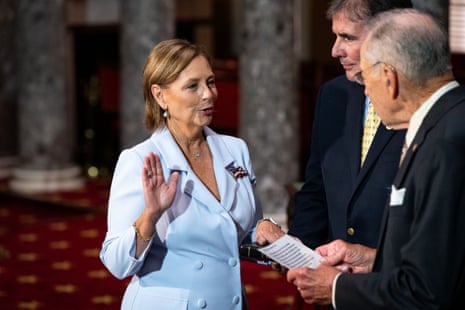
Darline Graham Nordone: Endorsement and Senate Race
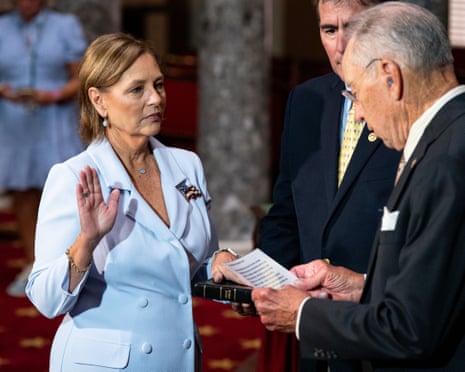
In a significant development for South Carolina politics, President Trump used his social media platform to urge Darline Graham Nordone to run for a full term in the U.S. Senate. Nordone was recently appointed to serve the remainder of her late brother Lindsey Graham’s term, which concludes in January 2027, following his sudden passing last weekend. Trump’s post explicitly stated, "I have asked Darline, for the Good of our Nation, to run for the U.S. Senate in the Special Republican Primary on Tuesday, August 11, 2026." He added, "Darline, who comes from an absolutely incredible family, should she accept, has my Complete and Total Endorsement in the Special Election for U.S. Senate in South Carolina — SHE WILL NEVER LET YOU DOWN. RUN, DARLINE, RUN!"
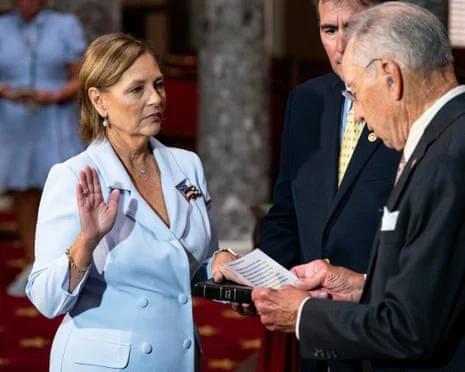
This endorsement comes shortly after Nordone was sworn in as a senator, an appointment also encouraged by Trump to South Carolina Governor Henry McMaster as a "fabulous tribute to Lindsey Graham." Nordone, a career civil servant, has dedicated decades to publicly funded programs in South Carolina assisting people with disabilities in overcoming employment barriers. Her potential candidacy for a full term would mark her first bid for elected office. The rapid timeline for the August 11 primary, potentially followed by a runoff, presents a formidable challenge for any candidate, let alone one juggling new Senate duties. Semafor reported that while her interim appointment was intended to provide the administration more time to consider a long-term endorsement, her interest in a full term could significantly impact the Republican primary landscape and potentially affect House Speaker Mike Johnson’s narrow majority if a House member were to seek the seat.
Canada Wildfire Smoke: A Cross-Border Blame Game
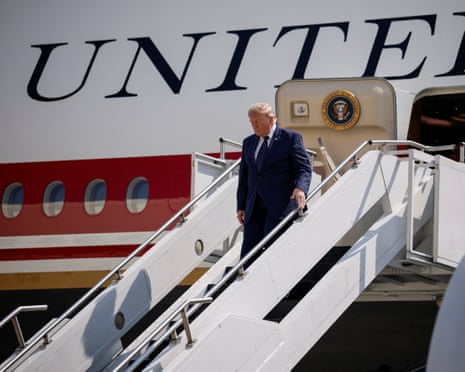
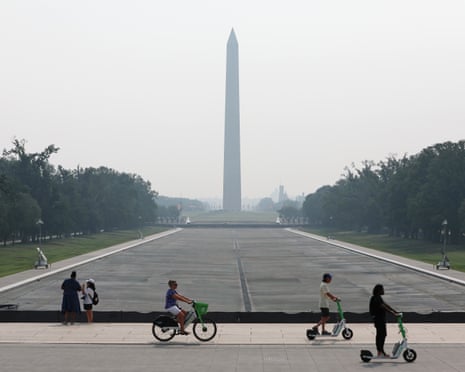
Environmental and diplomatic tensions flared as President Trump publicly "blasted" Canada for its handling of persistent wildfires, which have generated vast plumes of smoke blanketing large swathes of the U.S. Midwest, Mid-Atlantic, and Northeast, affecting an estimated 109 million people. On Truth Social, Trump declared, "We are holding Canada responsible for the fact that they are not properly maintaining their Forests, and Brush therein, and the United States is being unnecessarily invaded by filthy, polluted, and unhealthy air."
The president went further, threatening economic repercussions: "The cost is incalculable! This is Willful Negligence, and becoming a yearly occurrence, costing the United States Billions of Dollars, which cost of this pollution must of necessity be added to the TARIFFS Canada is currently paying." He indicated he would contact Canadian Prime Minister Mark Carney to discuss "next steps." Trump’s aggressive stance echoed a letter sent by four Republican Michigan representatives earlier in the week, accusing the Canadian government of insufficient efforts to prevent the cross-border smoke.
As of Friday, the Canadian Interagency Forest Fire Centre reported over 880 active fires across Canada, a stark reminder of the increasing frequency and intensity of wildfires exacerbated by climate change. Prime Minister Carney, responding to the growing criticism from conservative U.S. lawmakers, retorted in French at a press conference, "Climate change is everyone’s responsibility. Including the United States." This exchange highlights a significant ideological divide, with Trump downplaying climate change while Canadian officials emphasize its global implications for environmental disasters like wildfires. The diplomatic implications of such confrontational rhetoric, particularly the threat of tariffs, could strain U.S.-Canada relations, which historically rely on cooperation in shared environmental challenges.
Escalating Hostilities with Iran: Civilian Targets Hit
The geopolitical landscape was further unsettled by an expanded U.S. aerial campaign against Iran on Friday, which saw American forces strike critical Iranian civilian infrastructure. Bridges, energy facilities, and key port installations were targeted, leading to immediate retaliatory strikes by Iran against U.S. allies in the region.
Iranian state television reported at least seven fatalities from U.S. airstrikes on bridges in Iran’s southern Hormozgan province, which serve as a vital transit point for Bandar Abbas, the country’s main port. Further strikes reportedly destroyed a tower in Chabahar port on the Gulf of Oman, which the U.S. military alleged was used by the Islamic Revolutionary Guard Corps (IRGC) to facilitate attacks on vessels in the strategically crucial Strait of Hormuz. Electrical infrastructure and Iranshahr airport were also hit, leading Iran’s energy ministry to advise citizens to conserve electricity and air conditioning amidst "extreme heat and attacks on power infrastructure."
The strikes drew immediate condemnation from human rights experts, who cautioned that targeting civilian infrastructure not directly used for military purposes could constitute war crimes under international law. By Friday morning, a spokesperson for Iran’s health ministry, Hossein Kermanpour, stated that renewed U.S. strikes had resulted in at least 38 deaths and over 400 injuries across Iran. This escalation marks a dangerous intensification of tensions in the Middle East, with potential for broader regional instability and a severe humanitarian impact on the Iranian populace already grappling with high temperatures and disrupted essential services.
Truth Social’s Controversial Monetization Plan

Amidst these political and international developments, President Trump’s media company announced a controversial plan to introduce a paid "high-speed access" service, "Truth PSI," for Truth Social posts. This service would allow Wall Street trading firms and other institutional clients to gain expedited access to news and information shared by top Truth Social contributors, potentially including President Trump himself. The move immediately sparked ethical alarms, with critics labeling it "brazen corruption."
The concern stems from the fact that President Trump is the platform’s most prominent user and the largest shareholder of the publicly traded parent company, meaning he would directly benefit financially from this new offering. Kathleen Clark, a professor at Washington University School of Law and an expert in government ethics, sharply criticized the plan, stating, "He’s selling expedited, privileged access to information about what he is doing as president. It’s yet more brazen corruption, an improper exploitation of government power to enrich himself."
While other social media platforms offer similar data access services, the direct financial benefit to a sitting president from information that could move financial markets introduces unprecedented conflicts of interest and raises serious questions about national security and fair market practices. Critics argue this move exemplifies the administration’s broader pattern of blurring the lines between public service and personal profit, potentially allowing select financial actors to capitalize on presidential pronouncements before the general public or other market participants.
New Restrictions on Foreign Journalist Visas
Further changes to U.S. policy with international implications were announced by the Trump administration, revealing drastically shortened visa durations for foreign journalists and, specifically, Chinese journalists. The Department of Homeland Security (DHS) declared an end to the "duration of status" system, which previously allowed foreign journalists, students, and exchange visitors to remain in the U.S. as long as they met eligibility requirements.
Under the new rules, foreign journalists’ visas will be limited to 240 days, a significant reduction from the previous five-year standard. Chinese journalists will face even stricter limits, with their visas capped at just 90 days. DHS Secretary Markwayne Mullin justified the change, claiming that "For nearly half a century, the outdated ‘duration of status’ system has compromised national security and created an environment ripe for immigration fraud." He added, "For decades, foreign students have been admitted into the US indefinitely, allowing thousands to abuse our immigration system by perpetually enrolling in courses to avoid having to leave the US."
Mullin asserted that implementing "clear, finite limits" on visas would allow the U.S. to "reclaim its ability to properly screen, vet and monitor individuals within our borders." However, press freedom organizations and international observers are likely to view these restrictions as a curb on independent reporting and an impediment to comprehensive international coverage of the United States. The move is expected to provoke diplomatic responses, particularly from China, and could lead to reciprocal actions against American journalists abroad, further complicating the global media landscape.
Democratic Outcry Over Election Narrative
President Trump’s consistent attacks on election integrity, culminating in his Thursday night address, drew a chorus of condemnation from Democratic leaders. Senate Minority Leader Chuck Schumer called the speech a "pathetic attempt" to undermine the legitimacy of the 2020 election and "rig the midterms before a single vote has even been cast." Schumer pointed to Trump’s persistent evasion of substantive policy debates, noting that the president’s approval rating remained at 37%, the same level as when he left office in 2021.
Schumer also forcefully rejected Trump’s proposed "Save America Act," a voter-ID legislation requiring proof of citizenship for voter registration, declaring it "isn’t going anywhere" in Congress. "The courts have rejected it, Congress has rejected it, even members of your own party have rejected it – give it up," Schumer stated, highlighting the bipartisan opposition to such measures due to concerns about voter suppression.
Other Democratic lawmakers openly mocked Trump’s convoluted logic. Massachusetts Congressman Jim McGovern remarked, "Trump says Democrats forgot to rig the election in 2016, successfully rigged it while he was president in 2020, then forgot how to rig it again in 2024. So the only election Democrats supposedly stole was the one he himself controlled. You have to be a special kind of stupid to believe this bullshit." Republican pollster and prominent Trump critic Sarah Longwell warned that the president was "preemptively working to delegitimize America’s elections," while Democratic National Committee Chair Ken Martin asserted that Republicans were "laying the groundwork" for election interference because "Republicans know they’re going to lose the midterms." The unified Democratic front emphasized the perceived danger of a president actively sowing doubt in the electoral process, especially in the run-up to critical midterm elections.
The day’s events, from the glitz of a FIFA reception to the somber implications of foreign policy and election rhetoric, painted a picture of an administration increasingly focused on leveraging executive power to advance its political narratives and personal interests, often at the expense of established norms, international relations, and democratic institutions.