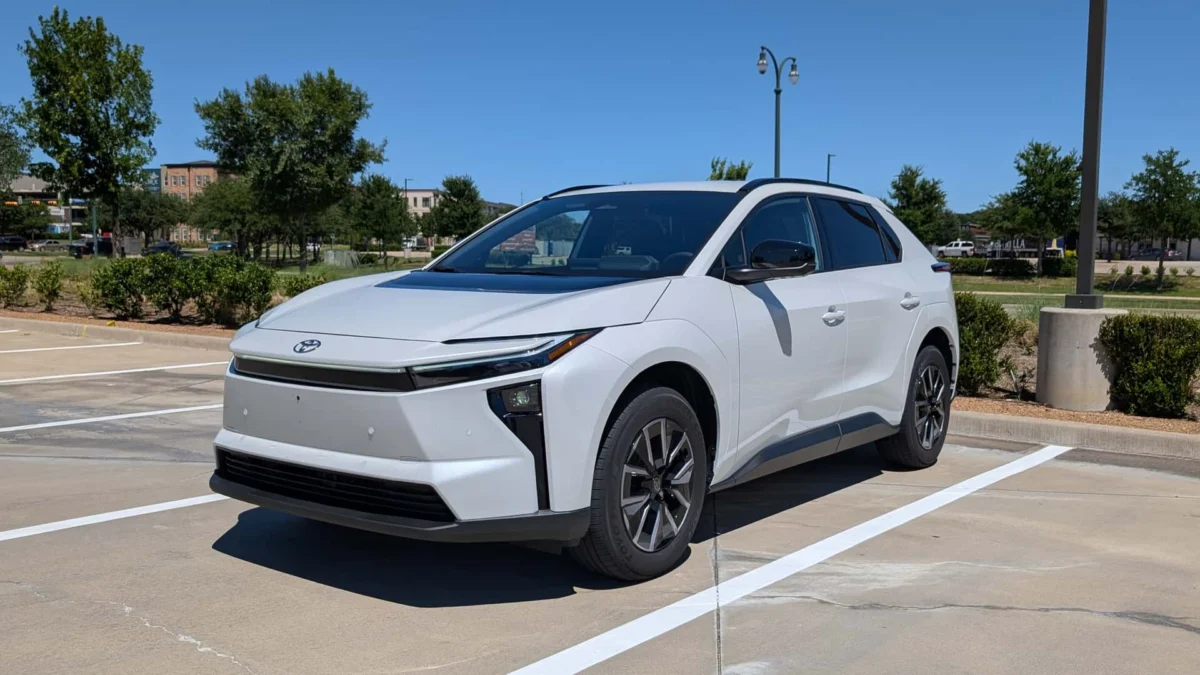
Toyota Motor North America has launched a series of aggressive financial incentives designed to bolster the market share of its latest electric vehicle, the 2026 Toyota bZ, specifically targeting current electric vehicle owners in the competitive California market. The centerpiece of this promotional campaign is a $3,000 "conquest cash" incentive, a strategic move intended to encourage drivers of older battery-electric vehicles (BEVs) to transition into Toyota’s refined electric crossover. This targeted offer highlights a shift in Toyota’s marketing strategy as it seeks to capitalize on a growing segment of "early adopters" who are now entering their second or third cycle of EV ownership.
The conquest cash offer is not a universal rebate but is instead meticulously structured to target a specific demographic of motorists. To qualify for the $3,000 incentive, applicants must currently own or lease a specific range of electric vehicles manufactured between the 2020 and 2023 model years. By focusing on this three-year window, Toyota is effectively tapping into the natural trade-in cycle of the automotive industry, where many lease agreements are expiring and owners of early-generation EVs may be seeking upgrades in range, charging technology, and software integration.
Regional Strategy and Regulatory Context
While the $3,000 conquest offer is currently restricted to California residents, the geographical limitation is a calculated move. California remains the largest market for zero-emission vehicles (ZEVs) in the United States, driven by robust state-level mandates and a mature charging infrastructure. By offering this incentive in the Golden State, Toyota is positioning the bZ to compete directly with established players like Tesla, Hyundai, and Ford in a region where brand loyalty in the EV sector is still being forged.
Industry analysts note that this incentive is distinct from California’s upcoming $3,500 EV rebate program. The state-sponsored program is primarily designed to assist first-time EV buyers and lower-income households, whereas Toyota’s conquest cash is a manufacturer-to-consumer incentive specifically for those already entrenched in the EV ecosystem. However, Toyota has included a provision for household flexibility: the offer is transferable to immediate family members living in the same household, allowing families with an qualifying older EV to apply the discount toward a new bZ purchase for another family member.
National Incentives and Financial Accessibility
For consumers residing outside of California, Toyota has introduced a suite of national incentives that are among the most competitive in the current high-interest-rate environment. The automaker is offering 0% APR financing for up to 72 months on the bZ, a significant financial lever that can save consumers thousands of dollars in interest over the life of the loan. In addition to financing, Toyota is providing up to $4,000 in lease cash. This brings the cost of a 36-month lease down to approximately $349 per month with a $3,999 down payment at signing, making the bZ one of the most affordable entry points into the mid-size electric crossover segment.
To further broaden its appeal, Toyota is stacking these offers with specialized rebates for specific demographics. Military personnel and recent college graduates can qualify for additional rebates of $750 and $500, respectively. These cumulative discounts reflect a broader industry trend where legacy automakers are utilizing aggressive pricing to clear inventory and establish a foothold in a market that has seen a recent cooling in demand for high-priced electric models.
A Chronology of the bZ Platform’s Evolution
The current success of the 2026 Toyota bZ marks a significant turnaround for the company’s "Beyond Zero" (bZ) sub-brand. The journey began with the launch of the bZ4X in 2022, which faced a challenging introduction. Early models were subject to a high-profile global recall due to concerns regarding wheel hub bolts, a setback that hampered initial sales and consumer confidence.
Following the resolution of these mechanical issues, Toyota embarked on a rigorous refinement process. The transition from the bZ4X moniker to the simplified "bZ" for the 2026 model year coincides with substantial technical upgrades. The 2026 iteration addresses the primary criticisms of its predecessor, offering enhanced battery thermal management systems that allow for more consistent DC fast-charging speeds in cold weather—a common pain point for early EV adopters.

The 2026 bZ also boasts improved EPA-estimated range figures and a more streamlined packaging approach. The introduction of the "Woodland" trim level, which features a slightly more rugged aesthetic and off-road-oriented tuning, demonstrates Toyota’s attempt to align its EV offerings with its successful line of adventurous internal combustion engine (ICE) SUVs like the RAV4 and 4Runner.
Market Performance and Supporting Data
The financial incentives appear to be yielding tangible results. According to recent sales data, Toyota’s EV sales have experienced an unprecedented surge in the first half of 2026. The company reported the sale of 17,553 units of the bZ during this period, representing a nearly 100% increase compared to the same period in the previous year. This growth trajectory has propelled the bZ into a leading position among non-Tesla electric vehicles in the United States.
This sales momentum is particularly noteworthy given Toyota’s historically cautious approach to full electrification. For years, the company prioritized its hybrid and plug-in hybrid (PHEV) lineups, arguing that a "multi-pathway" approach was more sustainable than a singular focus on battery-electric vehicles. While Toyota continues to lead the hybrid market, the doubling of bZ sales suggests that the automaker is successfully pivoting to capture the growing demand for pure BEVs.
Competitive Landscape and Industry Implications
The use of "conquest cash" is a classic automotive industry tactic, but its application in the EV sector signifies a new phase of competition. In the early days of the EV market, manufacturers focused on converting ICE owners. Now, as the market matures, the battle is shifting toward "stealing" customers from rival EV brands. Toyota’s specific targeting of 2020-2023 models suggests they believe their 2026 refinements offer a superior experience to the first-generation efforts of their competitors.
The $3,000 offer is likely a response to the aggressive price cuts initiated by Tesla over the past 18 months. As the market leader, Tesla’s pricing shifts have forced legacy automakers to either lower their MSRPs or provide heavy incentives to remain competitive. By opting for incentives like 0% financing and conquest cash, Toyota can maintain its vehicle’s perceived value (MSRP) while offering lower "real-world" prices to consumers.
Furthermore, the 0% APR offer is a strategic response to the Federal Reserve’s monetary policy. With standard auto loan rates hovering between 6% and 9% for many consumers, the ability to finance a vehicle at 0% is a powerful psychological and financial motivator that can outweigh the appeal of a lower sticker price from a competitor.
Future Outlook: The Road Ahead for Toyota’s EV Strategy
As Toyota continues to roll out its bZ lineup, the industry will be watching closely to see if these incentives are a temporary measure or a long-term fixture of their sales strategy. The company has announced plans to introduce several more models under the bZ umbrella, including a three-row electric SUV intended for the North American market, which is expected to be manufactured in Kentucky.
The success of the 2026 bZ serves as a proof of concept for Toyota’s ability to iterate and improve on its electric offerings. By combining its reputation for reliability and its massive dealer network with aggressive financial incentives, Toyota is positioning itself to be a dominant force in the EV transition, challenging the notion that legacy automakers cannot compete with "digital-first" EV startups.
For the consumer, the current landscape represents a "buyer’s market" for electric vehicles. The combination of manufacturer incentives, federal tax credits (which can often be applied at the point of sale for leases), and state-level rebates creates a unique window where the total cost of ownership for an EV like the Toyota bZ may be lower than that of a comparable gasoline-powered vehicle. As Toyota pushes to maintain its sales growth through the remainder of 2026, the bZ stands as a testament to the brand’s resilience and its evolving vision for the future of mobility.