The political landscape in Washington and across the United States has once again been roiled by an unexpected clash between a sitting president and his immediate predecessor. Prior to boarding Air Force One for a high-stakes campaign rally in Corinth, Mississippi, Donald Trump delivered a scathing, extensive tirade in response to remarks made by former President Barack Obama over the weekend. The exchange underscores the intensely polarized political climate as the nation hurtles toward critical midterm elections, blending personal aesthetics, architectural critiques, and deeper historical subtext.

The genesis of the public feud occurred during a campaign stop in Ohio on Saturday, where Barack Obama took aim at Trump’s distinct taste in interior design. In a speech that quickly went viral, Obama joked that Trump’s extensive renovations of the executive mansion—notably featuring "gold everywhere"—left the iconic historical residence "looking like Saddam Hussein opened a Cheesecake Factory." While mainstream political analysts largely viewed the quip as a lighthearted commentary on maximalist interior decoration, right-wing media outlets swiftly attempted to reframe the joke as an insult directed at working-class patrons of the popular restaurant chain. Reports subsequently surfaced indicating that Obama’s own family had occasionally frequented the establishment during his tenure, further muddying the conservative talking points.
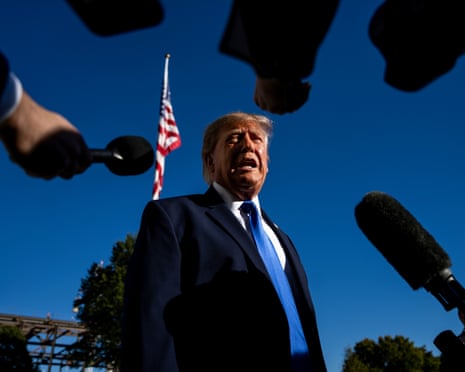
The confusion crystallized when Cara Castronuova, a correspondent for LindellTV, approached Trump on the tarmac before his departure and asked if he had a response to Obama "who made fun of the Cheesecake Factory, comparing it to the White House." Initially offering a curt "No," Trump immediately reversed course, launching into a detailed, nearly 500-word defense of his architectural interventions.
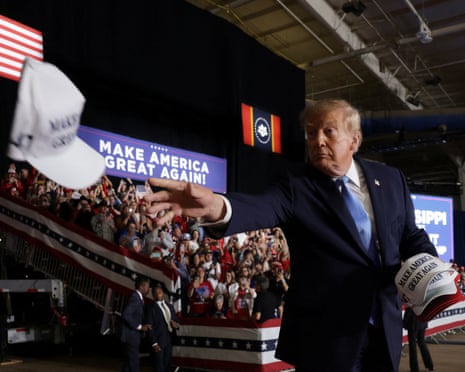
"I’ve taken care of the White House. I fixed it with the finest artisans in the world. We’ve reskinned it. It was in horrible shape," Trump stated, pivoting quickly to a direct attack on Obama’s personal habits and administrative oversight. The incumbent president criticized his predecessor using language that media observers and cultural historians noted closely channeled long-standing racial tropes regarding cleanliness and upkeep.
"Guys like Obama, they would pass the front door, they’d see the broken masonry; they’d see the broken—the beautiful pilasters that were all broken, for years they were broken, and he wouldn’t notice because he doesn’t notice that," Trump asserted. "He doesn’t notice dirt and filth that hadn’t been cleaned, where the walls hadn’t been cleaned for years. He doesn’t notice areas that haven’t been painted."

Trump further emphasized his personal standards, declaring, "So it’s very easy for me to do. I do it very very simply because it’s my nature. You know, I’m a very clean person, and the White House was in terrible shape." Escalating the rhetoric, the president questioned Obama’s intellect before turning directly to the camera lens to deliver a pointed message: "We have to explain to Obama that the White House is a symbol of America, and it has to be maintained properly… And for you to say it’s a Cheesecake Factory, that just shows why you were a lousy president."
Background Context and Political Implications
The architectural back-and-forth unfolds against a backdrop of deep national anxiety and intense electoral competition. Trump’s journey to Corinth, Mississippi, was designed to bolster Republican Senator Cindy Hyde-Smith, who is facing an unexpectedly fierce challenge from Democratic challenger Scott Colom. Traditionally a safe red seat, Mississippi has emerged as a battleground amid voter discontent over soaring inflation, high energy costs tied to the ongoing conflict with Iran, and the fallout from federal legislative policies enacted during Trump’s second term.

At the same time, the broader media ecosystem has been saturated with controversies surrounding the administration’s aggressive posture toward independent journalism. Just hours before Trump’s remarks on the tarmac, a coalition of news consumers filed a federal lawsuit challenging the administration’s practice of restricting White House press access for outlets deemed unfavorable. Plaintiffs argued that barring networks such as CNN and Politico infringes upon the public’s constitutional right to receive unobstructed reporting and exerts a chilling effect on the broader press corps.
Furthermore, the administration remains embroiled in parallel controversies, ranging from federal court rulings overturning the dismissal of high-profile prosecutors to ongoing debates over foreign policy, civil rights denunciations by organizations like the NAACP, and the administrative handling of intelligence and defense supplies abroad.
Broader Reactions and Chronology of Events
The convergence of personal insults, cultural touchstones, and high-stakes policy battles highlights the unique communication strategy favored by the Trump administration during the closing weeks of the midterm cycle. By transforming a former president’s interior design joke into a sprawling discourse on national dignity, executive competence, and personal hygiene, Trump successfully redirected media attention away from local policy debates and onto familiar cultural battlegrounds.
Political scientists note that while such rhetorical maneuvers reliably galvanize the core base, they also risk further polarizing an electorate already exhausted by relentless political theater. As both parties make their final appeals to voters ahead of election day, the lingering echoes of the "Cheesecake Factory" dispute serve as a striking illustration of how modern American political discourse frequently collapses the boundary between matters of state and populist entertainment.