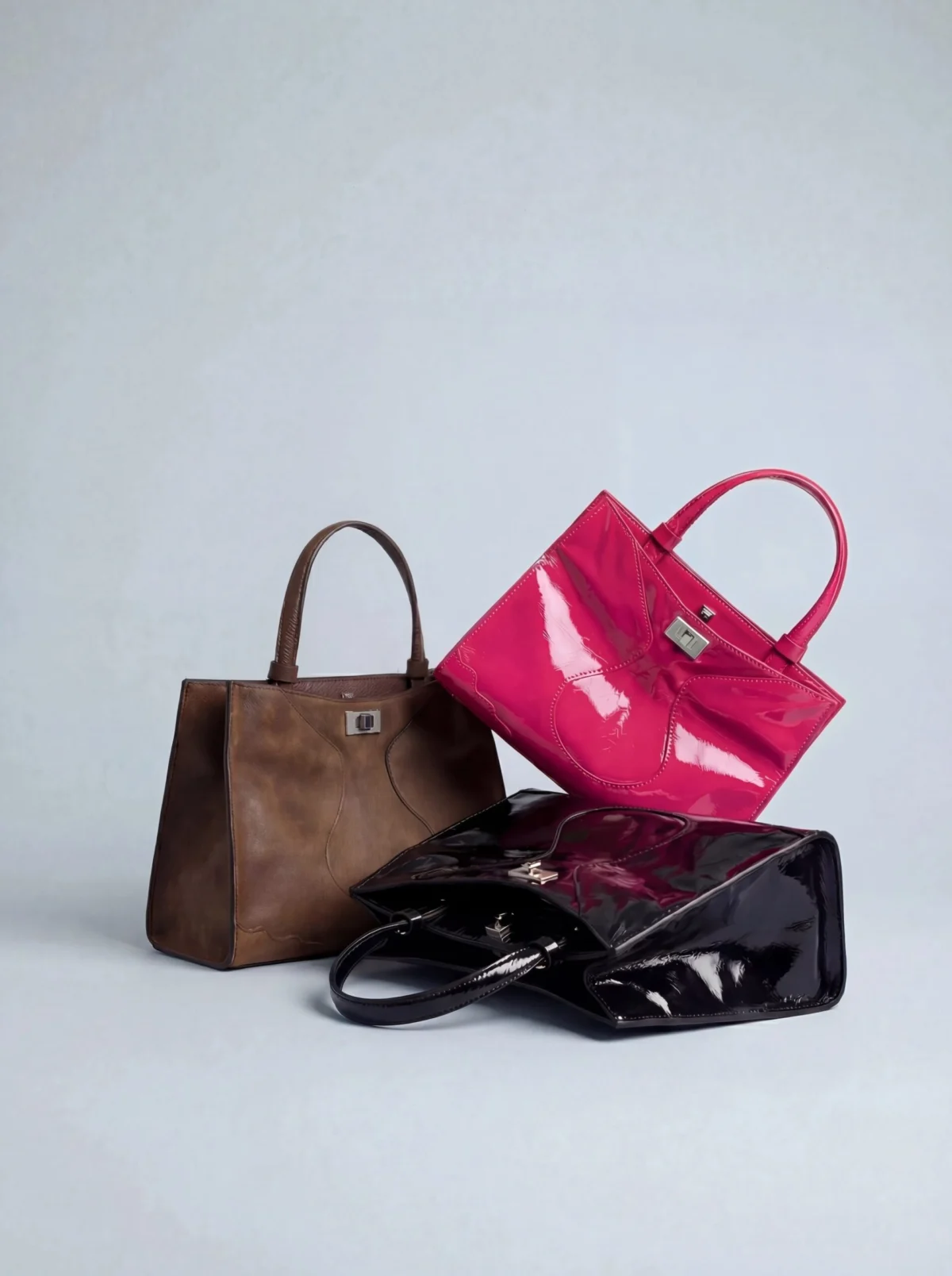
The French contemporary luxury house Zadig & Voltaire has officially announced the expansion of its handbag portfolio with the introduction of the Jack Mini, a compact iteration of its critically acclaimed Jack silhouette. This strategic release follows the commercial success of the original Jack handbag, which made its debut in the fall of 2024 and quickly became a cornerstone of the brand’s accessories division. By downsizing the slouchy, utilitarian tote into a more versatile "mini" format, the Parisian label aims to capture a growing market segment that prioritizes transitionary pieces capable of moving seamlessly from professional daytime environments to evening social engagements.
The Jack Mini is being launched in three distinct variations, each catering to a different aesthetic preference within the brand’s "rock-and-roll" design DNA. The "Wood" colorway features a rich brown waxy suede, retailing at $548, while the "Black" and "Podium" (a vibrant hot pink) versions are crafted from high-shine vintage patent leather, both priced at $628. This pricing strategy positions the Jack Mini within the "accessible luxury" tier, a sector that has shown remarkable resilience in the global fashion economy despite fluctuating consumer spending in the ultra-high-end luxury market.
The Evolution of the Jack Silhouette: A Chronological Overview
To understand the significance of the Jack Mini, one must look at the rapid trajectory of the Jack line. The original Jack bag was introduced as part of the brand’s Autumn/Winter 2024 collection, designed under the creative direction of Cecilia Bönström. It was intended to be the ultimate carryall—a bag that rejected the rigid structures of traditional luxury totes in favor of a relaxed, "lived-in" look that resonated with the brand’s effortless Parisian aesthetic.

By the beginning of 2025, the original Jack had become a top-tier performer for Zadig & Voltaire, frequently appearing in editorial spreads and on high-profile influencers. Market data from the first half of 2025 indicated a consumer shift: while large totes remained popular for work and travel, there was a rising demand for smaller versions of these relaxed silhouettes. Consumers were seeking the "slouch" of a hobo bag but in a size that did not overwhelm the frame during evening events.
In response to this feedback, Zadig & Voltaire’s design team spent the latter half of 2025 developing the Jack Mini. The goal was to retain the signature pleats and the tactile nature of the original while recalibrating the proportions for a "nano" or "mini" scale. The result, arriving in time for the Spring/Summer 2026 season, represents the brand’s commitment to iterative design—taking a proven success and adapting it to the shifting rhythms of modern life.
Design Philosophy and the French Rock-and-Roll Aesthetic
Zadig & Voltaire has long been synonymous with a specific brand of "edgy" French luxury. Founded in 1997 by Thierry Gillier, the brand carved out a niche by blending high-quality materials—such as cashmere, silk, and premium leathers—with a rebellious, rock-inspired sensibility. The Jack Mini is a physical manifestation of this philosophy.
The choice of materials for the Jack Mini launch is deliberate. The "Wood" suede option appeals to the "Boho-chic" resurgence that has permeated the 2025 and 2026 runways, offering a soft, matte texture that gains character with age. Conversely, the patent leather options in Black and Podium pink reflect a more polished, nocturnal energy. Patent leather, often associated with ’90s minimalism and early 2000s club culture, provides a structural contrast to the bag’s inherently slouchy shape.

Industry analysts note that Zadig & Voltaire’s success often lies in its ability to make "messy" look "expensive." The Jack Mini does not stand upright; it collapses slightly when placed on a surface, a design choice that signals a rejection of the stiff, "prim and proper" handbag styles of previous decades. This aesthetic choice aligns with the broader cultural movement toward "authentic" and "unfiltered" fashion.
Analyzing the Slouchy Bag Trend of 2026
The Jack Mini arrives at a pivotal moment in the accessories market. According to trend forecasts for the Spring/Summer 2026 season, the "slouchy bag" is poised to be the dominant silhouette, effectively replacing the micro-mini bags and rigid box bags that defined the early 2020s.
During the most recent fashion weeks in Paris and Milan, major luxury houses showcased bags that were oversized, under-structured, and occasionally even styled as if they were overstuffed or left partially open. This "on-the-go" aesthetic suggests a consumer who is active and unpretentious. The Jack Mini captures this trend but scales it down for those who only need to carry essentials—a smartphone, a cardholder, and perhaps a lipstick.
Furthermore, the Jack Mini draws heavy inspiration from the 1990s hobo bag. However, it avoids being a mere vintage replica by incorporating contemporary hardware and modern leather treatments. The ’90s influence is a strategic move, as Gen Z and Millennial consumers continue to drive the market for "nostalgia-core" accessories that feel both familiar and fresh.

Market Positioning and Economic Context
The release of the Jack Mini is also a calculated business move within the context of the global accessories market. Accessories, particularly handbags, remain the highest-margin category for luxury brands. By offering the Jack Mini at a price point between $548 and $628, Zadig & Voltaire is targeting the "HENRY" (High Earner, Not Rich Yet) demographic—consumers who are willing to invest in quality and brand prestige but may be priced out of the $3,000+ offerings from heritage houses like Chanel or Hermès.
Recent retail reports suggest that the "mid-range luxury" or "contemporary luxury" tier is seeing increased traffic as consumers become more discerning about "cost-per-wear." The versatility of the Jack Mini—its ability to function as a daytime crossbody or an evening clutch—increases its perceived value.
In terms of distribution, Zadig & Voltaire is leveraging a multi-channel approach. The Jack Mini is available immediately through the brand’s global e-commerce platform and its network of brick-and-mortar boutiques in fashion capitals such as Paris, New York, London, and Shanghai. This ensures that the brand can capitalize on the immediate "see-now, buy-now" mentality of the modern digital consumer.
Materiality and Craftsmanship
A technical analysis of the Jack Mini reveals a focus on tactile diversity. The waxy suede used in the "Wood" colorway undergoes a specific treatment process to ensure water resistance and durability, addressing common consumer concerns regarding the fragility of suede. The "vintage patent" leather used in the Black and Podium versions is designed to have a slight crinkle, which prevents the material from looking too plastic-like and helps hide minor scratches that occur with daily use.

The bag’s interior is optimized for the "essentials-only" lifestyle. Despite its compact exterior, the slouchy nature of the leather allows for a surprisingly flexible interior volume. This "deceptively spacious" quality is a hallmark of the Jack line, ensuring that the bag remains functional rather than purely ornamental.
Broader Implications for the Fashion Industry
The shift from the "original" Jack to the "Jack Mini" reflects a broader industry trend toward "fractionalized" product lines. Brands are no longer launching a single hero product; they are launching ecosystems of products in various sizes (Nano, Mini, Medium, XL) to ensure they have an offering for every specific use case.
Moreover, the Jack Mini’s success or failure will be a bellwether for the "rock-chic" aesthetic in 2026. As fashion cycles move away from the "Quiet Luxury" and "Old Money" trends of 2023-2024, there is a visible return to more expressive, textured, and "moody" fashion. Zadig & Voltaire, as a primary purveyor of this style, stands to benefit significantly from this cultural pivot.
The Jack Mini is more than just a smaller handbag; it is a strategic response to the evolving needs of the modern luxury consumer. It balances the brand’s historical roots in French rock culture with the current market demand for slouchy, ’90s-inspired silhouettes. As the Spring/Summer 2026 season progresses, the Jack Mini is expected to solidify its place as a staple accessory, reinforcing Zadig & Voltaire’s position as a leader in the contemporary luxury landscape. Whether through the rugged charm of "Wood" suede or the high-octane energy of "Podium" pink, the collection offers a compelling argument that in the world of modern accessories, the most impactful statements are often made by the smallest pieces.