The landscape of modern cinema often relies on high-concept tropes to explore the complexities of adult life, yet rarely does a project emerge that mirrors the private existence of its creators with such uncompromising transparency as the upcoming feature film Babies. Written and directed by Lauren Miller Rogen and starring her husband, Seth Rogen, alongside Anna Kendrick, the film serves as a narrative exploration of the child-free lifestyle—a topic that remains a polarizing and frequently misunderstood subject in contemporary societal discourse. Premiering at the Toronto International Film Festival (TIFF) at The Hollywood Reporter’s Studio at 1 Hotel, the film represents a departure from the traditional comedic roles usually associated with the Rogen brand, opting instead for a grounded, introspective look at the choice to forgo parenthood.
A Decade-Long Evolution of a Concept
The genesis of Babies traces back to a domestic shift nearly ten years ago. Lauren Miller Rogen recalls a period when a close friend—a divorced mother of one—moved into the Rogen household for a year. The cultural friction and emotional resonance of that arrangement initially sparked the idea for a television series. Miller Rogen hypothesized that the setup—a child-free couple navigating their own identity while simultaneously hosting a single parent and a child—would provide a fertile ground for episodic storytelling.
However, the project remained in a state of creative stasis for years. The primary obstacle was not a lack of interest, but rather the absence of a resolution. As Miller Rogen explained during the TIFF press event, the narrative lacked an emotional anchor because she and Seth were still processing their own conclusions regarding their path forward. It was only after years of internal debate, extensive personal reflection, and the solidification of their decision to remain a child-free couple that the script found its necessary trajectory. The production timeline was remarkably compressed following this breakthrough: the script was penned in January 2025, completed by the spring, and moved into principal photography by the following autumn.
Narrative Framework and Character Parallels
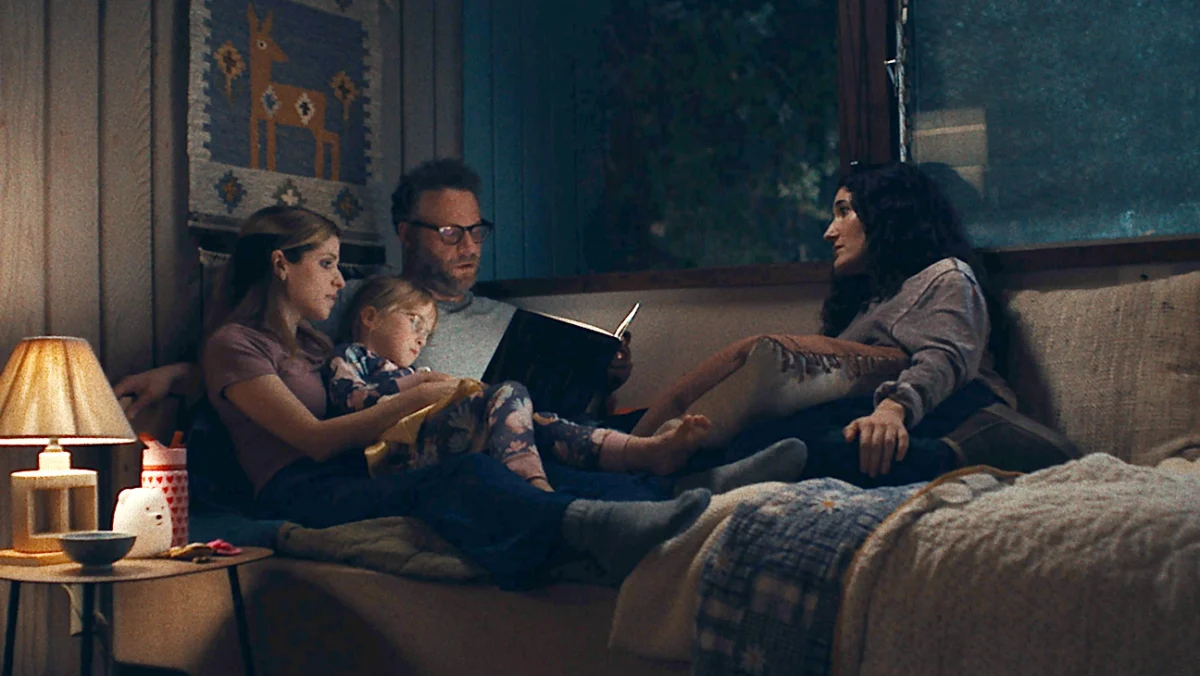
In the film, the protagonists—Annie and Aaron—are intentionally named after the middle names of Lauren and Seth, signaling the autobiographical nature of the project. The characters find their structured, stable lives interrupted when their friend, played by Kate Berlant, moves in with her daughter following a separation. This central conflict acts as a crucible, allowing the audience to observe the realities of child-rearing from an intimate, domestic vantage point.
Beyond the central theme of parenthood, the film weaves in a deeply personal thread regarding Annie’s mother’s battle with Alzheimer’s disease. This plot point is a direct reflection of Miller Rogen’s own life; her mother passed away in 2020 due to complications from early-onset Alzheimer’s. By intertwining the pressures of caregiving for an aging parent with the existential questions surrounding the creation of a new family, the film positions itself as a meditation on the cyclical nature of life, death, and legacy.
Anna Kendrick, who portrays the lead character, acknowledged the emotional intensity required to inhabit a role so closely tethered to the director’s lived experience. Kendrick noted during the festival that the level of vulnerability displayed by Miller Rogen would have been overwhelming, describing the proximity to reality as almost "dissociative."
Societal Context and the Child-Free Movement
The release of Babies arrives at a time when the decision to remain child-free is increasingly represented in sociological data. According to recent surveys from the Pew Research Center, the number of adults in the United States who do not have children and do not expect to have them has seen a steady incline. This shift is often attributed to economic pressures, environmental concerns, and a broader cultural re-evaluation of the "life script" that prioritizes parenthood as the ultimate milestone of adulthood.
Seth Rogen’s critique of language, specifically the term "dad duty," highlights a growing sentiment that traditional gender roles and the performative nature of modern parenting language often obscure the actual, lived reality of families. By framing "dad duty" as an "obnoxious" descriptor, Rogen suggests that the film seeks to strip away the performative aspects of parenting, asking why society feels the need to label basic acts of caregiving as extraordinary chores.
The film argues that one can be highly capable, responsible, and fond of children while still choosing not to parent. This is a significant distinction that the production team aims to highlight. "You can like kids and be good with kids… and you could still just maybe not really want it," Rogen stated. "That’s a very under-shared perspective."
Balancing Perspectives: An Inclusive Approach
Despite its focus on the child-free experience, Miller Rogen is quick to emphasize that the film is not intended to alienate those who choose to be parents. The production team maintains that the project is an exploration of multiple truths. Throughout the writing process, they drew upon their close relationships with friends who have successfully built families, aiming to depict those dynamics with respect and nuance.
"We’ve been around our friends who have had beautiful families. We have amazing relationships with their kids," Miller Rogen explained. "I think that it was about not just making it feel real and grounded to us, but also sort of honoring what we’ve witnessed so many times, and how beautiful that relationship is."
This attempt to balance perspectives is crucial for the film’s potential impact. By positioning the narrative as a dual reflection—acknowledging both the beauty of parenthood and the validity of opting out—Babies seeks to bridge a divide that often leads to social judgment.
Broader Implications and Industry Impact
The film’s 2027 theatrical release date suggests a strategic rollout, allowing the project to generate discourse well ahead of its arrival in cinemas. From an industry standpoint, the backing of a project that centers on such a personal, non-traditional narrative arc reflects a shifting appetite in Hollywood for "personal-truth" cinema. Studios and streaming platforms are increasingly prioritizing projects that move away from franchise-heavy content in favor of stories that offer profound, character-driven insights into contemporary dilemmas.
Furthermore, the involvement of high-profile talent like Seth Rogen and Anna Kendrick provides a megaphone for the film’s message. When celebrities of this caliber align themselves with a narrative that challenges the status quo, it invariably accelerates public conversation. The implication for the industry is clear: audiences are demonstrating a greater appetite for stories that reflect the messy, often contradictory realities of modern life.
As the industry looks toward 2027, the success of Babies will likely be measured not only by its box office performance but by its ability to foster a more nuanced dialogue regarding the diverse paths individuals take in adulthood. By bravely putting their own experiences on display, the Rogens have created a work that serves as both a private catharsis and a public invitation to examine the societal pressures surrounding one of life’s most significant decisions. The film stands as a testament to the belief that the most effective stories are often those that require the highest degree of personal vulnerability to tell.