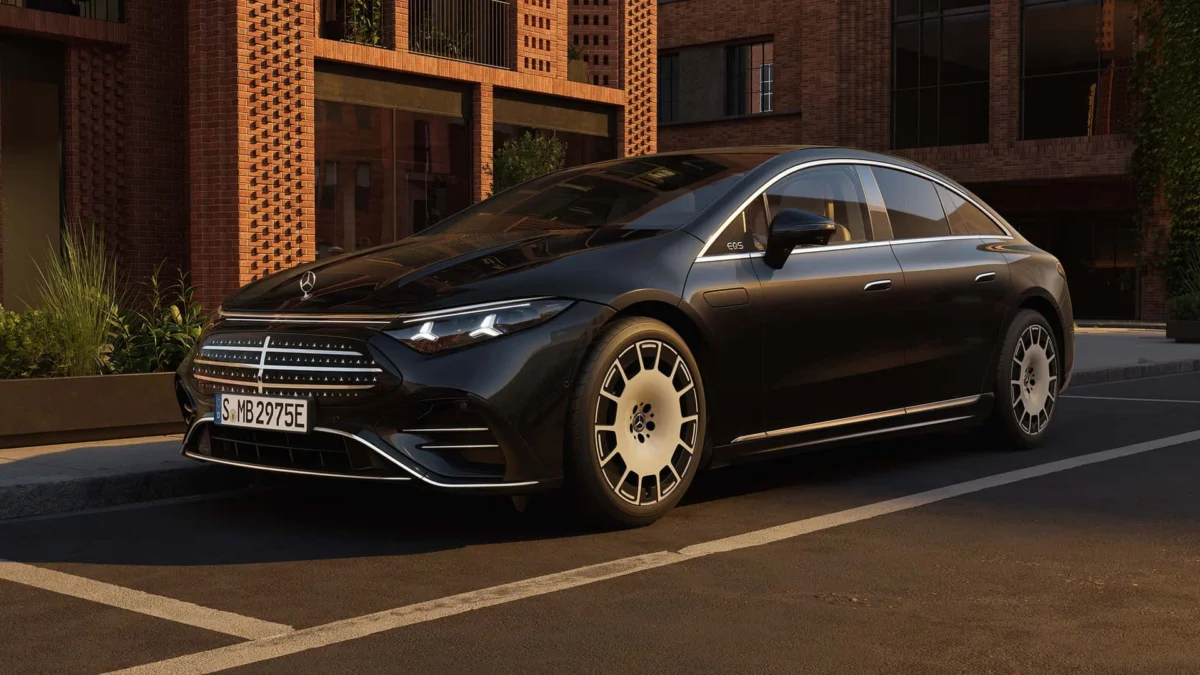
The landscape of electric vehicle (EV) ownership underwent a significant shift this week as the 2027 Mercedes-Benz EQS 450+ sedan demonstrated a milestone performance in independent real-world testing. Conducted by the automotive research firm Edmunds, the evaluation saw the luxury electric sedan cover 539 miles on a single charge. This result not only eclipses the vehicle’s official EPA-estimated range of 467 miles by a margin of 72 miles but also sets a new benchmark for production sedans, signaling a pivotal moment in the ongoing effort to neutralize "range anxiety"—the psychological barrier that has long hindered widespread EV adoption.
The Evolution of the EQS Platform
The 2027 iteration of the Mercedes-Benz EQS represents a calculated engineering response to market demands for greater efficiency and faster power replenishment. While the exterior aesthetics remain familiar to brand loyalists, the powertrain architecture has undergone a comprehensive overhaul. The most notable change is the integration of an upgraded 122-kilowatt-hour (kWh) battery, an increase from the 118 kWh unit found in the previous model year.
Beyond raw battery capacity, Mercedes-Benz has transitioned the vehicle to an 800-volt electrical architecture. This high-voltage platform is critical for reducing heat generation during high-speed charging sessions and allows for thinner, lighter cabling throughout the vehicle’s electrical harness. Complementing this is the introduction of a new two-speed transmission on the rear motor, a mechanical refinement that allows the vehicle to optimize torque delivery at low speeds while maintaining high-efficiency cruising at highway velocities. These technical advancements, which have also been implemented in the recently unveiled Mercedes-Benz CLA 250+, reflect a broader corporate strategy to harmonize luxury performance with industry-leading efficiency metrics.
Analyzing the Edmunds Testing Methodology
To understand the significance of the 539-mile result, it is necessary to examine the testing protocol employed by Edmunds. Unlike the Environmental Protection Agency (EPA), which relies heavily on standardized laboratory cycles to determine range, the Edmunds test utilizes a real-world route consisting of a 60/40 split between city and highway driving. This methodology is designed to mimic the unpredictable nature of daily commuting, including variations in elevation, traffic flow, and wind resistance.
The EPA’s own testing regimen utilizes a 55/45 split. The fact that the EQS 450+ over-performed its EPA rating under a more demanding testing cycle is a testament to the vehicle’s thermal management and regenerative braking systems. While the Cadillac Escalade IQ currently holds the record in the Edmunds database with a 558-mile result, the EQS 450+ now stands as the undisputed leader among sedans, surpassing the previous record-holder, the Lucid Air Dream Edition, by 34 miles.
Charging Infrastructure and Efficiency
A vehicle’s utility is defined not only by how far it can travel on a single charge but also by how quickly it can regain that range. The 800-volt architecture has transformed the EQS into one of the most efficient charging machines currently available on the global market.
In the latest evaluations, the EQS 450+ demonstrated the ability to recover 100 miles of range in just seven minutes when connected to a compatible DC fast-charging station. This metric, often referred to as "miles-per-hour" of charging, places the EQS in the top tier of the industry, currently trailing only the Hyundai Ioniq 6 and the aforementioned Mercedes-Benz CLA 250+. The combination of a 500-plus mile range and rapid charging capabilities effectively addresses the two most common critiques of electric transport: the inability to complete long-distance trips and the perceived inconvenience of lengthy charging stops.
Market Context and the Diminishing Range Barrier
The achievement of the 2027 EQS arrives at a time when the electric vehicle market is experiencing a transition from "early adopter" novelty to "mass-market" necessity. Historically, the 300-mile range threshold was viewed as the "holy grail" for EV manufacturers. A decade ago, this target was almost exclusively held by premium offerings like the Tesla Model S. Today, that milestone has become the baseline for entry-level and mid-range vehicles.
Data from recent industry testing indicates that more than 90 different EV models currently available in the North American market have exceeded the 300-mile mark. Vehicles such as the Chevrolet Equinox EV and the Kia EV3 demonstrate that high-capacity, efficient battery technology is no longer the exclusive domain of luxury manufacturers. This democratization of range is slowly decoupling the concept of "EV ownership" from "high-cost investment."
However, the 2027 EQS 450+ serves as a reminder that the cutting edge remains expensive. With a sticker price approaching $122,000, the vehicle remains an aspirational product. The broader market impact, therefore, is not necessarily the direct accessibility of this specific sedan, but rather the validation of the technology contained within it. The components that allowed the EQS to travel 539 miles—the 800-volt architecture, the two-speed transmission, and advanced battery chemistry—are the same technologies that will eventually migrate down to more affordable vehicle segments.
Industry Implications and the Road Ahead
The automotive industry is currently navigating a complex period of electrification. While manufacturers have largely succeeded in solving the "range problem," other hurdles remain, specifically regarding the reliability of public charging infrastructure and the initial purchase price gap between internal combustion engine (ICE) vehicles and EVs.
Nevertheless, the data provided by the EQS performance suggests that range anxiety is increasingly becoming a legacy concern. As the number of vehicles capable of exceeding 500 miles increases—including the BMW iX3, i3, and iX5, as well as upcoming offerings from Volvo and Porsche—the consumer perception of electric vehicles is expected to shift.
From an engineering perspective, the performance of the EQS also highlights the importance of aerodynamics and software integration. The vehicle’s ability to "overdeliver" on its EPA rating suggests that manufacturers are becoming increasingly sophisticated at managing power consumption in real-world conditions. This is a critical development for the industry, as it allows for smaller, lighter, and more cost-effective battery packs to achieve the same range targets that previously required massive, heavy, and expensive battery arrays.
Future Outlook
Looking toward the remainder of the decade, the industry trajectory is clear: the focus is shifting from "how far" to "how efficiently." With the 800-volt platform becoming the new standard for premium EVs, the next phase of development will likely center on vehicle-to-grid (V2G) integration, improved battery recycling, and the continued refinement of solid-state or high-density battery chemistries.
The performance of the 2027 Mercedes-Benz EQS 450+ is more than just a marketing victory for the German automaker. It serves as a benchmark for the industry and a data point that will likely influence consumer sentiment for years to come. By proving that a luxury sedan can travel nearly 540 miles without requiring a refueling stop, Mercedes-Benz has effectively closed a chapter in the history of the electric vehicle. The conversation has now moved beyond whether an EV can handle a long-distance road trip; it has shifted to the logistics of how, where, and when the transition to a fully electric transportation ecosystem will occur.
As the industry continues to monitor these developments, the focus will undoubtedly remain on the "charge-up" experience. The ability to add significant range in under ten minutes represents a level of convenience that, when combined with 500-mile range capabilities, mirrors the refueling experience of traditional gas-powered vehicles. With the technical foundation now firmly established, the challenge for the next generation of electric vehicles will be to scale these high-performance features across the entire price spectrum, ensuring that the benefits of long-range, fast-charging electric mobility are accessible to all segments of the driving population.