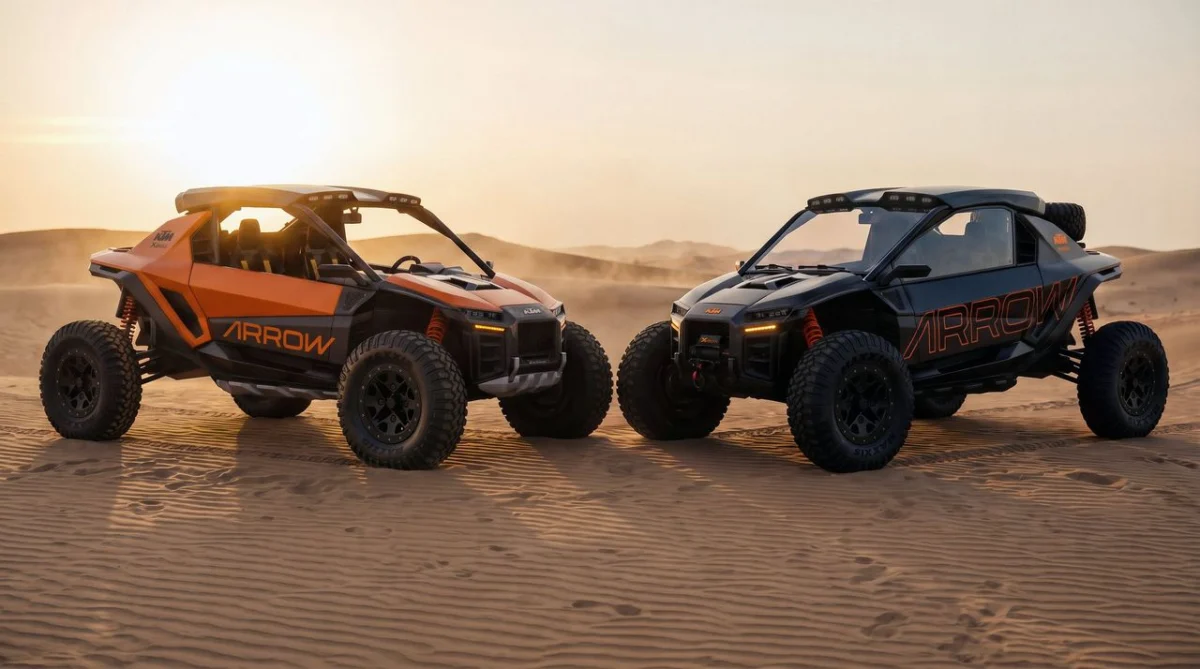
Nearly two decades after KTM shocked the automotive industry by transitioning from a world-renowned motorcycle manufacturer to a niche creator of track-focused, lightweight sports cars, the Austrian marque has unveiled its most radical departure to date. The KTM X-Bow Arrow, announced on November 10, 2026, marks the brand’s definitive entry into the high-performance off-road buggy segment. By shifting its focus from the smooth asphalt of circuits like the Red Bull Ring to the unpredictable terrain of rally-raid landscapes, KTM is positioning the Arrow as a direct competitor to the established Ariel Nomad.
The evolution of the X-Bow brand has been a story of constant refinement and increasing audacity. From the original, minimalist X-Bow—notorious for its lack of a windscreen and its exposed carbon-fiber architecture—the lineup expanded into increasingly sophisticated iterations. The progression culminated in the GT-XR, a closed-cockpit model that demonstrated KTM’s ability to build grand-touring vehicles with supercar levels of performance. However, the Arrow represents a fundamental re-engineering of the X-Bow philosophy. Unlike its siblings, which rely on a rigid carbon-fiber monocoque to achieve their signature handling, the Arrow is built upon a high-strength tubular steel structure designed to absorb the immense kinetic energy of high-speed off-road impacts.
Technical Specifications and Engineering Architecture
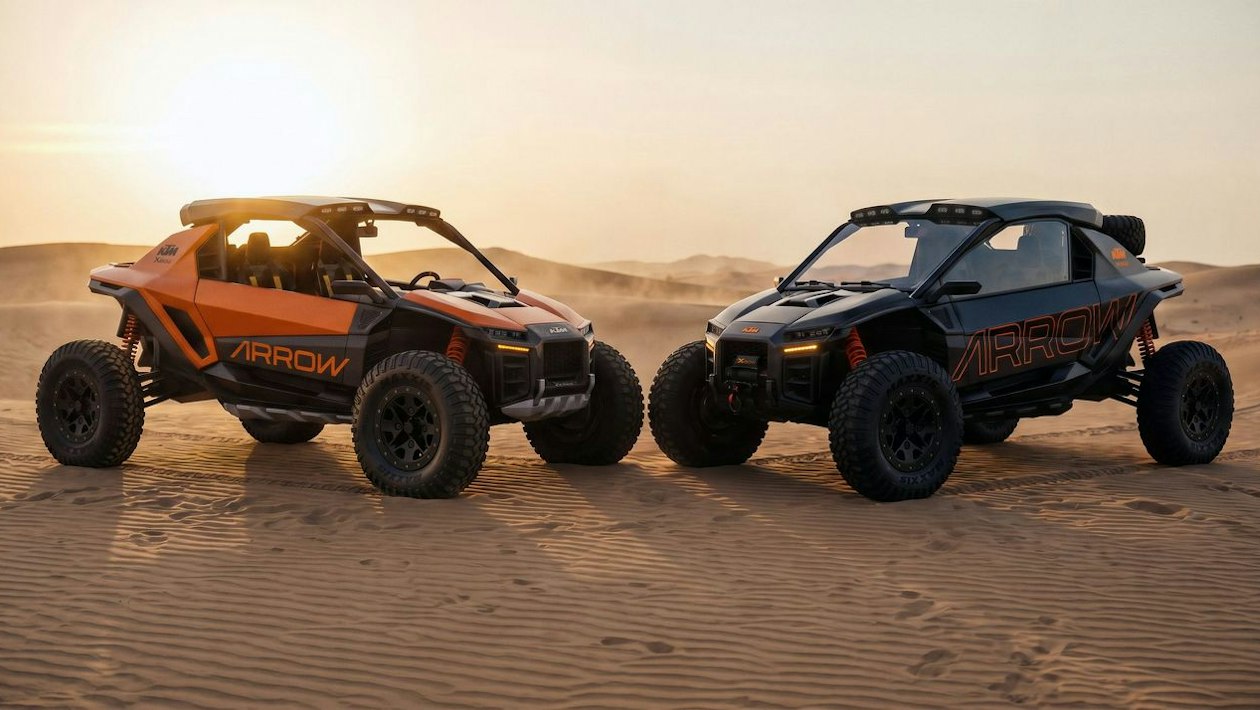
At the heart of the Arrow’s performance is a sophisticated suspension geometry tailored for extreme terrain. KTM has opted for double-wishbone setups at both the front and rear, complemented by a bespoke damping system from KW Automotive. The standard Arrow variant features three-way manually adjustable dampers, providing 600mm of suspension travel—a critical metric for maintaining tire contact on uneven surfaces.
The range-topping Arrow Black takes these capabilities further. It incorporates an electronically adjustable suspension system that reacts to terrain changes in real-time. This version also features an active anti-roll bar system and hydraulic bump stops, allowing the vehicle to tackle deep ruts and jumps with a level of composure rarely seen in this segment. The rolling stock is equally specialized: the standard Arrow sits on 15-inch wheels wrapped in 32-inch Maxxis RAZR XT tires, while the Black variant upgrades to 35-inch tires mounted on beadlock wheels. These beadlock wheels are a significant addition for enthusiasts, as they mechanically secure the tire bead to the rim, preventing de-beading during low-pressure operation in sand or rocky environments.
Powering both iterations is the ubiquitous, yet highly capable, Volkswagen Group EA888 2.0-liter turbocharged inline-four engine. This powerplant has become the industry standard for performance-oriented vehicles, from the VW Golf GTI to the Audi S3. In the Arrow, the engine is tuned to deliver 276 bhp, while the Arrow Black pushes that output to 326 bhp. Both models utilize a seven-speed dual-clutch automatic transmission, providing rapid, seamless gear changes that are essential for maintaining momentum on loose surfaces.

Weight Considerations and Ergonomic Integration
While the X-Bow has historically been defined by its featherlight weight, the transition to an off-road chassis has necessitated a shift in mass. The standard Arrow weighs approximately 1,000kg, while the Black variant hits the scales at 1,100kg. This weight disparity, when compared to the 700kg Ariel Nomad, is largely attributed to the robust steel spaceframe and the integration of heavy-duty recovery equipment, including an integrated winch on the Black model.
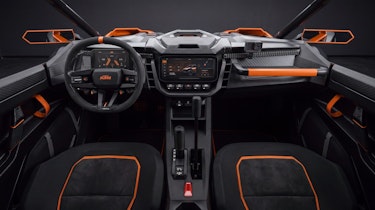
Despite its rugged nature, KTM has prioritized a level of interior amenity that distinguishes the Arrow from stripped-out competition-only buggies. The cabin features USB-C charging ports for navigation hardware, a high-definition reversing camera for tight technical maneuvers, and a weather-resistant sound system. These additions suggest that while the vehicle is built for the dunes, it is also intended to be a viable recreational vehicle for weekend excursions.
Market Positioning and Global Strategy
KTM has confirmed that the X-Bow Arrow is intended for a global market, with deliveries scheduled to commence in late 2027. The pricing structure is segmented to cater to both performance purists and those seeking the fully equipped, top-tier model. In the United States, the entry-level Arrow starts at $59,800, while the performance-focused Black edition is priced at $98,600. These figures place the Arrow in a competitive bracket against existing light-weight off-roaders and high-end side-by-side vehicles.
The legal status of the vehicle remains a nuanced subject. A spokesperson for KTM stated that the Arrow is designed "first and foremost for off-road driving," and noted that registration for road use is subject to regional regulations. In many U.S. states, the vehicle’s compliance with low-volume vehicle manufacturing laws may allow for limited road use, though owners are encouraged to consult local statutes regarding "street-legal" status for off-road-centric designs.
Industry Implications: The Shift Toward Niche Off-Roading
The arrival of the X-Bow Arrow reflects a broader trend in the automotive industry: the diversification of performance brands into the "adventure" and "off-road" sectors. As consumers increasingly prioritize experiential driving over traditional commuting, boutique manufacturers are finding success by adapting track-bred engineering for the dirt.
The rivalry with the Ariel Nomad is expected to be significant. Ariel’s success in establishing the Nomad as the premier road-legal buggy has created a loyal following, but the X-Bow Arrow enters the market with the backing of KTM’s vast expertise in rally-raid and off-road motorcycle racing. KTM’s deep involvement in the Dakar Rally and its dominance in enduro championships provide a level of technical pedigree that is difficult for smaller manufacturers to match. The use of the VW EA888 engine also provides a level of parts accessibility and reliability that could prove decisive for long-term ownership satisfaction.

Chronology of Development
The path to the Arrow was not instantaneous. Following the initial launch of the X-Bow in 2008, KTM spent over a decade refining the chassis and powertrain. Key milestones include:
- 2008: Launch of the original X-Bow, focusing on track-day enthusiasts.
- 2015: Introduction of the X-Bow R, featuring increased power and refined aerodynamics.
- 2022: The debut of the GT-XR, signaling KTM’s move toward more substantial, road-going sports cars.
- 2026 (November): Official unveiling of the X-Bow Arrow, the company’s first purpose-built off-road buggy.
- 2027 (Late): Anticipated commencement of first customer deliveries.
Conclusion: A New Frontier for KTM
The KTM X-Bow Arrow is a bold statement from a company that has rarely shied away from unconventional design. By moving the X-Bow concept into the wilderness, KTM is not only diversifying its portfolio but is also challenging the established order of the off-road vehicle market. The combination of high-travel suspension, a proven turbocharged powertrain, and a focus on durability suggests that the Arrow is built to handle the rigors of serious off-road use.
As the industry moves toward 2027, the success of the Arrow will likely be measured by how well it bridges the gap between a high-performance track toy and a capable, trail-ready machine. If the initial reception is any indication, KTM’s latest project is poised to capture the interest of enthusiasts looking for a unique, adrenaline-fueled experience that transcends the limitations of a traditional road-going sports car. The battle for the dunes has officially begun, and with the introduction of the Arrow, the terrain has become significantly more competitive.