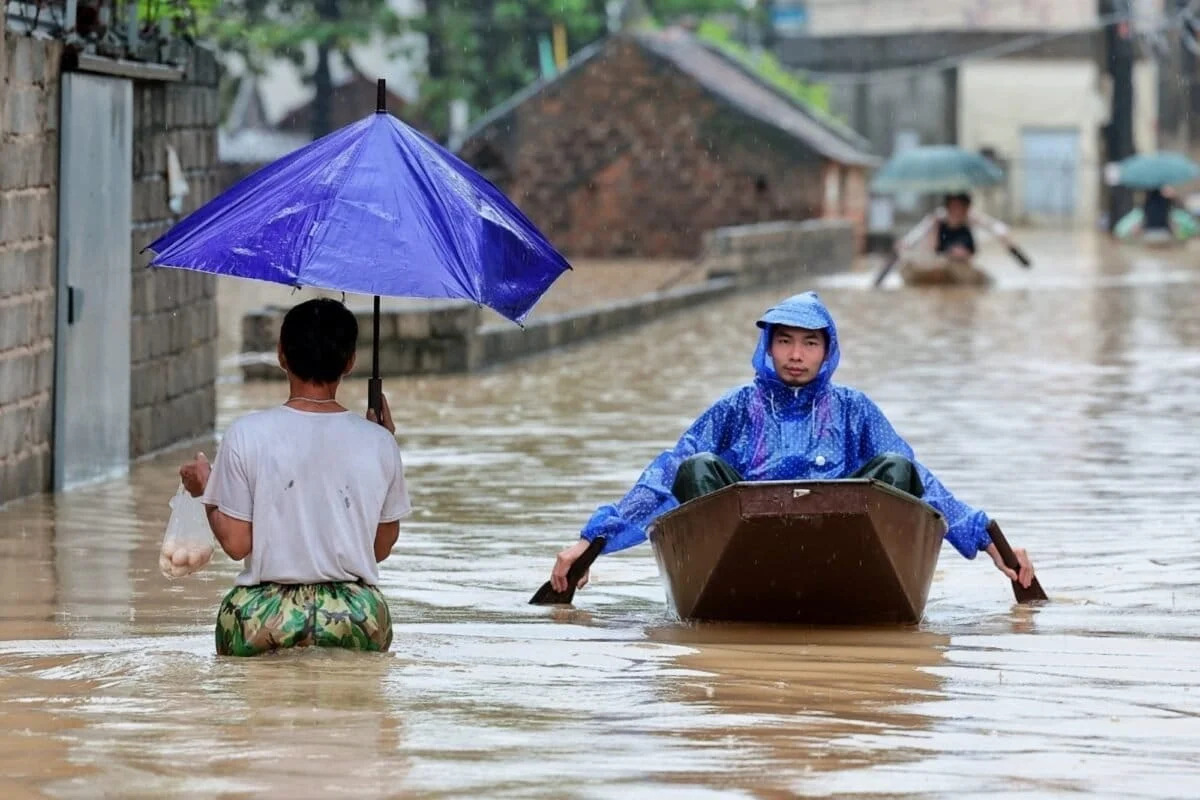
Northern and north-central Vietnam are grappling with a severe environmental crisis as relentless, torrential rainfall has triggered widespread flooding, paralyzing transportation networks, submerging thousands of homes, and threatening the livelihoods of rural and urban communities alike. The disaster, which intensified throughout the current week, has pushed water levels in several key river systems to critical, dangerous thresholds. As state media and disaster management authorities confirm, the scale of the inundation—fueled by extreme meteorological conditions—has necessitated emergency interventions from the military and regional governments.
The meteorological data driving this crisis is significant. According to the national disaster prevention department, some regions have recorded rainfall exceeding 50 centimeters (19.7 inches) in a matter of days. This volume of precipitation has overwhelmed local drainage infrastructure and soil absorption capacities, particularly in the provinces of Ninh Binh and Thanh Hoa. These regions, characterized by a mix of low-lying floodplains and hilly terrain, have become the epicenter of the current deluge, with over 2,000 households submerged and more than 1,000 families currently isolated by rising waters.
A Chronology of the Deluge
The current flooding event began to gain momentum early this week as a persistent weather pattern settled over the northern territories. By Wednesday night, the intensity of the downpour increased significantly, with some stations reporting over 15 centimeters (5.9 inches) of rainfall within a twelve-hour window.
By Thursday morning, the impact on Hanoi, the nation’s capital, was palpable. Major thoroughfares were rendered impassable as water depths reached nearly a meter in certain districts. The resulting gridlock effectively halted the daily routines of millions, preventing commuters from reaching offices and forcing schools and universities to suspend in-person operations. Many educational institutions have transitioned to online instruction to maintain continuity, yet the digital divide remains a point of concern for students in the most severely affected rural sectors.
The situation in the southwest outskirts of Hanoi has been particularly dire. The Bui River, which serves as a vital hydrological artery, began to crest, threatening to breach its banks and swamp nearby residential areas. In a proactive measure to mitigate human tragedy, the government mobilized hundreds of soldiers to assist residents in relocating essential belongings and livestock to higher ground.
Economic and Agricultural Consequences
The agricultural toll of the flooding is mounting rapidly, creating long-term food security concerns for the region. Preliminary assessments indicate that approximately 10,014 hectares (24,745 acres) of rice paddies and various high-value crops have been submerged or destroyed. In the agricultural heartlands of Ninh Binh, Thanh Hoa, and Nghe An, the losses are catastrophic.
Beyond crop damage, the livestock sector has suffered heavy casualties. Thousands of poultry and cattle have perished, dealing a significant economic blow to smallholder farmers who form the backbone of the rural economy. While some residents, such as those interviewed by national broadcaster VTV, expressed a stoic resilience—noting that flooding is an annual occurrence for which they stock fresh water and non-perishable food—the intensity and frequency of these events are testing the limits of traditional coping mechanisms.
Projections and Regional Risks
The threat is far from over. Meteorological experts at the Southern Regional Hydro-Meteorological Center have issued urgent warnings regarding a cold air mass currently migrating south. This shift is expected to bring five consecutive days of heavy rain to the southern regions of Vietnam, including Ho Chi Minh City, the nation’s financial and economic engine.
Beginning September 17 and extending through September 21, authorities anticipate widespread flooding across low-lying districts and along major waterways. Forecasts indicate that Ho Chi Minh City could see between 10 and 20 centimeters (4 to 8 inches) of rain, with isolated areas expected to exceed those totals. Given the city’s dense population and urban infrastructure, the potential for significant economic disruption is high.

Contextualizing Climate Vulnerability
Vietnam is consistently ranked among the nations most vulnerable to the impacts of climate change. Its extensive coastline, low-lying river deltas, and monsoon-driven climate make it a focal point for global discussions on disaster risk reduction. The current disaster occurs against a backdrop of a tumultuous 2025, which saw a recurring cycle of tropical storms, typhoons, and flooding events.
History serves as a sobering reminder of the country’s susceptibility. In July 2025, Tropical Storm Wipha caused significant infrastructure damage, followed closely by the destructive path of Tropical Storm Kajiki in August, which induced severe landslides. The arrival of Typhoon Bualoi in September 2025 resulted in at least 26 fatalities, while the historic cities of Hue and Hoi An were submerged during October, alongside large swaths of the north.
The repetition of these events has forced the Vietnamese government to move beyond reactive disaster management toward a proactive, systemic approach. Following the devastating storms of last year, the state initiated an aggressive review of its disaster management framework, seeking to integrate better early-warning systems, more robust infrastructure, and community-based resilience strategies.
Analysis of Policy and Infrastructure Implications
The persistent nature of these floods raises critical questions regarding urban planning and infrastructure resilience. As Vietnam continues its rapid industrialization and urban expansion, the conversion of natural floodplains into residential and commercial zones has, in many cases, exacerbated the severity of inundation. The current events in Hanoi underscore the challenges of maintaining a city designed for a different climate reality.
"The frequency of these extreme events is no longer an anomaly; it is a baseline," says a representative from a regional disaster analysis group. "The challenge for Vietnam is two-fold: hardening existing infrastructure to withstand higher water volumes and implementing land-use policies that respect natural hydrological cycles."
Official responses have focused on maintaining order and ensuring the survival of the most vulnerable. The deployment of the military is a standard procedure in Vietnam’s disaster response, highlighting the government’s reliance on its defense forces to act as a primary emergency relief arm. While effective in the short term, policy experts argue that sustained investment in green infrastructure—such as the restoration of wetlands and the improvement of urban drainage networks—is essential to reduce the necessity for such large-scale emergency deployments in the future.
Looking Forward: A Call for International Cooperation
As the nation waits for the current weather system to dissipate, the focus will soon shift to recovery and reconstruction. The financial cost of repairing destroyed homes, damaged roads, and lost agricultural production is expected to be substantial. For a country that relies heavily on exports of rice and other agricultural products, the cumulative impact of these disasters on the national GDP is significant.
Furthermore, the situation serves as a poignant case study for the international community. As the United Nations and other global bodies continue to discuss the financing of climate adaptation in developing nations, Vietnam’s experience highlights the urgent need for technical and financial support. The ability of a country to adapt is not merely a matter of national policy; it is a global imperative in an era of accelerating climate instability.
For now, the priority remains the safety of the citizens. With the forecast predicting continued rain through September 21, residents in the southern provinces have been advised to monitor official channels, prepare emergency kits, and comply with any evacuation orders issued by local authorities. The resilience of the Vietnamese people, forged through generations of living with the river, remains the primary line of defense against the unpredictability of the coming days. The government’s capacity to manage this latest surge will be a critical test of the disaster management reforms initiated over the past year, determining not only the immediate outcome for the affected regions but also the strategic trajectory of Vietnam’s climate adaptation policy for the decade ahead.