The management philosophy governing the 193 million acres of United States public lands managed by the U.S. Forest Service is on the verge of a historic pivot. For nearly two decades, motorized recreation across the nation’s vast network of national forests has operated under a strict tenet known as the Travel Management Rule: trails, two-tracks, and backcountry routes are strictly closed to motorized vehicles unless explicitly designated as open. Under this framework, forest managers craft exhaustive, site-specific travel management plans dictating precisely which recreational activities—ranging from hiking and mountain biking to horseback riding and operating all-terrain vehicles (ATVs)—are permissible on every mile of terrain.
However, under the Trump administration, the U.S. Department of Agriculture (USDA) and the Forest Service have advanced a sweeping regulatory reversal. Federal officials have initiated a formal proposal to invert the decades-old standard, moving toward a policy where national forest trails and service routes are open to motorized use unless explicitly designated as closed. Proponents of the shift, including motorized advocacy groups and representatives of elderly or disabled recreationists, argue the change will eliminate bureaucratic red tape, clarify trail access, and democratize the backcountry for those physically unable to traverse rugged terrain on foot. Conversely, a coalition of conservation organizations, sportsmen, watershed managers, and wildlife biologists are fiercely opposing the move. They contend that opening up sensitive wilderness corridors to unchecked off-highway vehicle (OHV) traffic threatens fragile aquatic ecosystems, accelerates wildlife habitat fragmentation, and undermines millions of dollars in taxpayer-funded restoration work.
A Regulatory Reversal Rooted in Access and Efficiency
The potential overhaul of the Travel Management Rule represents a fundamental shift in federal land management priorities. The USDA formally announced its intentions to revise the rule, asserting that the modification will streamline regulatory compliance and expand recreational access across the National Forest System. Under the proposed framework, forest managers would be expected to prioritize motorized access on service roads, trails, and backcountry infrastructure.
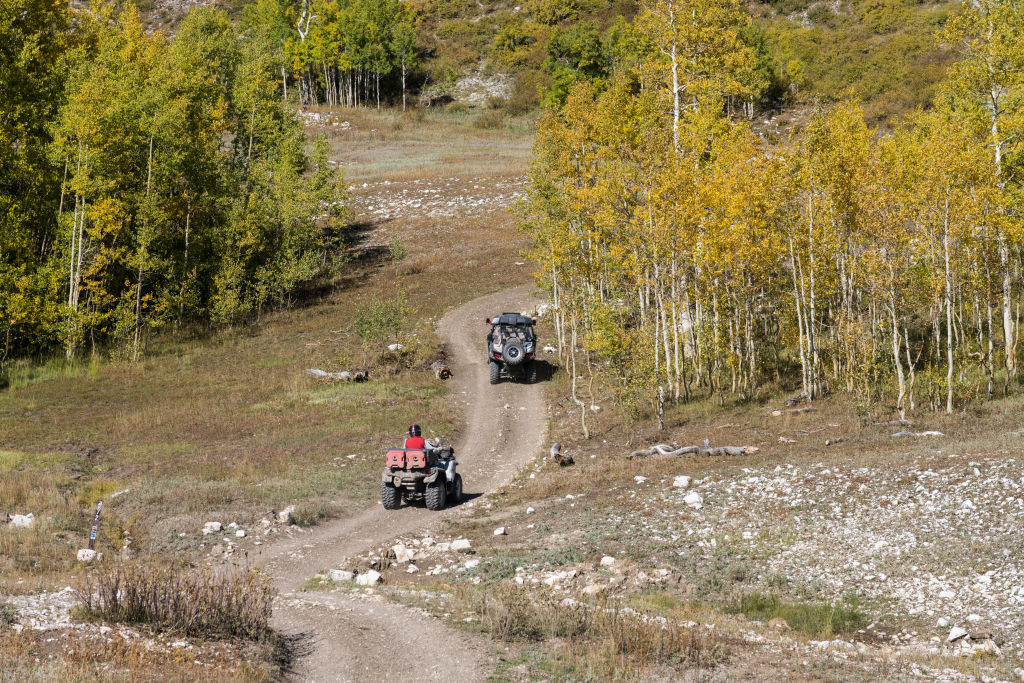
Advocates for the change argue that the current system places an unfair burden on visitors attempting to navigate complex, overlapping regulatory maps. Kerry White, executive director of the Bozeman-based nonprofit Citizens for Balanced Use and a former Montana state legislator, contends that the new rule places an appropriate level of responsibility back on the agency. According to White, making trails open unless posted closed places the onus squarely on the Forest Service to ensure that closures are properly marked, signed, and maintained. Furthermore, White emphasizes that motorized access is a matter of equity for elderly citizens and individuals with physical disabilities who rely on vehicles, side-by-sides, or e-bikes to access public lands.
Yet, public lands advocates point out that the travel management revision is part of a broader, more aggressive administrative push to reshape federal conservation policy. Last month, Agriculture Secretary Brooke Rollins announced that the USDA was moving forward with rescinding the 2001 Roadless Rule—a landmark policy that protects roughly 45 million acres of national forest land from road building and commercial timber extraction. While the initial public comment period for the travel management revision drew substantial scrutiny, the administration also faced swift backlash over truncated review windows for the Roadless Rule. In response to widespread criticism, the Forest Service extended the public comment window for the roadless policy, which now runs through October 6.
Environmental Realities and the Cost of Heavy Equipment
While the debate over motorized access is frequently framed as a clash between different styles of outdoor recreation, scientists and conservationists emphasize the tangible, physical toll that motorized vehicles inflict on delicate ecosystems. Roads and heavy vehicle tracks are well-documented drivers of habitat fragmentation, vectors for the introduction of noxious and invasive weeds, and catalysts for human-caused wildfires.
The consequences of unrestricted or poorly managed motorized recreation are not merely theoretical; they are visible in watersheds across the American West. Chris Edgington, a watershed project manager with Montana Trout Unlimited, witnessed the severe ecological degradation caused by unmanaged OHV crossings along the Middle Fork of the Judith River in central Montana’s Little Belt Mountains.
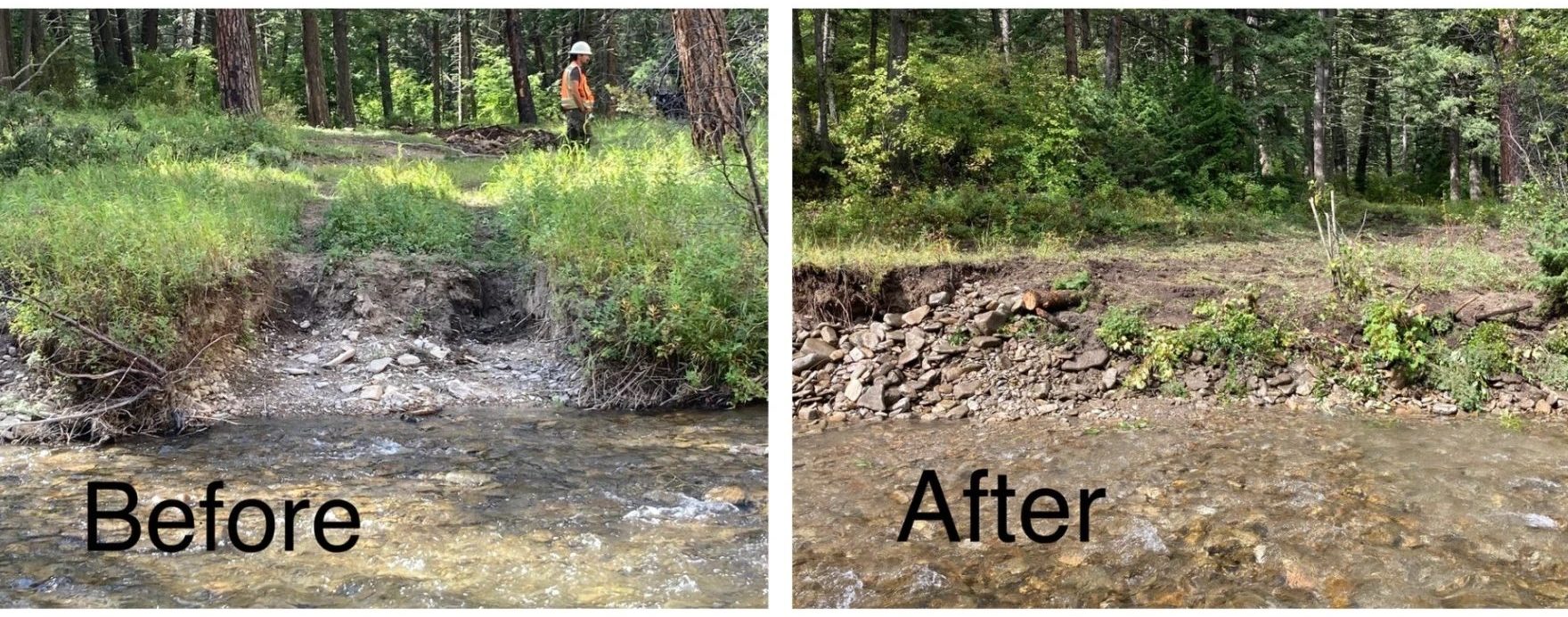
Prior to a comprehensive restoration effort completed in recent years, a six-mile stretch of the Middle Fork featured more than 80 vehicle entrances and 27 shallow water crossings where cars, trucks, and side-by-sides routinely forded the river. The constant vehicular traffic pulverized the riverbanks, triggering severe erosion and sending massive influxes of sediment downstream. This sediment coated the riverbed, smothering aquatic insect life and choking out spawning grounds for native fish species, including the vulnerable cutthroat trout. By 2020, fisheries surveys estimated that the local trout population had plummeted to less than 10 percent of its historical baseline.
Recognizing the crisis, Edgington spearheaded a collaborative coalition comprising local OHV communities, the Great Falls Trail Bike Riders Association, conservation groups, and various government agencies. The group successfully rebuilt 1,000 feet of eroded riverbank, eliminated 80 percent of the unauthorized vehicle crossings, and rerouted motorized trails away from the immediate river corridor. Funded by federal grants and conservation investments, the project has already yielded measurable dividends, with water quality improving and native fish populations rebounding.
However, Edgington warns that a wholesale repeal or weakening of the Travel Management Rule threatens to undo decades of painstaking restoration work. If vehicles are permitted on trails by default, resource managers will struggle to protect sensitive riparian zones from chronic sedimentation and degradation.
Broad Implications for Public Land Stewardship
The debate over the future of national forest management highlights a fundamental philosophical divergence regarding the purpose of public lands in the twenty-first century. Hillary Eisen, federal policy director for Wild Montana, argues that the administrative revisions currently underway reflect an erosion of the foundational principles upon which the national forest system was established.
Eisen describes the proposed travel management changes as vague and difficult to interpret, warning that they could invite widespread confusion and conflict among user groups. Without precise, legally binding designations for every trail and route, enforcement becomes nearly impossible, potentially allowing motorized vehicles to penetrate deep into fragile backcountry areas that were never engineered to support heavy traffic.
Furthermore, Eisen notes that the travel management framework touches the daily lives of nearly every visitor who steps onto national forest land outside of designated wilderness areas. Unlike single-issue policies, travel management dictates the immediate physical reality of hiking, hunting, camping, and ranching across millions of acres. The deliberate, highly scrutinized planning processes that created existing travel plans were designed to balance competing human uses while safeguarding clean water, wildlife corridors, and forest health for future generations.
Critics of the administration’s agenda argue that combining the relaxation of the Travel Management Rule with the rescission of the Roadless Rule and concurrent rollbacks to bedrock environmental statutes—such as the National Environmental Policy Act (NEPA) and the Endangered Species Act—signals a systemic retreat from federal conservation oversight.
As the public comment period for the travel management revisions proceeds, federal regulators face intense scrutiny from scientists, local communities, and outdoor enthusiasts alike. For policy makers, the central challenge remains balancing the legitimate demands for accessible public recreation against the ecological imperative to preserve finite natural resources, clean water supplies, and intact wildlife habitats for generations to come.