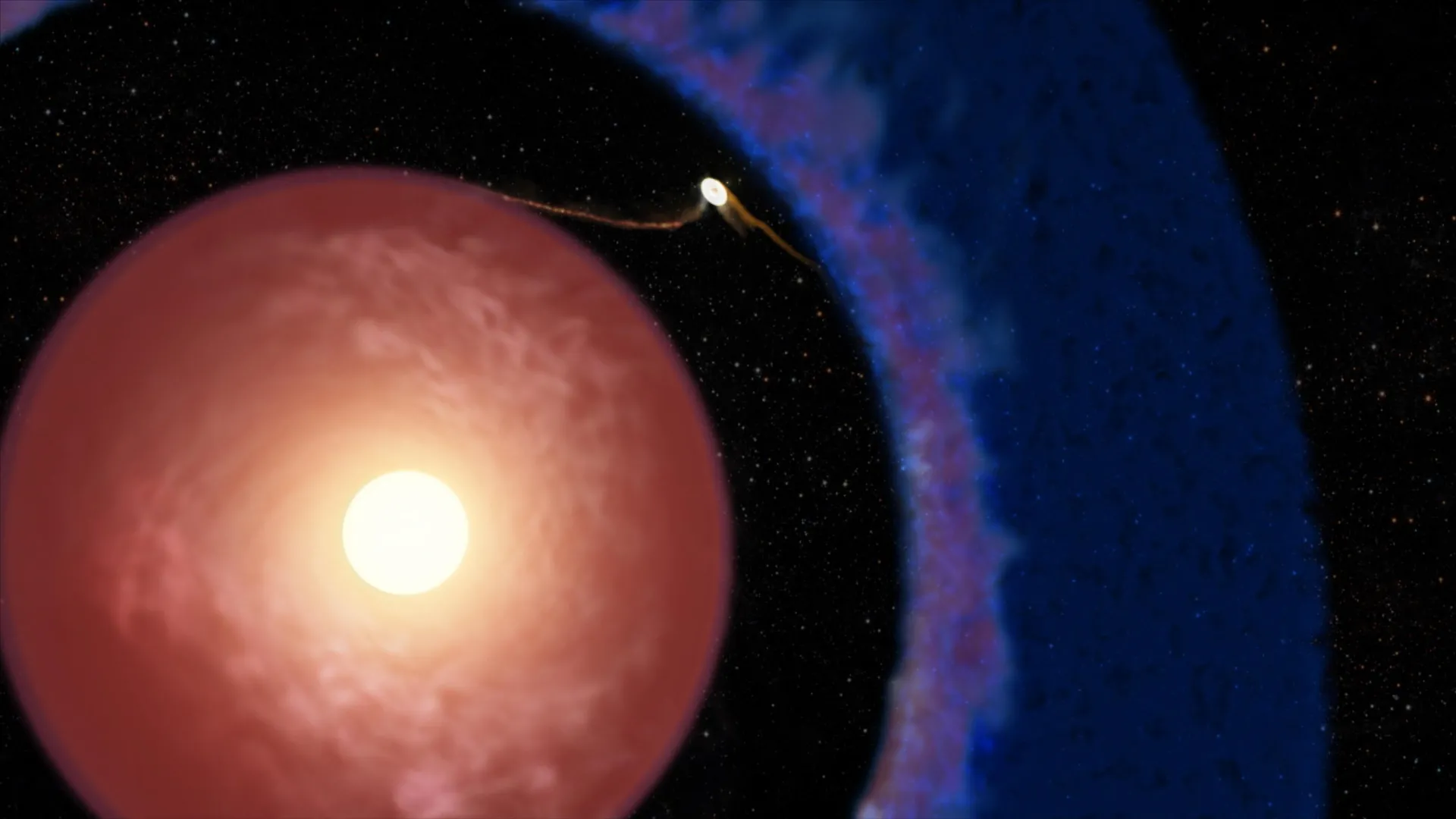
This groundbreaking discovery, centered on the celestial body designated Elias 2-24 b, represents a pivotal milestone in astrophysics. By observing a planet in such a nascent state, researchers are gaining an unprecedented, real-time look at the mechanisms of planetary accretion—the process by which cosmic dust and gas coalesce into solid, orbiting worlds. The study, published in the September 16 issue of The Astrophysical Journal Letters, provides a foundational shift in how scientists approach the "baby pictures" of planetary systems.
The Mechanics of the Discovery
The identification of Elias 2-24 b was not the result of a single, sudden observation, but rather the culmination of a decade-long investigative effort. The planet orbits a star located approximately 450 light-years from Earth, nestled within a debris disk composed of primordial gas, ice, and rocky fragments.
For years, astronomers had noted a peculiar, dark gap within the dusty disk surrounding the star Elias 2-24. Using data from the Atacama Large Millimeter/submillimeter Array (ALMA) in Chile, researchers identified a structural anomaly in the disk, hinting that something massive might be carving a path through the debris. Subsequent imaging by the European Southern Observatory’s Very Large Telescope (VLT) detected a faint, elusive point of light within that gap. However, the scientific community remained skeptical. Because existing planet-formation theories suggested that a giant planet could not materialize so rapidly—especially at such a vast distance from its host star—many speculated that the light was merely an imaging artifact or a distant background star.
The confirmation came when a team led by Andrea Bernardi, a doctoral candidate at the Universidad Diego Portales in Chile, conducted a comprehensive review of archival data. By synthesizing observations captured by the W. M. Keck Observatory in Hawaii—specifically data from 2018 and 2020—the team tracked the object’s trajectory. Its consistent movement in lockstep with the star confirmed its status as a planetary body.
Defying Existing Models
The existence of Elias 2-24 b poses a significant challenge to the standard model of planet formation. According to conventional astrophysical theory, the core accretion model suggests that a Jupiter-sized planet should take at least 5 million years to form. This timeline is based on the necessity of gathering enough material from the protoplanetary disk to reach the mass of a gas giant.
Elias 2-24 b, however, sits roughly 55 times further from its star than Earth is from the Sun. Under traditional models, the density of material at such a great distance should be too low to support such rapid growth.
"Our planet-formation models already struggled to explain the previous record holders—a four-way tie between planets orbiting the stars PDS 70 and WISPIT 2—which are all more than 5 million years old," explained Lucas Cieza, a professor at the Instituto de Estudios Astrofísicos in Chile and a co-author of the study. "Elias 2-24 b shows us that even our best planet-formation models are still missing some important processes. We are witnessing a ‘fast-track’ evolution that we simply did not believe was possible until now."
The discovery forces a re-evaluation of gravitational instability theories, which suggest that planets might form through the sudden, rapid collapse of large clumps of gas in a disk, rather than the slow accumulation of dust.
The Technical Challenge of Exoplanet Detection
To understand why Elias 2-24 b remained hidden for so long, one must consider the extreme difficulty of direct exoplanet imaging. Most of the 6,000-plus exoplanets confirmed to date were discovered using the "transit method," which detects the dip in starlight as a planet crosses its host star’s face.
However, planets in their infancy are often embedded in thick, opaque clouds of dust that obscure them from the view of even the most powerful telescopes. Furthermore, many young planets orbit at great distances from their stars, making transit observations impossible. To bypass these hurdles, astronomers employ a coronagraph, an instrument that masks the blinding glare of a central star, allowing the much fainter light of orbiting bodies to become visible.
The Keck Observatory’s coronagraph was instrumental in this study, proving that archival data—when revisited with refined analytical techniques—can hold the keys to discoveries that were previously overlooked. This highlights the importance of the NASA-funded Keck Observatory Archive as a critical repository for modern astrophysical research.
A Look Back at Our Own Origins
Studying Elias 2-24 b is akin to viewing a high-resolution time-lapse of our own solar system’s history. Approximately 4.5 billion years ago, our Sun was surrounded by a similar disk of gas and dust. By analyzing the composition, orbit, and temperature of Elias 2-24 b, scientists can infer the environmental conditions that ultimately led to the formation of Jupiter and Saturn.
This system acts as a proxy for the early stages of the solar nebula. The fact that the planet is already carving a distinct gap in its debris disk suggests that the influence of a planet on its environment is immediate and profound, effectively clearing its orbital path while simultaneously drawing in surrounding matter to increase its own mass.
Future Frontiers: The Nancy Grace Roman Space Telescope
While the discovery of Elias 2-24 b is a landmark, it is also a reminder of the limitations of current technology. As Cieza noted, the galaxy is teeming with planets at every stage of development, yet humanity remains "mostly blind" to the earliest, most formative years of these worlds.
The next leap in this field will be provided by the Nancy Grace Roman Space Telescope, which launched in late 2024. Equipped with a next-generation coronagraph, Roman is designed to suppress starlight with a precision an order of magnitude greater than current instruments. This will allow astronomers to detect planets closer to their host stars and reveal smaller, rocky worlds that are currently invisible.
"We usually hear about telescopes working separately, but this confirmation was possible only by using multiple telescopes together," Bernardi said. "Elias 2-24 b is at the limit of what current telescopes can detect, but with new instruments like Roman, such detections should become easier. We are transitioning from a period of lucky snapshots to a period of systematic observation."
Implications for Exoplanet Science
The confirmation of such a young planet has immediate implications for the broader scientific community:
- Refining Simulation Parameters: Theoretical physicists and computer scientists must now recalibrate their simulations to account for the rapid accretion observed in the Elias 2-24 system.
- Targeted Observation: The criteria for identifying "gaps" in debris disks will likely become a primary focus for future telescope time, as these gaps are now confirmed to be high-probability locations for infant planets.
- Collaborative Data Mining: The success of this study underscores the immense value of cross-institutional data sharing. By combining ALMA, VLT, and Keck data, the research team demonstrated that scientific breakthroughs are increasingly found in the integration of multi-wavelength data sets.
As we move forward, the search for "baby planets" will likely dominate the conversation in exoplanetary research. By identifying these worlds at the very beginning of their life cycles, astronomers hope to answer one of the most fundamental questions in science: how common are planetary systems like our own, and what are the specific environmental conditions required to trigger their formation?
For now, Elias 2-24 b stands as a singular, fragile beacon of light in the dusty disk of a distant star, offering a fleeting glimpse into the chaotic, violent, and beautiful process of world-building. It serves as a reminder that the universe is not a static place, but a dynamic, evolving environment that continues to surprise us with its capacity for rapid transformation. As the data from newer, more sensitive instruments begins to flow, the next generation of astronomers may well find that the infancy of planets is far more common—and far more complex—than we ever dared to imagine.