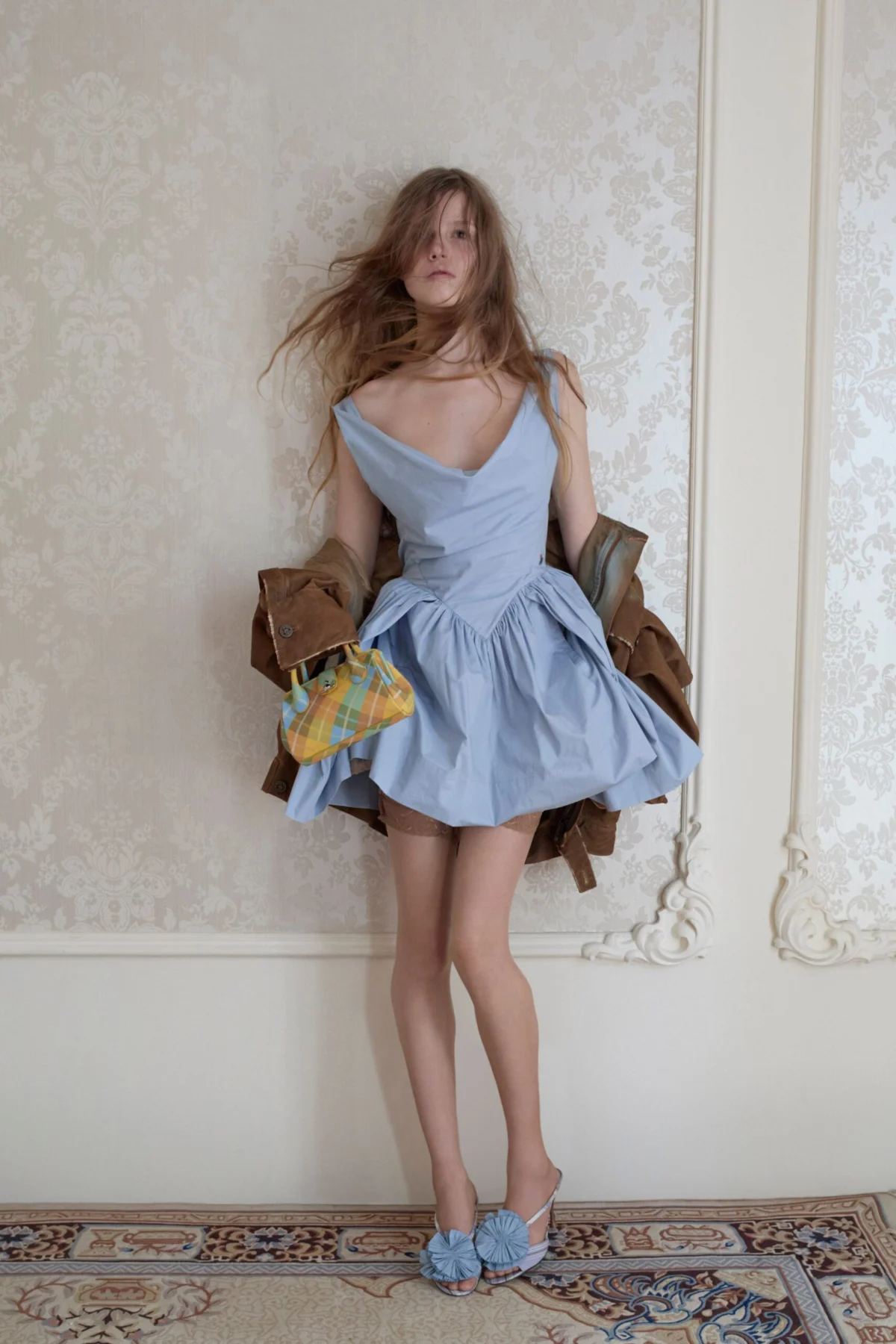
The Vivienne Westwood design team presented its Spring 2027 collection to critical acclaim, anchoring the presentation in an exhaustive yet playful exploration of the storied British fashion house’s vast archives. By bridging historical sartorial references with contemporary technical innovations, the atelier demonstrated the enduring relevance of Dame Vivienne Westwood’s visionary lexicon. The collection served as a masterclass in the tension between societal propriety and unbridled provocation, exploring core brand tenets such as the fetishization of traditional English dress codes, the intimate aesthetic of the boudoir, and an enduring commitment to garments that consciously reject conventional behavioral norms.
The Archival Foundation and the Spirit of Vive La Bagatelle
The conceptual genesis for the Spring 2027 collection traces back to Vive La Bagatelle, Westwood’s celebrated Spring 1997 line defined by flirty silhouettes and the symbolic act of a prettily tied ribbon being flirtatiously undone. Rather than merely replicating historical successes, the current design team utilized this archival touchstone to investigate the ongoing dialectic between repression and liberation.
This thematic friction manifested visibly across the runway in both familiar silhouettes and startling new developments. The iconic Sunday dress returned with its comforting, sweeping lines, juxtaposed against the disorienting, off-kilter construction of the house’s signature "drunken" tailoring. These foundational elements were interwoven with ambitious technical feats, most notably the introduction of the Mona corset. Drawing inspiration from 17th-century undergarments preserved in the house archives, the Mona corset features reworked side panels designed to compress the waist to an extreme degree. Crucially, the integration of softer boning materials achieved this dramatic silhouette while ensuring a surprisingly ergonomic and comfortable fit for the wearer.
Body-contouring has long been a hallmark of the Vivienne Westwood label, yet the Spring 2027 collection approached the figure with heightened subversiveness. Ruched and knotted skirts crafted from unexpected materials such as heavy denim and fine-gauge knitwear clung to and released from the body at strategic intervals, effectively transferring agency to the wearer to dictate how the garments were experienced and displayed.
Architectural Drama and Painterly Printmaking
Among the standout pieces of the season was the newly engineered Chi Chi dress. This dramatic black taffeta gown featured a highly architectural, sculptural bodice paired with an arpeggiating skirt. The design successfully synthesized echoes of the archival Bird of Paradise silhouette with the anarchic irreverence first seen in the historic Wake Up, Cave Girl! collection.
Black served as a commanding undercurrent throughout the presentation, anchoring the vibrant plaids rendered in jarring, off-color combinations. This dark foundation appeared across cady, crepe jersey, and eveningwear pieces that bore direct aesthetic debts to John Singer Sargent’s famous 1984 portrait Madame X.
Prints proved to be a fertile ground for humor and historical pastiche. Ripe grapes, pulled directly from the Spring 1997 archives, sprawled across a "drunken" shirt; the deliberately distorted seams and panels created a persistent optical illusion of movement, even when the wearer stood completely still. Elsewhere, oversized magnolia blossoms dominated voluminous skirts and outerwear, while François Boucher’s 18th-century rococo masterpiece Mars and Venus Surprised by Vulcan was transposed onto casual jersey t-shirts. The collection also featured meticulous micro-ginghams and broken pinstripes, executing the quintessential Westwood maneuver of taking respectable conventions of English tailoring and imbuing them with an unmistakable punk spirit.
Devious Tailoring and Artisanal Romance
Tailoring remained a deviously compelling focal point of the presentation. Waistcoat jackets, a dominant silhouette of the early 2000s, reappeared paired with louche, architecturally draped dovetail trousers. Double-breasted jackets were styled alongside Pirate buckle-back trousers, while relaxed Wreck jackets introduced utilitarian low-slung pockets. One particularly striking piece featured a jacket cinched simultaneously with belts positioned low on the waist and high on the shoulders, creating a stark visual of sartorial bondage.
Romance permeated the collection via the inclusion of Nottinghamshire-made Cluny lace—a traditional textile practice that has become increasingly rare and specialized within modern manufacturing. This delicate craftsmanship was balanced by fine, fluid knitwear interwoven with metallic threads that created a subtle, sparkle-dashed finish, as well as shortened, youthful iterations of the classic Sunday dress.
Chronology of the House and Sustainable Partnerships
The evolution of the Vivienne Westwood brand over the past decade and a half has seen a steady alignment between avant-garde design and ethical production methodologies. Marking its 15th anniversary this season, the house’s long-standing Made in Kenya partnership with the Ethical Fashion Initiative (EFI) and the Nairobi-based social enterprise Artisan Fashion continues to thrive. This initiative supports local craftsmanship and provides sustainable economic opportunities to artisan communities in East Africa. For Spring 2027, this collaboration yielded a series of exquisite, hand-beaded and woven bags that served as functional works of art on the runway.
Accessories further reinforced the archival narrative. The stacked Clomper sole made a triumphant return alongside anatomical-toe slingback heels, tying contemporary footwear trends directly to the house’s storied footwear heritage of the late 20th century.
Broader Industry Implications and Commercial Outlook
The presentation of the Spring 2027 collection arrives at a critical juncture for the luxury fashion market, where heritage houses are increasingly pressured to balance historical reverence with modern commercial viability. By demonstrating a dexterous capacity to rearrange, stretch, slice, and reinterpret the design vocabulary established by the late Dame Vivienne Westwood, the current creative team has solidified the brand’s position as a vital force in contemporary design.
Industry analysts note that the house’s ability to mine its rich archives while maintaining a forward-thinking approach to sustainable production—exemplified by the enduring Nairobi partnership—resonates strongly with ethically conscious consumers. The commercial implications of the collection are substantial, particularly given the strong demand for statement outerwear, meticulously tailored separates, and high-craft accessories like the Kenyan-produced beaded bags.
As the fashion industry continues to navigate cycles of nostalgia, Vivienne Westwood’s Spring 2027 outing proves that historical reference, when executed with intellectual rigor and irreverent wit, transcends simple revivalism. The collection ultimately reinforces the notion that the late founder’s design vocabulary possesses infinite potential when re-examined through contemporary lenses and executed with uncompromising craftsmanship.