Porsche has officially announced a significant evolution of its digital cockpit experience, confirming that the latest iteration of the Porsche Communication Management (PCM) system is currently being integrated across its core model lineup. This rollout, which encompasses the 911 sports car, the Taycan electric sedan, the Panamera luxury saloon, and the Cayenne SUV, marks a departure from traditional infotainment architectures toward a centralized, high-performance computing environment. By leveraging advanced system-on-chip (SoC) technology, the German manufacturer aims to standardize its digital interface, ensuring that the responsiveness and connectivity expected of a modern luxury vehicle are maintained across diverse powertrain configurations.
Architectural Shift: The Move to System-on-Chip
The cornerstone of this upgrade is the transition to a unified system-on-chip architecture. In previous generations of the PCM, vehicle functions were often distributed across disparate hardware components, including separate CPUs for navigation, media processing, and instrument cluster displays. This decentralized approach often resulted in latency during high-demand tasks.
By consolidating these functions onto a single, high-performance chip, Porsche engineers have achieved a claimed five-fold increase in computing power compared to the outgoing system. This hardware shift translates into immediate, tangible benefits for the driver: significantly reduced boot times, instantaneous transitions between navigation and media interfaces, and a fluid user experience during complex multitasking. Furthermore, this hardware foundation is designed with long-term scalability in mind. The new architecture is fully compatible with over-the-air (OTA) software updates, allowing Porsche to deploy performance patches, feature enhancements, and security protocols without requiring a visit to a service center.

Chronology of Digital Integration
Porsche’s focus on the "digital cockpit" has accelerated rapidly over the last thirty-six months. The current deployment follows a trajectory established by the brand’s pivot toward software-defined vehicle features.
- Early 2024: Porsche begins internal stress-testing of unified SoC architectures, aiming to reconcile the disparate software requirements of its combustion-engine 911 series and its electric Taycan models.
- Late 2025: The new interface design is unveiled within the context of the Cayenne Electric, setting a new visual and functional benchmark for the brand.
- November 3, 2026: The manufacturer announces the broader rollout of this system, confirming that the "Cayenne Electric aesthetic" will become the standard across the legacy combustion and hybrid ranges.
- 2027 and Beyond: The company has signaled a commitment to expanding the third-party application ecosystem, with a roadmap that includes deeper integration of autonomous driving assistance visualizations and enhanced vehicle-to-infrastructure (V2I) communication.
Advanced Features and Voice Pilot AI
A major focal point of this update is the introduction of the next-generation Voice Pilot. Moving beyond simple voice commands, the system now utilizes advanced natural language processing. The AI is designed to interpret multi-step requests, allowing users to chain commands—such as adjusting cabin temperature, selecting a playlist, and setting a navigation destination in a single, fluid sentence.
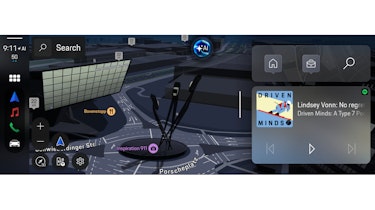
The navigation system has also undergone a total overhaul, moving toward a 3D-first interface. For owners of electric variants, the Porsche Charging Planner has been refined to better account for real-time traffic data, charging station availability, and, crucially, battery preconditioning. By automatically warming or cooling the battery to the optimal temperature as the vehicle approaches a fast-charging station, the system aims to minimize total trip time—a critical metric for electric vehicle adoption.
Customization and User-Centric Design
Porsche is placing a heavy emphasis on personalization to combat the "cookie-cutter" feel of modern digital dashboards. The new interface allows for extensive widget configuration, enabling drivers to curate their home screen based on personal priority. Whether a driver favors lap timers and performance metrics or navigation and communication, the UI can be adapted to keep essential data within immediate reach.

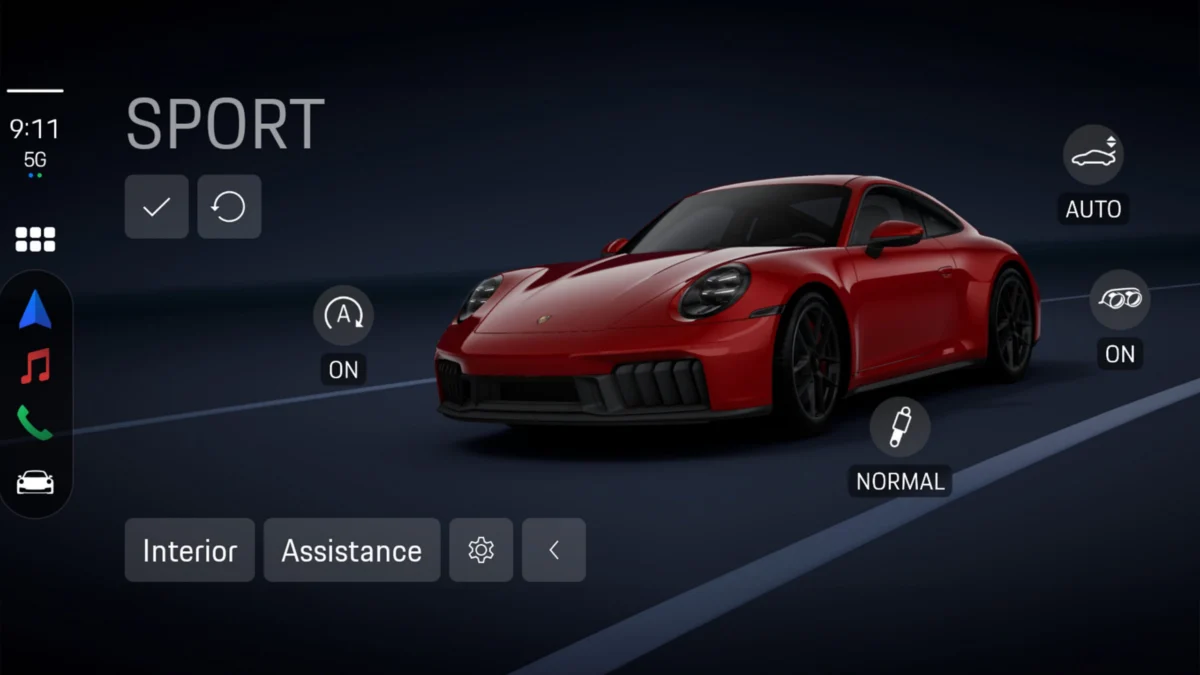
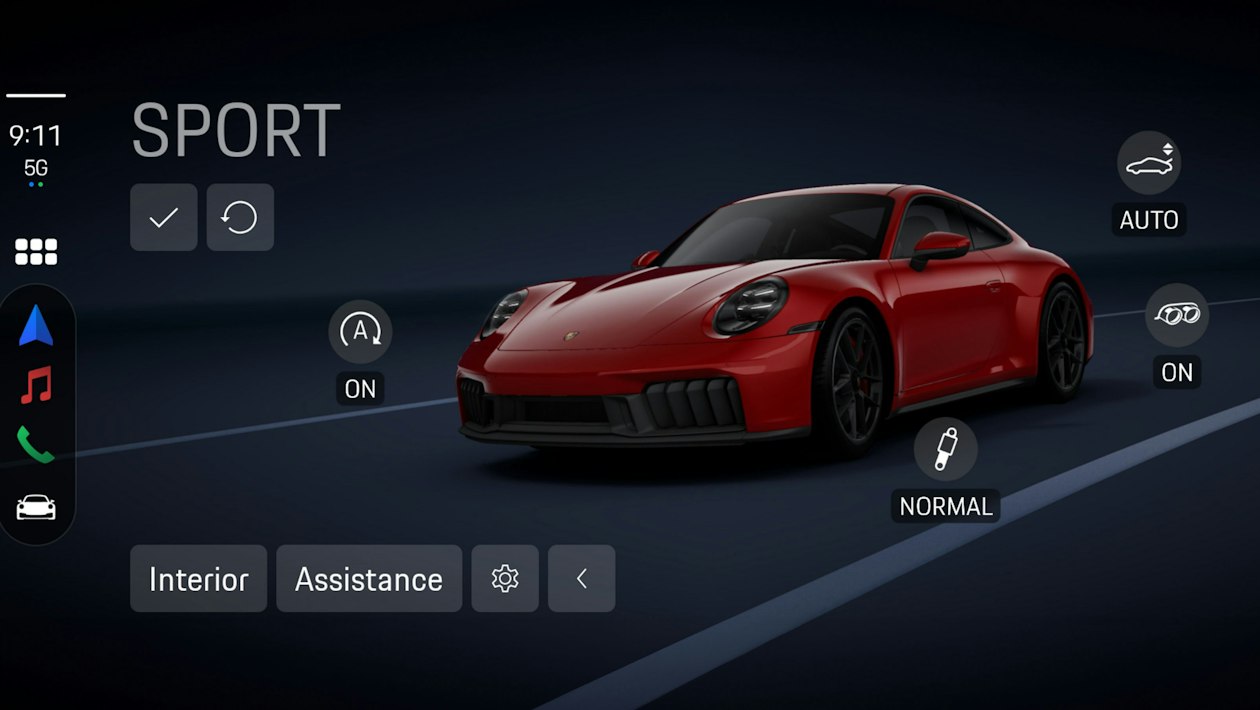
Perhaps the most visually distinct addition is the real-time, rotatable 3D digital representation of the vehicle. This model is rendered to match the specific configuration of the customer’s car, including exterior paint, wheel choice, and trim. This feature serves as more than a cosmetic flourish; it acts as a visual interface for vehicle settings, allowing users to toggle external lighting, spoiler deployment, or roof operation by interacting with the 3D model directly on the screen.
Ecosystem and Connectivity: The App Centre
The integration of a native App Centre marks a strategic shift for the automaker. By allowing third-party applications to run directly on the vehicle’s hardware, Porsche is reducing the dependency on smartphone mirroring services like Apple CarPlay or Android Auto. While these remain available, the native apps—such as dedicated navigation services and streaming platforms like Spotify—offer a more seamless integration with the vehicle’s internal sensors. For example, navigation instructions from these apps will now be reflected in the instrument cluster, a level of integration that is rarely achievable through standard wireless mirroring.
For the audiophile segment, the update introduces Dolby Atmos support for vehicles equipped with premium sound systems from Bose or Burmester. By utilizing the higher processing speeds of the new chip, the system can render complex spatial audio formats with greater accuracy, providing an immersive experience that aligns with the premium positioning of the Porsche brand.
Official Statements and Strategic Vision
Oliver Seifert, Porsche’s head of infotainment, provided context on the strategic rationale behind these updates. "This new generation of infotainment means we can create a more powerful digital platform that combines enhanced performance, intelligent connectivity, and a consistent user experience across multiple model lines," Seifert stated.
He further emphasized the importance of the digital ecosystem, noting, "The combination of a modern system-on-chip architecture, Porsche Digital Interaction, and an expanded digital ecosystem enables us to continuously develop the in-car Porsche experience." This philosophy underscores a broader industry trend where the "value" of a vehicle is increasingly defined not just by its mechanical prowess, but by the longevity and adaptability of its software.
Implications and Market Context
The decision to bring these high-end features to the 911, Panamera, and Cayenne indicates that Porsche is committed to maintaining a high-tech value proposition even as it manages a complex transition toward electrification. By creating a consistent software experience across its fleet, the manufacturer is effectively lowering the barrier to entry for customers moving between models.

However, the rapid digitization of the cockpit is not without challenges. Industry analysts note that as automakers shift toward "software-defined" vehicles, the pressure to ensure cybersecurity and system stability becomes paramount. The reliance on over-the-air updates is a double-edged sword; while it allows for rapid innovation, it also necessitates a robust infrastructure to handle potential software regressions or vulnerabilities.
Furthermore, by integrating AI assistants and a proprietary App Centre, Porsche is entering into a subtle competitive space with big-tech companies like Google and Apple. The goal is to maintain the "Porsche feel"—a unique, driver-focused identity—while offering the convenience of modern smartphone-like functionality. As competitors like Mazda move toward full Google Gemini integration, Porsche’s strategy of retaining control over the software layer, while opening the door for third-party apps, reflects a desire to keep the driver in the loop without sacrificing the brand’s distinct character.
Ultimately, this update is a testament to the fact that in the 2020s, the "Porsche experience" is as much about the lines of code running on the dashboard as it is about the flat-six engine or the electric powertrain. As the automotive industry continues to grapple with the demands of an increasingly connected world, Porsche’s investment in a scalable, high-performance infotainment architecture positions it to remain relevant in a market that is rapidly prioritizing digital utility alongside traditional performance.