The landscape of the electric vehicle market has undergone a radical transformation over the last decade. Less than ten years ago, achieving a 300-mile driving range was considered the "holy grail" of EV engineering—a psychological and technical barrier that, once crossed, promised to eliminate the "range anxiety" hindering mass adoption. Today, that milestone has been firmly surpassed. As the automotive industry moves into the 2025 model year, the conversation has shifted from reaching 300 miles to approaching, and in some cases exceeding, the 500-mile mark. This evolution comes even as charging infrastructure finally begins to scale across North America, suggesting that while chargers are becoming more plentiful, consumer demand for long-range autonomy remains a primary driver of sales and innovation.
The journey to this high-range reality began in earnest in 2016, when the Tesla Model S became the first mass-produced electric car to receive an official EPA rating of 300 miles. Since that breakthrough, manufacturers have been locked in a range-based arms race. This competition has been fueled by two main factors: a lagging public fast-charging network and the expansion of EV sales into regions with harsh winters. In states outside of the temperate "smile" belt—comprising the West Coast, the Southwest, and the Southeast—cold weather can sap an EV’s range by as much as 30% to 40%. Consequently, a 400-mile range in ideal conditions becomes a necessary 250-mile buffer in a Midwestern January.
By 2023, the median range for new EVs in the United States had reached 270 miles. For the 2025 model year, industry analysts expect that median to climb toward 300 miles, making what was once a premium feature the new baseline for the average consumer. However, at the top of the market, a new class of "range kings" has emerged, utilizing massive battery packs and advanced aerodynamics to push the boundaries of what is possible on a single charge.
The Chronology of Range Evolution
The progression of EV range can be viewed in three distinct phases. The first phase, roughly 2010 to 2015, was defined by "compliance cars" and early adopters. Vehicles like the original Nissan Leaf offered roughly 73 to 84 miles of range, making them strictly urban commuters. The second phase, from 2016 to 2021, saw the normalization of the 200-to-300-mile range, led primarily by Tesla and followed by the Chevrolet Bolt and Hyundai Kona Electric.
The third and current phase, beginning around 2022, is characterized by the "Ultra-Long Range" segment. This era is defined by the arrival of the 100+ kWh battery pack and the entry of heavy-duty electric trucks and luxury sedans. In this phase, range is no longer just about getting from point A to point B; it is about luxury, towing capability, and the ability to bypass multiple charging stops on a cross-country journey.
For 2025, the market is bifurcated. On one hand, manufacturers like Lucid and Hyundai are focusing on extreme efficiency—extracting more miles out of every kilowatt-hour through aerodynamics and motor optimization. On the other hand, American legacy automakers like General Motors and Ford are using "brute force" range—installing massive battery packs, some exceeding 200 kWh, into full-sized trucks and SUVs to overcome the aerodynamic disadvantages of their sheer size.
Technical Analysis: The Cost and Weight of Long Range
Achieving 400 or 500 miles of range is not without significant trade-offs. The most prominent of these is weight. Many of the vehicles on the 2025 top-range list utilize battery packs that weigh as much as an entire gasoline-powered compact car. For example, the GMC Hummer EV and the Chevrolet Silverado EV utilize GM’s Ultium platform, with battery packs weighing nearly 3,000 pounds alone.

This weight creates a compounding effect: a heavier vehicle requires a stronger suspension, larger brakes, and more energy to move, which in turn requires an even larger battery to maintain range. This cycle has led to the emergence of "medium-duty" electric vehicles. The Hummer EV, for instance, is so heavy that it is classified by the EPA as a commercial vehicle, exempting it from certain light-duty fuel economy reporting standards.
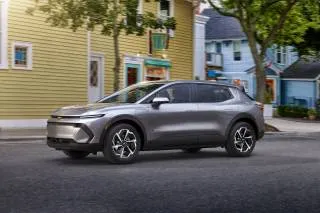
Furthermore, the financial cost of this range is substantial. While the 2025 Chevrolet Equinox EV stands out as a value proposition—offering 319 miles for approximately $35,000—most vehicles offering over 350 miles of range carry six-figure price tags. The cost of the raw materials for these large batteries, including lithium, cobalt, and nickel, remains high, making long-range EVs a luxury for the time being.
The Top Twelve 2025 EVs by Range
The following list identifies the leaders in the 2025 range race, based on official EPA data or manufacturer estimates for vehicles currently in delivery. To provide a clear comparison, only the highest-range configuration for each nameplate is listed.

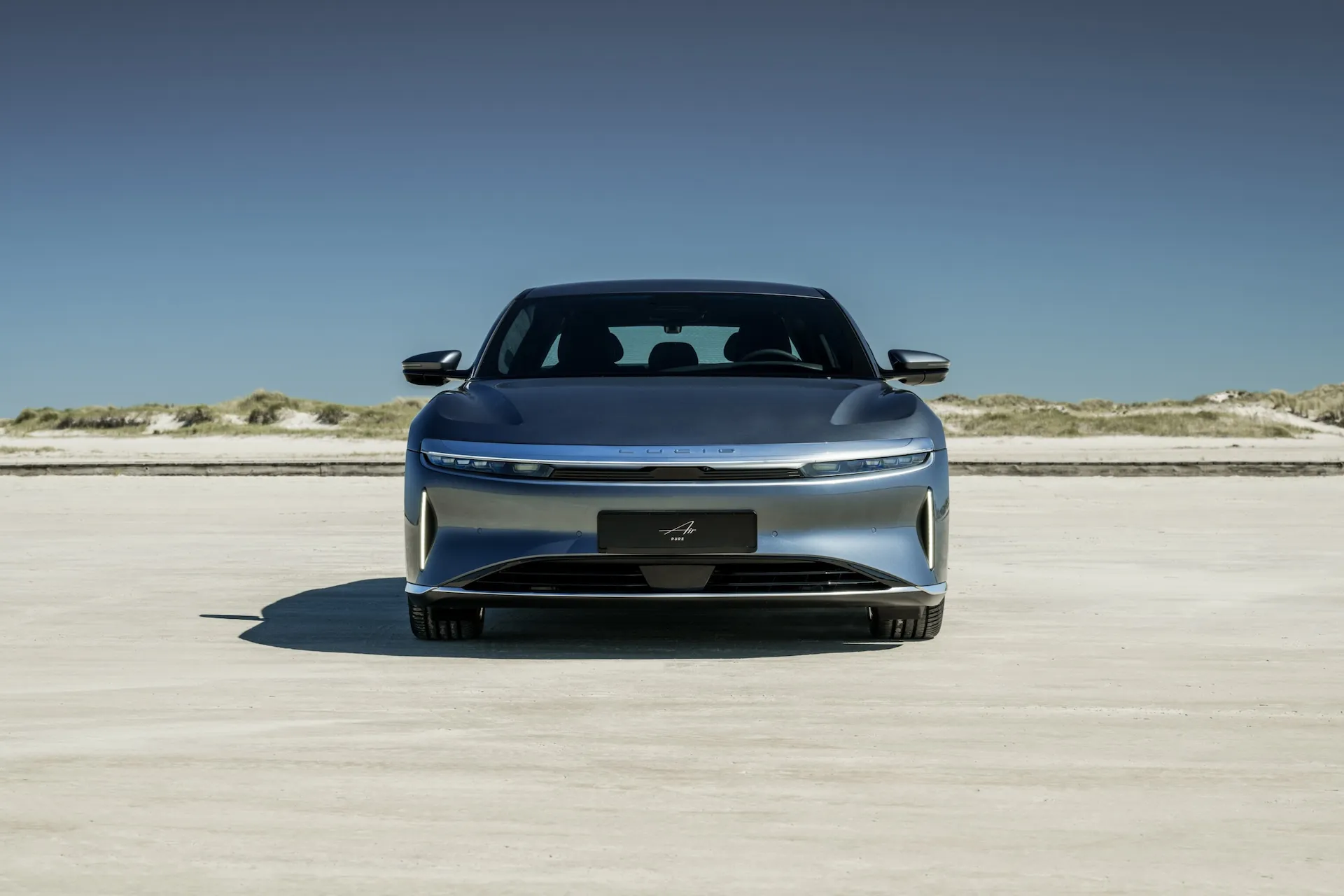
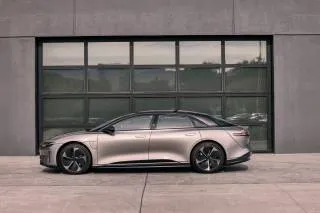
1. 2025 Lucid Air Grand Touring
- EPA Range: 512 miles (with 19-inch wheels)
- Efficiency: 3.8 mi/kWh
- Curb Weight: 5,204 lbs
- Starting Price: $112,400
The Lucid Air remains the undisputed champion of range. Unlike its competitors, Lucid achieves its numbers through industry-leading motor efficiency and a drag coefficient of just 0.197.
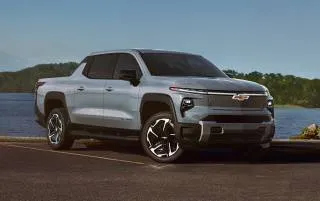
2. 2025 Chevrolet Silverado EV RST / GMC Sierra EV Denali
- EPA Range: 460 miles
- Efficiency: N/A (Classed as Medium-Duty)
- Curb Weight: ~8,800 lbs
- Starting Price: $97,895 (Silverado) / $97,990 (Sierra)
These sibling trucks from General Motors utilize a massive 200+ kWh battery pack to achieve a range that allows for meaningful towing capacity, which typically cuts EV range by half.
3. 2025 Cadillac Escalade IQ
- EPA Range: 460 miles
- Efficiency: N/A
- Curb Weight: ~9,100 lbs
- Starting Price: $129,990
The Escalade IQ is a masterclass in "brute force" range. It combines the luxury of the Cadillac brand with the massive Ultium battery architecture to ensure that even a vehicle of its stature can travel from New York to Boston and back on a single charge.
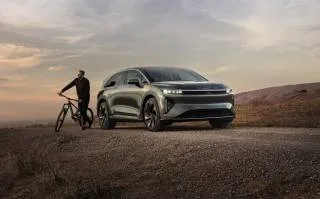
4. 2025 Lucid Gravity Grand Touring
- EPA Range: 450 miles
- Efficiency: N/A
- Curb Weight: 5,919 lbs
- Starting Price: $96,625
Lucid’s first SUV applies the efficiency lessons of the Air sedan to a three-row family hauler, instantly becoming the longest-range SUV on the market.
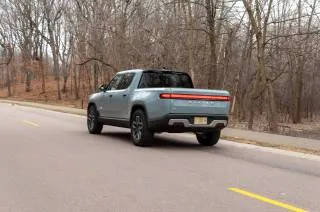
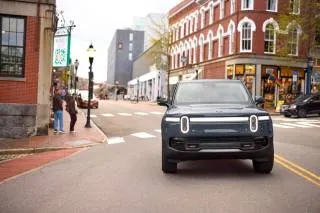
5. 2025 Rivian R1T Dual Max
- EPA Range: 420 miles
- Efficiency: 2.6 mi/kWh
- Curb Weight: ~7,300 lbs
- Starting Price: $85,700
Rivian’s "Max Pack" battery configuration provides the R1T with enough endurance for off-road expeditions where charging stations are non-existent.
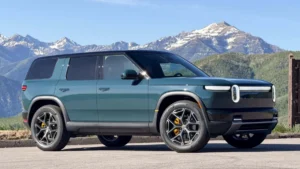
6. 2025 Rivian R1S Dual Max
- EPA Range: 410 miles
- Efficiency: 2.5 mi/kWh
- Curb Weight: ~7,200 lbs
- Starting Price: $91,700
The SUV version of the Rivian platform sacrifices a slight amount of range compared to the truck due to aerodynamic differences but remains a top-tier long-distance cruiser.
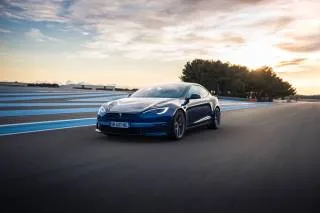
7. 2025 Tesla Model S
- EPA Range: 410 miles
- Efficiency: 3.6 mi/kWh
- Curb Weight: 4,560 lbs
- Starting Price: $81,630
The veteran of the group, the Model S continues to be a range leader through constant software refinement and motor efficiency, despite its aging platform.
8. 2025 GMC Hummer EV Pickup 3X
- Range: 381 miles (Manufacturer Est. with $9,995 Extended Range Battery)
- Efficiency: 1.6 mi/kWh
- Curb Weight: ~9,000 lbs
- Starting Price: $116,940
The Hummer EV is the least efficient vehicle on this list, requiring a gargantuan amount of energy to move its nearly 5-ton mass.
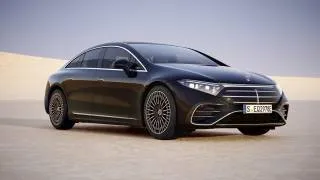
9. 2025 Mercedes-Benz EQS 580 4Matic
- EPA Range: 371 miles
- Efficiency: 2.8 mi/kWh
- Curb Weight: ~5,600 lbs
- Starting Price: $128,500
The flagship Mercedes EV focuses on comfort and "slippery" aerodynamics to achieve its range, though it lags behind Lucid in pure efficiency.
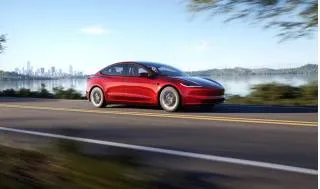
10. 2025 Tesla Model 3 Long Range RWD
- EPA Range: 363 miles
- Efficiency: 4.1 mi/kWh
- Curb Weight: 4,054 lbs
- Starting Price: $44,130
This is arguably the most efficient car on the list. By removing the front motor and focusing on weight reduction, Tesla offers high range at a relatively accessible price point.
11. 2025 Polestar 3 Single Motor
- EPA Range: 350 miles
- Efficiency: 2.8 mi/kWh
- Curb Weight: 5,720 lbs
- Starting Price: $68,900
Polestar’s newest entry focuses on a balance of performance and endurance, utilizing a large battery and a single-motor setup to maximize distance.
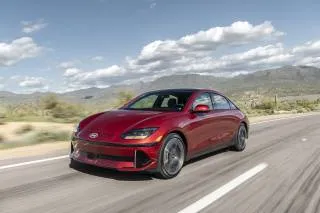
12. 2025 Hyundai Ioniq 6 SE Long Range
- EPA Range: 342 miles
- Efficiency: 3.9 mi/kWh
- Curb Weight: 4,376 lbs
- Starting Price: $43,850
The Ioniq 6 is a standout for efficiency. Its teardrop shape is designed specifically to cut through the air, allowing it to compete with much more expensive vehicles in terms of usable range.
Official Responses and Market Context
The push for 400+ mile ranges has been met with mixed reactions from industry experts and environmental groups. Spokespeople for General Motors have defended the use of large batteries in trucks like the Silverado EV, stating that high range is essential for customers who use their vehicles for work and towing. "For a truck customer, range isn’t just about the commute; it’s about the capability to get the job done without stopping every hundred miles to charge while hauling a trailer," a GM engineering executive noted during a recent press briefing.
Conversely, some environmental analysts argue that "range overkill" is detrimental to the overall goal of electrification. Using twice as much lithium and cobalt to build one 500-mile battery instead of two 250-mile batteries can limit the total number of EVs that can be produced given current resource constraints. Furthermore, the increased energy required to move 9,000-pound vehicles like the Hummer EV reduces the net carbon savings of switching from gasoline to electricity.
Broader Impact and Future Implications
As we look toward the second half of the decade, the "range wars" are likely to enter a new phase focused on solid-state batteries. These next-generation power cells promise higher energy density, which would allow for 500-mile ranges without the massive weight penalties seen in today’s lithium-ion vehicles. Toyota, BMW, and Volkswagen have all signaled that solid-state technology could enter production by 2027 or 2028.
In the immediate term, the arrival of these high-range 2025 models will likely put downward pressure on the prices of 250-to-300-mile EVs, making them more accessible to the general public. As charging speeds also increase—with many 2025 models capable of adding 200 miles of range in under 15 minutes—the focus may eventually shift away from the total size of the "gas tank" and toward the speed and convenience of the "pump." For now, however, in the eyes of the American consumer, more miles remains the ultimate luxury.