The world of science and technology continues to deliver a steady stream of fascinating, and at times, bewildering developments. From the persistent whispers of celebrity clones to the intricate interplay between our senses and the food we consume, and the serendipitous connections that link the cosmos to popular culture, recent observations offer a compelling glimpse into the diverse frontiers of human inquiry and curiosity. This report delves into these intriguing areas, providing context, analysis, and the latest findings that are capturing public and scientific attention.
The Enduring Allure of Celebrity Clones: A Technological Mirage
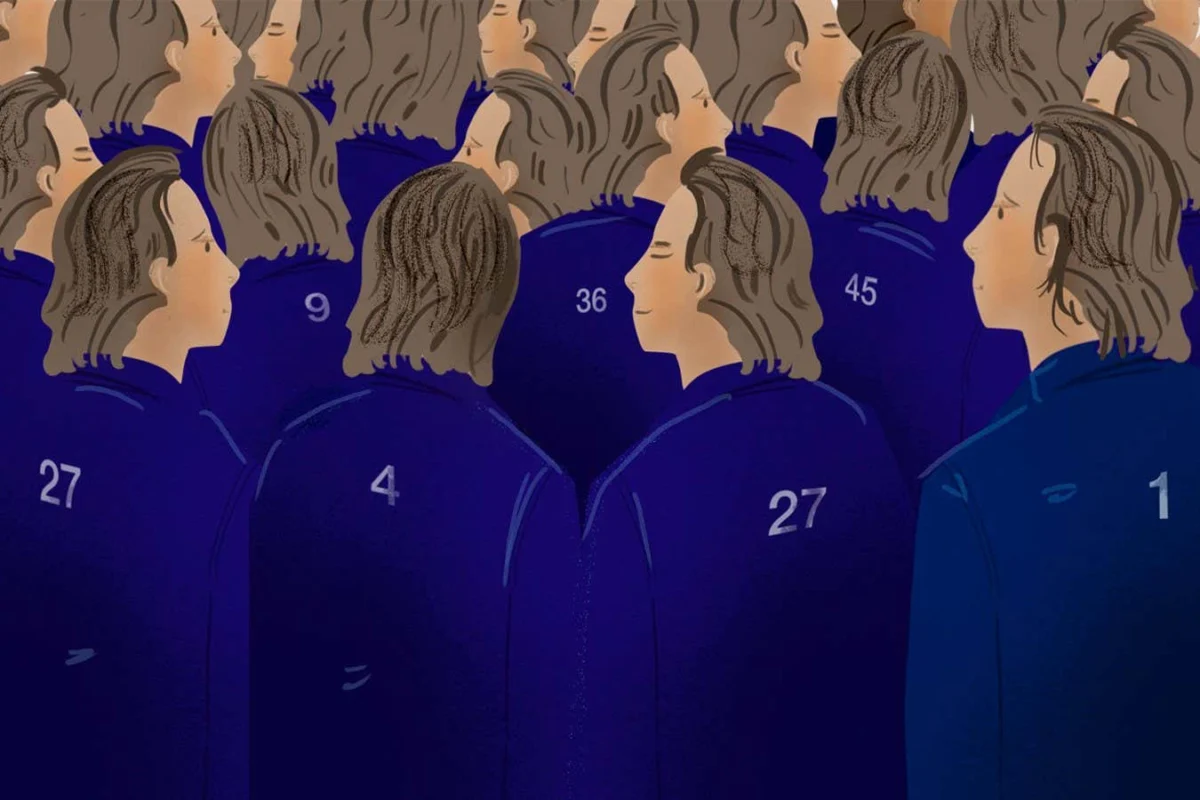
Speculation surrounding the alleged replacement of celebrities with clones, though firmly rooted in the realm of conspiracy theories, continues to gain traction online. The most recent individual to be drawn into this narrative is actor Jim Carrey, whose appearance at the 51st Césars Awards in Paris on February 26th sparked renewed discussion. This marked Carrey’s first public engagement in some time, and observers noted a perceived alteration in his appearance. While natural explanations such as aging and cosmetic enhancements are readily available, a vocal segment of the internet has posited a more extraordinary explanation: that the individual in attendance was not Carrey himself, but a meticulously crafted clone.
This burgeoning theory places Carrey alongside other high-profile figures who have been similarly targeted by cloning conspiracies. Notably, the late Beatle Paul McCartney has been the subject of such claims for decades, with theories suggesting his death in 1966 and subsequent replacement by a look-alike gaining significant traction in certain circles. More recently, singer Avril Lavigne has been implicated, with allegations of her demise in 2003 and a subsequent cloning operation to maintain her public persona. The sheer volume of these alleged "body snatchings" suggests an unusually active, albeit covert, cloning operation working tirelessly to maintain the public visibility of numerous celebrities.
However, a critical examination of the scientific and logistical challenges involved in such an endeavor reveals significant hurdles. To date, no human has been successfully cloned. While the scientific community has achieved cloning in various animal species, the complexities of human reproduction and development present a far greater challenge. Even if a hypothetical, clandestine cloning laboratory were operational in Hollywood, the fundamental issue of temporal progression remains.
The process of creating a viable human clone would necessitate the harvesting of genetic material, perhaps from the actor himself. Following the successful creation of a clone, it would emerge from its developmental stage as an infant. This nascent clone would then require approximately 64 years to mature and reach an age where it could believably impersonate the original individual in their current state. For Jim Carrey, this would mean the clone would need to reach the age of 128 years to physically resemble him as he appears today. This age, well beyond the current human lifespan, renders the theory scientifically untenable.
This predicament echoes fictional narratives, such as the plot of the film Star Trek: Nemesis. In that storyline, antagonists attempted to replace Captain Picard with a genetically engineered clone that had undergone accelerated aging. Even with the advanced (fictional) technology of the 24th century, this process proved imperfect. The narrative serves as a cinematic illustration of the profound biological and temporal barriers that would confront any real-world cloning operation aiming for immediate, indistinguishable replication of an adult human. Therefore, the current technological landscape suggests that the "celebrity clone" phenomenon remains firmly in the realm of science fiction and online speculation, rather than a tangible scientific reality.
The Symphony of Sustenance: Sonic Seasoning and the Metallic Palate
In an era where culinary experiences are increasingly scrutinized and enhanced, the emerging field of "sonic seasoning" is gaining prominence. This innovative practice explores the profound influence of carefully curated sounds on the perception and enjoyment of food. The underlying principle is the science of sensory cross-modality, which posits that our senses are intricately interconnected within the brain. This interdependency can lead to unexpected correspondences, such as a particular sound evoking a specific smell or taste. While some individuals experience synaesthesia, a condition where sensory pathways are cross-wired leading to experiences like colors eliciting tastes, the impact of sound on food perception is observable even in those without this condition.
Writer Chris Simms highlights recent research from the University of Oxford, conducted by Charles Spence and Tianyi Zhang, which delves into this fascinating nexus. Their investigation focused on identifying a "musical match for the metallic taste," a sensory association that had previously remained uncharted and unexamined within the scientific literature.
With a predictable elegance, the sound found to be "strongly associated with a metallic taste" was identified as the distinctive wail of the theremin. This electronic instrument, often associated with vintage science fiction films, produces its ethereal tones without direct physical contact. Instead, the musician manipulates the electromagnetic fields around two antennas by moving their hands, generating a soundscape that is frequently employed to evoke a sense of the uncanny or the otherworldly. The theremin’s unique timbre, therefore, appears to resonate with the sensation of a metallic flavor, a testament to the complex interplay of auditory and gustatory perception.
This finding prompts a broader consideration of how sound can shape our dining experiences. While the original Star Trek theme is often popularly believed to feature a theremin, a closer examination reveals its absence, suggesting that individual associations can sometimes diverge from objective musical composition. Similarly, iconic soundtracks like that of Forbidden Planet and the Beach Boys’ "Good Vibrations" are also sometimes misattributed to theremin presence, further illustrating the subjective nature of these sensory connections.
The implications of sonic seasoning extend beyond mere novelty. Restaurants could potentially employ specific soundscapes to enhance the perceived sweetness, bitterness, or even the texture of their dishes. This opens up a new dimension for gastronomic innovation, allowing chefs and sound designers to collaborate in crafting multi-sensory dining experiences. The challenge for researchers now lies in systematically mapping these cross-modal associations for a wider range of flavors and ingredients, potentially revolutionizing how we approach food and its preparation. As this field continues to develop, the question arises: what sonic accompaniment would best enhance the simple pleasure of leftover pizza?
Cosmic Cartography and Cultural Resonance: The Great Bear’s Curious Connection
In the ongoing exploration of the universe and the intricate patterns within it, serendipitous connections between scientific discovery and cultural touchstones continue to emerge. Reader Richard Black has brought to light a particularly delightful instance of what might be termed nominative determinism, or perhaps a more intricate web of coincidences, linking astronomical observation to popular music.
The chain of events began with an article by Chanda Prescod-Weinstein, an astronomer, discussing the fundamental question: "What is a galaxy?" In her piece, Prescod-Weinstein referenced a paper by astronomer Simon Smith, which detailed the discovery of a star cluster designated Ursa Major III. This celestial formation derives its name from its position within the constellation Ursa Major, Latin for "the great bear."
Upon encountering this information, Richard Black’s mind, as he describes it, immediately leaped to a connection with the well-known song "Simon Smith and the Amazing Dancing Bear," performed by Alan Price. This immediate association, while not necessarily a direct scientific link, highlights how scientific nomenclature can inadvertently trigger resonant cultural memories. The juxtaposition of an astronomer named Simon Smith discovering a star cluster within the Great Bear constellation, directly echoing the title and subject of a popular song, creates a memorable and amusing confluence.
Whether this phenomenon qualifies as pure nominative determinism or simply a complex game of "Six Degrees of Kevin Bacon" is debatable. However, the connection is undeniable and, as Black points out, has now been implanted in the minds of the magazine’s readership.
To further solidify the theme and preempt any claims that the initial connection was too tenuous, another reader, Richard Bartlett, has provided an additional example. Bartlett informs us that the head coach of Leicester City women’s football team is Rick Passmoor. While seemingly unrelated, the inclusion of "Pass" in the coach’s surname, coupled with a football team (often referred to as a "team" or "squad"), subtly echoes the theme of passing on or collective action, further contributing to the delightful tapestry of coincidences.
These instances, though seemingly trivial, underscore the fascinating ways in which scientific nomenclature, cultural artifacts, and everyday occurrences can intersect, offering moments of unexpected delight and reinforcing the interconnectedness of our world, from the grandest cosmic scales to the most personal cultural references.
For readers interested in contributing to the "Feedback" section, submissions can be made via email to [email protected]. Please include your full home address with your submission. Past and current "Feedback" articles are available on the New Scientist website.