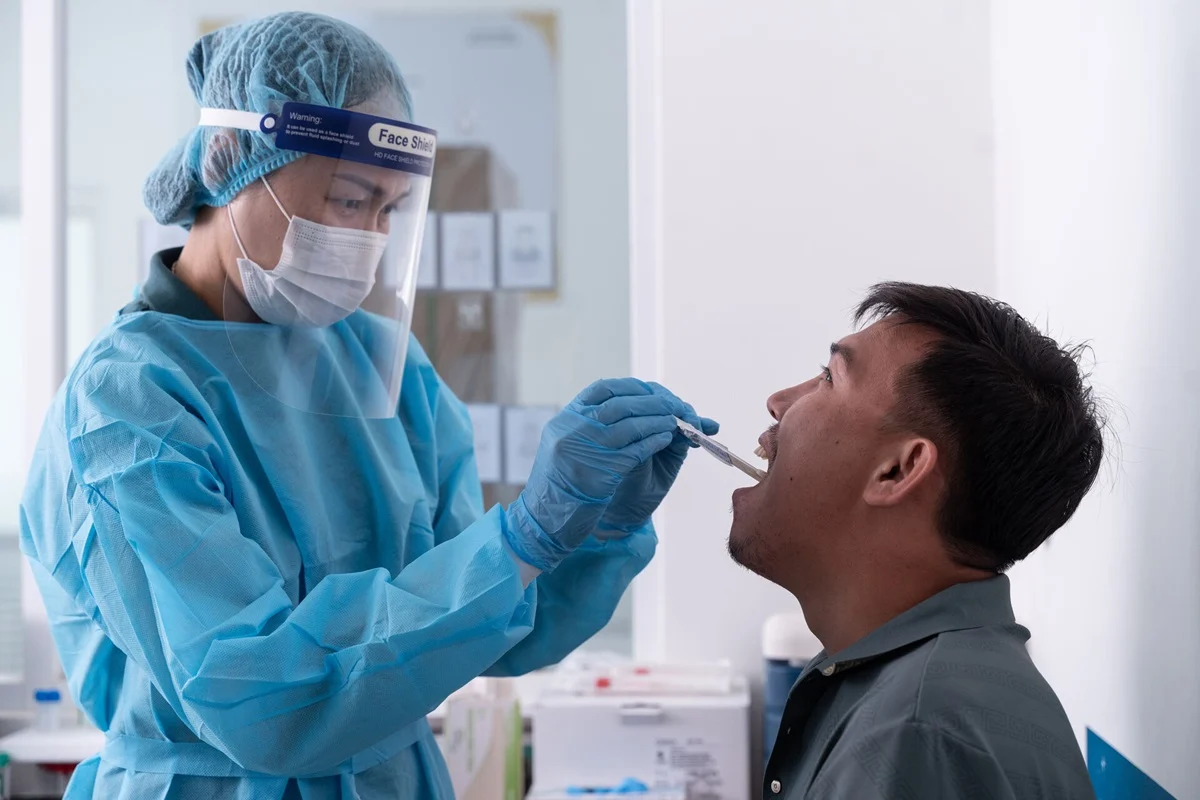
On World TB Day, the World Health Organization (WHO) is issuing an urgent call to action, imploring nations worldwide to accelerate their efforts to eradicate tuberculosis (TB) and significantly expand access to life-saving services. This renewed push is underscored by the introduction of groundbreaking innovations, including advanced diagnostic tests deployable at the point-of-care and novel tongue swab techniques designed to detect the disease more rapidly and reach a broader population. The organization’s latest guidelines on near-point-of-care TB testing represent a pivotal advancement in the fight against one of the globe’s most formidable infectious killers, aiming to bring diagnosis and treatment closer to individuals, thereby saving lives and curbing transmission.
The significance of these new diagnostic tools cannot be overstated. Unlike traditional laboratory-based testing, which often involves lengthy sample transportation and processing, these portable and user-friendly tests can be administered directly in community health centers, mobile clinics, or even in patients’ homes. This proximity to care is crucial for individuals living in remote areas, those with mobility challenges, or populations that face barriers to accessing centralized healthcare facilities. With operational capabilities powered by battery, these tests can deliver accurate results in under an hour, a dramatic reduction from the days or even weeks often associated with conventional methods. This swift turnaround time allows for the immediate initiation of treatment, a critical factor in improving patient outcomes and preventing the further spread of the disease.
Dr. Tedros Adhanom Ghebreyesus, WHO Director-General, emphasized the transformative potential of these innovations. "These new tools could be truly transformative for tuberculosis," he stated, highlighting their ability to "bring fast, accurate diagnosis closer to people, saving lives, curbing transmission and reducing costs." His appeal to governments was unequivocal: "WHO calls on all countries to scale up access to these and other tools so every person with TB can be reached and treated promptly." The implications extend beyond TB, as these versatile diagnostic platforms hold promise for detecting other infectious diseases such as HIV, mpox, and HPV, fostering a more patient-centered, equitable, and integrated approach to disease management.
Innovations in Sample Collection: Broadening the Reach of TB Testing
The WHO’s updated guidelines also champion new, simplified methods for sample collection, which are poised to further expand the reach of TB testing. Alongside near-point-of-care diagnostics, the recommendations include the adoption of easy-to-collect tongue swabs and a cost-effective sputum pooling strategy. The tongue swab offers a breakthrough for individuals who struggle to produce sputum, a common requirement for traditional TB tests. This includes vulnerable groups such as children and the elderly, or those with certain medical conditions. By enabling testing through a simple swab, the WHO aims to ensure that those most at risk of severe TB complications and mortality are no longer excluded from diagnosis.
Furthermore, the sputum pooling strategy presents a significant opportunity for resource-constrained settings. This method involves combining sputum samples from multiple individuals and testing them collectively. While individual testing is the gold standard for definitive diagnosis, sputum pooling can drastically reduce the consumption of testing reagents and minimize the time required for laboratory analysis. This efficiency gain is particularly valuable in regions with limited financial resources and a high burden of TB, allowing for a greater number of individuals to be screened and diagnosed with fewer resources. This approach, specifically recommended for situations of extreme resource limitation, can significantly accelerate the identification of cases and facilitate timely treatment initiation, thereby optimizing the impact of TB control programs.
Global Progress at Risk: The Imperative of Faster Diagnosis
Tuberculosis remains a relentless global health adversary. Daily, it claims the lives of over 3,300 people and infects more than 29,000 individuals, despite being a preventable and curable disease. Since the turn of the millennium, concerted global efforts have averted an estimated 83 million deaths from TB, a testament to the progress made in diagnosis, treatment, and prevention. However, these hard-won gains are increasingly imperiled by alarming cuts in global health funding. This financial squeeze threatens to undermine existing programs and stifle the adoption of new, effective interventions.
A significant hurdle in the widespread implementation of rapid diagnostic tools has been their perceived high cost and the logistical complexities associated with sample transport to centralized laboratories. This reliance on established infrastructure can create diagnostic bottlenecks, leading to delays in treatment and an increased risk of onward transmission. The WHO’s push for near-point-of-care diagnostics, including readily available urine tests for people living with HIV and low- to moderate-complexity tests for broader populations, aims to directly address these challenges. By decentralizing testing and making it more accessible, these solutions can bridge critical diagnostic gaps across all levels of the healthcare system, moving closer to the ambitious global targets for universal access to TB and drug-resistance testing.
World TB Day 2026: A Global Call to Action
The theme for World TB Day 2026, "Yes! We Can End TB: Led by Countries, Powered by People," encapsulates a powerful message of collective responsibility and agency. The WHO’s agenda for this significant day is clear: to galvanize urgent action across multiple fronts. This includes:
- Strengthening Political Commitment: Urging heads of state and government to prioritize TB eradication at the highest levels of policy and governance.
- Boosting Domestic and International Funding: Advocating for increased investment in TB research, development, and program implementation.
- Accelerating the Scale-Up of Innovative Tools: Facilitating the widespread adoption and equitable distribution of new diagnostic tests, treatments, and preventive therapies.
- Engaging Communities and Civil Society: Recognizing the indispensable role of affected communities and local organizations in driving TB response efforts and ensuring that no one is left behind.
Dr. Tereza Kasaeva, Director of WHO’s Department for HIV, Tuberculosis, Hepatitis and Sexually Transmitted Infections, underscored the economic rationale behind investing in TB control. "Investing in TB is a strategic political and economic choice, generating up to US$ 43 in health and economic returns for every dollar spent," she stated. "What is required now is decisive leadership, strategic investment and rapid implementation of WHO recommendations and innovations to save lives and protect communities." This highlights that tackling TB is not merely a public health imperative but also a sound economic strategy.
The Path Forward: Sustained Innovation and Research
While the introduction of new diagnostic tools represents a monumental leap forward, the ultimate eradication of TB hinges on sustained and intensified investment in research and innovation. The current global funding landscape for TB research falls far short of the estimated annual requirement of approximately US$5 billion. This deficit creates significant gaps in the development of next-generation diagnostics, more effective treatments, and crucially, a preventative vaccine.
The WHO, in collaboration with its global partners, is actively working to bridge these research gaps and accelerate progress. Initiatives such as the TB Vaccine Accelerator Council, recently launched, exemplify this commitment. The Council aims to fast-track the development and ensure equitable access to novel TB vaccines by fostering alignment among governments, researchers, funders, and the pharmaceutical industry around shared priorities and coordinated investment strategies. Such collaborative efforts are essential to overcome the remaining scientific and logistical hurdles in the fight against TB.
As nations observe World TB Day 2026, the WHO’s overarching message to governments and partners is unequivocal: TB must be recognized and prioritized as a central pillar of global health security and a critical component of universal health coverage. Achieving this requires a paradigm shift in how TB is addressed, moving from a reactive approach to one that is proactive, innovative, and deeply integrated into broader health system strengthening efforts. The journey to end TB is challenging, but with the advent of new technologies and a renewed global commitment, the goal of a TB-free world is increasingly within reach, provided that countries and communities are empowered and supported to lead the way.