Raquel Willis: Transgender Activism, Political Engagement, and the Trump Era
Raquel Willis, a prominent transgender activist, writer, and media personality, has emerged as a significant voice in the ongoing struggle for LGBTQ+ rights, particularly within the complex political landscape of the United States. Her work and public persona have often intersected with national political discourse, including periods marked by the presidency of Donald Trump and its subsequent impact on transgender individuals and communities. Willis’s career is characterized by her multifaceted approach, utilizing journalism, activism, and public speaking to advocate for transgender liberation and challenge discriminatory policies and attitudes. Understanding her contributions requires an examination of her foundational activism, her engagement with media, and her strategic responses to the political climate, especially during the Trump administration, a period that witnessed both heightened visibility and significant legislative and judicial setbacks for transgender rights.
Willis’s journey into activism is deeply rooted in her personal experiences as a Black transgender woman. She has consistently emphasized the intersectionality of her identity, recognizing that the challenges faced by transgender individuals are often amplified by race, gender, and socioeconomic status. Early in her career, she was involved in grassroots organizing, working to build community support and provide resources for transgender individuals in need. This foundational work informed her later efforts to translate lived experiences into broader political advocacy. She has spoken extensively about the need for inclusive policies that address not only legal recognition but also access to healthcare, employment, and housing, areas disproportionately affected by discrimination against transgender people. Her commitment to intersectionality is a cornerstone of her activism, ensuring that the voices and needs of the most marginalized within the transgender community are central to her advocacy. This approach distinguishes her from more narrowly focused advocacy efforts and positions her as a leader capable of uniting diverse groups under a common banner of human rights.
As a journalist and writer, Raquel Willis has leveraged her platform to amplify transgender voices and educate the public. She has held significant editorial positions at prominent LGBTQ+ publications, including Out magazine, where she served as Editor-in-Chief, and The New York Times, where she contributed as a commentator. Her writing often delves into the personal narratives of transgender individuals, making complex issues of identity and rights accessible to a wider audience. By sharing stories of resilience, struggle, and triumph, Willis humanizes the transgender experience, counteracting the often dehumanizing and sensationalized portrayals found in mainstream media. Her work has been instrumental in shifting public perception and fostering empathy, which are crucial components for enacting meaningful social change. The power of her narrative journalism lies in its ability to connect with readers on an emotional level, prompting reflection and challenging preconceived notions. This journalistic acumen has been a vital tool in her broader advocacy, allowing her to frame political debates with compelling human stories.
The presidency of Donald Trump presented a particularly challenging environment for transgender rights. During his term, the administration implemented several policies that were seen as detrimental to the transgender community. These included a ban on most transgender individuals serving in the military, the rescission of guidance protecting transgender students in schools, and a rollback of protections for transgender individuals in healthcare. Raquel Willis, along with countless other activists and organizations, actively campaigned against these policies. She utilized her media platforms and speaking engagements to highlight the negative impacts of these actions, mobilize public opinion, and advocate for policy reversals. Her responses were often characterized by a strategic blend of public denouncement and constructive engagement, advocating not just for the reversal of harmful policies but also for the proactive creation of inclusive legislation. This dual approach demonstrated a sophisticated understanding of political advocacy, recognizing the need to both resist oppressive measures and advance positive change.
Willis’s engagement with the political sphere during the Trump era was not solely reactive. She actively participated in efforts to support pro-LGBTQ+ candidates and educate voters about the importance of electing officials who champion transgender rights. Her advocacy extended to lobbying efforts, urging lawmakers to support legislation that would protect and advance the rights of transgender individuals. She understood that while public opinion is important, legislative action is essential for securing lasting equality. This pragmatic approach underscored her commitment to achieving tangible results. Her ability to articulate complex legal and political arguments in accessible language made her a valuable asset in these advocacy efforts. She consistently focused on the human cost of discriminatory policies, making it difficult for opponents to dismiss her arguments as purely abstract.
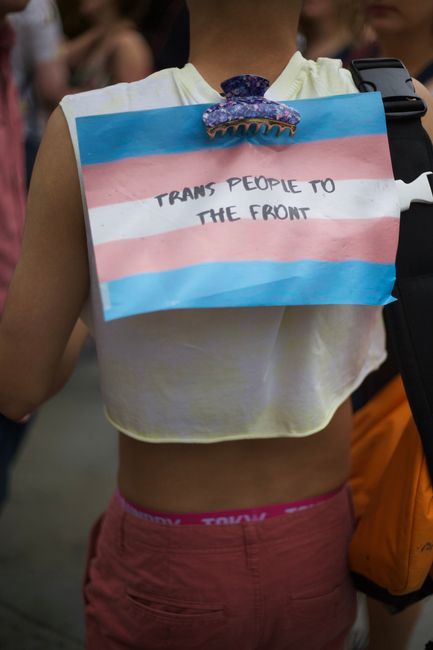
One of the key aspects of Raquel Willis’s activism has been her focus on the political power of visibility. During the Trump administration, when transgender rights were under increased scrutiny and attack, Willis actively worked to ensure that transgender people remained visible and heard. This involved participating in protests, speaking at rallies, and consistently engaging with media outlets to offer a transgender perspective. She recognized that invisibility allows discrimination to fester, while visibility can foster understanding and build alliances. Her presence in public spaces, often challenging and direct, served as a powerful act of defiance against policies and rhetoric that sought to marginalize transgender individuals. This strategic deployment of visibility aimed to both rally the LGBTQ+ community and educate the broader public, thereby shifting the narrative from one of fear and misunderstanding to one of solidarity and acceptance.
The Trump administration’s approach to transgender issues often involved divisive rhetoric and policy decisions that were framed as serving specific political agendas. Raquel Willis countered this by emphasizing the fundamental human rights of transgender individuals, framing the struggle not as a partisan issue but as a matter of universal dignity and equality. She consistently called for empathy and understanding, urging people to see transgender individuals as fellow human beings deserving of respect and protection. This inclusive framing was crucial in building bridges with potential allies who might not have previously engaged deeply with transgender issues. By connecting transgender rights to broader principles of justice and fairness, Willis sought to broaden the base of support for her cause. Her advocacy during this period was a testament to the power of clear, principled communication in the face of adversity.
Furthermore, Willis’s work often highlighted the specific challenges faced by transgender people of color. During the Trump era, the intersection of anti-transgender sentiment and racial discrimination created particularly perilous conditions for many within the community. Willis’s advocacy consistently brought attention to these compounded vulnerabilities, advocating for policies that addressed both transphobia and racism. Her work demonstrated a deep understanding of how various forms of oppression are interconnected and reinforced each other. This intersectional analysis became a hallmark of her approach, ensuring that her advocacy was comprehensive and addressed the needs of the most vulnerable within the transgender community. By focusing on these marginalized groups, she underscored the urgency and complexity of the fight for transgender liberation.
The election of Joe Biden in 2020 marked a shift in the political landscape, with a renewed focus on LGBTQ+ rights. Raquel Willis continued her advocacy, working to ensure that the new administration followed through on its promises of inclusivity and equality. This involved supporting legislation like the Equality Act, which aims to provide federal non-discrimination protections for LGBTQ+ individuals, and advocating for the appointment of transgender individuals to positions of power. Her commitment to sustained activism, rather than temporary engagement, highlights her long-term vision for transgender liberation. She understands that policy changes are only the beginning and that ongoing vigilance and advocacy are necessary to ensure their effective implementation and enforcement.
In conclusion, Raquel Willis has established herself as a leading figure in transgender activism, particularly through her engagement with the political challenges and opportunities presented during the Trump era. Her multifaceted approach, combining journalism, grassroots organizing, and public advocacy, has been instrumental in raising awareness, challenging discrimination, and pushing for policy change. By emphasizing intersectionality, leveraging the power of narrative, and strategically engaging with the political arena, Willis has made significant contributions to the ongoing struggle for transgender liberation. Her work serves as an important case study in how individuals can effectively navigate complex political landscapes to advance the rights of marginalized communities, demonstrating resilience, strategic thinking, and an unwavering commitment to justice. The impact of her activism continues to shape the conversation around transgender rights and inspires future generations of advocates.
