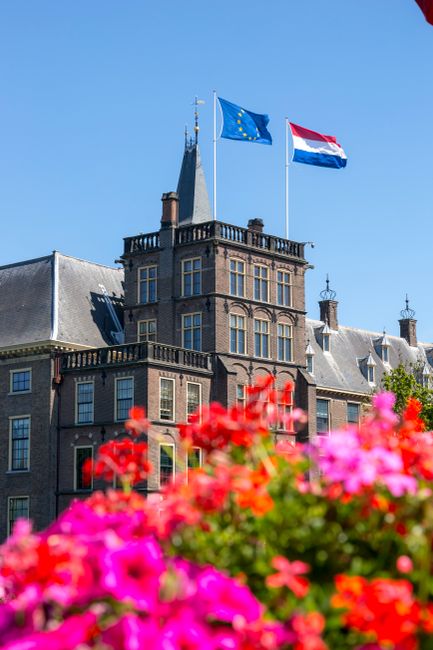
Category: Dutch Politics 2 – Navigating the Nuances of the Netherlands’ Political Landscape
Dutch politics, characterized by its multi-party system, coalition governments, and a strong emphasis on consensus-building, presents a complex yet fascinating study. Unlike many countries with dominant two-party systems, the Netherlands consistently sees a fragmentation of the political landscape, making coalition formation a central and often protracted process. This characteristic is not a recent phenomenon but deeply rooted in the nation’s history and social fabric. The proportional representation electoral system is the primary driver of this fragmentation, ensuring that even smaller parties can gain parliamentary seats, thereby necessitating collaboration and compromise among diverse political ideologies. Understanding "Dutch Politics 2," therefore, requires delving beyond superficial party labels and exploring the underlying dynamics of governance, policy-making, and public discourse within this intricate framework. The stability of Dutch governments, despite this fragmentation, is often attributed to a culture of pragmatism and a willingness to engage in constructive dialogue, albeit sometimes with intense negotiation. This article will explore key aspects of this political terrain, examining recent trends, significant policy debates, and the evolving role of various political actors.
The electoral system in the Netherlands is a cornerstone of its political structure. With proportional representation, the entire country functions as a single electoral constituency. Parties are allocated seats in the House of Representatives (Tweede Kamer) in direct proportion to the number of votes they receive. This system effectively eliminates the "wasted vote" phenomenon common in first-past-the-post systems and ensures a broad representation of political viewpoints. For instance, a party securing 5% of the national vote is guaranteed approximately 7-8 seats in the 150-seat chamber. This inherent feature of the electoral law directly contributes to the multi-party system, where numerous parties, ranging from liberal to socialist to Christian democratic and populist, consistently secure representation. The threshold for securing a seat is very low, further facilitating the entry of smaller parties. This has a profound impact on government formation, as no single party can realistically expect to win an outright majority. Consequently, coalition governments are the norm, with parties needing to find common ground to form a governing majority. The process of forming a coalition can be lengthy and arduous, often involving extensive negotiations over policy priorities, ministerial appointments, and budget allocations. This can lead to periods of political uncertainty, though the eventual formation of a government is usually seen as a testament to the Dutch commitment to stable governance. The continuous presence of a diverse range of parties also means that policy debates are often characterized by a multiplicity of perspectives, leading to a richer, though sometimes more challenging, policy development process.
Coalition formation is arguably the most distinctive and often challenging aspect of Dutch politics. Following general elections, the leader of the largest party is typically tasked with initiating exploratory talks, often referred to as "verkenningsgesprekken." These discussions aim to gauge the willingness of other parties to form a coalition and to identify potential areas of policy agreement. The process can involve "informateurs," neutral figures who facilitate these early-stage discussions, and subsequently "formateurs," usually designated to lead the formation of the actual government. The complexity arises from the sheer number of parties and the diverse ideological spectrum they occupy. A winning coalition typically requires at least two, and often three or more, parties to secure a parliamentary majority. This necessitates significant compromise, as parties must reconcile differing views on critical issues such as taxation, social welfare, immigration, and environmental policy. The negotiation process is highly strategic, with parties vying for key ministerial portfolios and seeking to secure concessions on their core policy objectives. The media plays a crucial role in observing and reporting on these negotiations, often fueling public speculation and debate. While sometimes protracted, the eventual formation of a coalition government is a pragmatic necessity driven by the understanding that effective governance requires collaboration. The stability of Dutch governments, despite the inherent challenges of coalition building, is a testament to the political culture’s emphasis on finding workable solutions.
Recent political developments in the Netherlands have been marked by significant shifts and evolving dynamics. The rise of populist parties, such as the Party for Freedom (PVV) led by Geert Wilders, has been a prominent trend, challenging established political norms and injecting a more confrontational tone into public discourse. The PVV, with its anti-immigration and Eurosceptic platform, has consistently gained electoral support, forcing mainstream parties to adapt their messaging and policy proposals. This has led to a more polarized political environment, though the fundamental need for coalition remains. Another key development has been the increasing prominence of environmental issues, with parties like GroenLinks advocating for ambitious climate policies. This has placed climate action firmly on the political agenda, leading to debates about the economic implications of green transitions and the pace at which they should be implemented. Furthermore, the COVID-19 pandemic significantly impacted Dutch politics, leading to emergency legislation, debates about public health measures, and the economic fallout. The government’s response, while generally characterized by a pragmatic approach, also faced scrutiny and criticism, highlighting the challenges of managing a national crisis within a multi-party parliamentary system. The demographic shifts within the Netherlands, including an aging population and increasing diversity, also continue to shape political discussions around social welfare, healthcare, and integration.
Key policy debates in Dutch politics often revolve around a core set of issues reflecting the nation’s societal priorities and economic realities. Healthcare remains a perennial topic, with debates focusing on affordability, accessibility, and the sustainability of the current insurance-based system. The balance between private providers and public oversight is a constant point of contention. Social welfare and the pension system are also under continuous review, particularly in light of an aging population and the desire to maintain a robust social safety net. Debates often center on the retirement age, contribution levels, and the fairness of intergenerational transfers. Immigration and integration continue to be sensitive issues, fueling discussions about border control, asylum policies, and the social and economic impact of migration. Populist parties have consistently leveraged these concerns, pushing for stricter measures. Climate change and environmental policy have gained significant traction, with ambitious targets for emission reduction and a transition to renewable energy sources. However, debates persist regarding the economic costs, the impact on traditional industries, and the equitable distribution of the burden of these transitions. European Union membership and the Netherlands’ role within it are also subjects of ongoing discussion. While generally supportive of the EU, there are debates about national sovereignty, contributions to the EU budget, and the direction of European integration. The housing market crisis, with rapidly increasing prices and a shortage of affordable housing, has also become a critical policy challenge, prompting discussions about zoning regulations, construction policies, and rental market reforms.
The role of political parties and their evolution are central to understanding Dutch politics. The traditional pillarized structure of Dutch society, where political parties were closely aligned with specific religious or ideological groups, has eroded significantly. While some historical affiliations persist, voters are increasingly detached from these traditional allegiances. This has led to greater voter volatility and a more fluid party landscape. Major parties like the VVD (People’s Party for Freedom and Democracy), a liberal-conservative party, and the PvdA (Labour Party), a social democratic party, continue to be significant players, but their dominance has been challenged by newer parties and the rise of populism. Christian democratic parties, historically a strong force, have seen their support decline but still play a crucial role in coalition formation. The emergence of populist parties like the PVV and Forum for Democracy (FvD) has fundamentally altered the political discourse, introducing more nationalistic and anti-establishment sentiments. Furthermore, the Green parties (GroenLinks and D66, a progressive liberal party) have gained influence by emphasizing environmental and social justice issues. The fragmentation of the party system necessitates continuous adaptation and coalition-building, forcing parties to moderate their stances and engage in compromise to govern effectively. The challenge for many parties is to maintain their core identity while appealing to a broader electorate and navigating the complexities of coalition politics.
Public discourse and media influence are integral to the functioning of Dutch politics. The Netherlands enjoys a high degree of press freedom, with a diverse media landscape that includes national newspapers, television broadcasters, and online platforms. Public broadcasters, funded by a combination of government grants and subscriptions, play a significant role in providing impartial news and facilitating public debate. The rise of social media has also had a profound impact, offering new avenues for political engagement, citizen journalism, and the dissemination of information, but also contributing to the spread of misinformation and echo chambers. Political debates are often characterized by a high level of civility and a focus on evidence-based arguments, although this can be strained by the heightened rhetoric of populist movements. The role of think tanks and academic institutions is also important in shaping policy debates, providing research and analysis that informs political decision-making. Public opinion polls are widely published and closely watched, influencing the strategies of political parties and the perceived legitimacy of government actions. The transparency of government processes, while generally high, is continually debated, with ongoing discussions about access to information and public scrutiny of policy development.
The future of Dutch politics is likely to be shaped by several overarching trends. The ongoing challenge of coalition formation will persist, requiring parties to be increasingly flexible and pragmatic. The continued influence of populist movements will likely keep the political discourse dynamic, potentially leading to further shifts in party alignments and policy priorities. Climate change will undoubtedly remain a dominant issue, demanding significant policy innovation and societal adaptation. The Netherlands’ position within the European Union will continue to be a subject of debate, with discussions about sovereignty and integration likely to evolve. Furthermore, the impact of digitalization and artificial intelligence on the economy and society will necessitate new policy frameworks and raise questions about regulation and social equity. The demographic shifts, including an aging population and evolving migration patterns, will continue to influence social policy and resource allocation. Navigating these complex and interconnected challenges will require continued dialogue, compromise, and a commitment to the fundamental principles of democratic governance that have long defined Dutch politics. The ability of the political system to adapt to these evolving dynamics will be crucial for its continued stability and effectiveness.
