Andy Burnham officially became the sixth Prime Minister of the United Kingdom in just over a decade today, marking a significant and unusually popular transition for the Labour Party. In an extensive interview with Patrick Maguire of The Times, Burnham articulated a clear vision for his premiership, emphasizing a departure from conventional politics, immediate measures to alleviate the cost of living crisis, and a commitment to a "10-year plan" for national renewal. The day’s events unfolded with the traditional pageantry of a leadership handover, beginning with outgoing Prime Minister Keir Starmer’s farewell address and culminating in Burnham’s appointment by the King at Buckingham Palace, followed by his inaugural speech from Downing Street and the critical task of appointing his cabinet.

Burnham’s pronouncements signal a distinct shift in approach, aiming to redefine the political landscape after what he described as a "decade of it just not working." He challenged the conventional Westminster paradigm, stating, "Judge me in six, twelve months on whether I’ve lapsed back into that [doing conventional politics]. I’m going to really try not to. Politics needs a bit of a line drawn." This commitment to a "different way" resonates with his background as Mayor of Greater Manchester, where he cultivated a reputation for pragmatic, people-focused governance, often seen as an outsider to the Westminster establishment. His promise of a fresh start seeks to tap into widespread public disillusionment with traditional politics and the perceived stagnation of recent years, aiming to restore faith in a system many feel has become detached from their realities.
Immediate Priorities: Tackling the Cost of Living Crisis
A cornerstone of Burnham’s immediate agenda is tackling the persistent cost of living crisis that has gripped the nation. He assured the public of "early moves to help," underscoring that his focus would be "much more about the real show in town, which is that pressure people feel around their finances." Drawing directly from public sentiment gathered during his political campaigns, he recounted hearing frustrations on doorsteps in areas like Makerfield – a constituency often cited as a barometer of working-class opinion – where residents lament being unable to afford basic leisure activities such as a pint on Friday, outings with children, or even a holiday. These anecdotes highlight a deep-seated economic anxiety that Burnham appears keen to confront head-on.
While specific policy details remained under wraps, Burnham confirmed he had been in discussions with the Treasury regarding "some of the announcements" he plans to make this week. The cost of living crisis has seen inflation soar, real wages stagnate, and household energy bills reach unprecedented levels, pushing millions into financial precariousness. According to recent Office for National Statistics data, the average UK household has seen its real disposable income decline for several consecutive quarters, with food price inflation alone hovering around 15-20% in the past year, significantly impacting lower-income families. His emphasis on "early investment, early intervention, setting people up for success, and much less paying for failure" suggests a preventative economic strategy aimed at building long-term resilience rather than merely reactive relief. This contrasts with some past governmental approaches that have been criticized for short-term fixes or insufficient structural support.
Policy Realignments and Fiscal Considerations
One of the first tangible policy shifts under Burnham’s nascent leadership is the decision to scrap Keir Starmer’s plan for a digital ID scheme, an announcement made yesterday. Burnham defended this reversal as an example of his administration’s pragmatic approach. He argued that the digital ID initiative "wouldn’t make a tangible difference to people’s lives anytime soon," and even in the long run, its benefits for easing daily life were uncertain. This move is indicative of Burnham’s stated intention to redirect resources towards policies with more immediate and palpable benefits for ordinary citizens, distinguishing his priorities from those of his predecessor. The digital ID scheme had previously faced criticism from civil liberties groups and some within the Labour Party over potential privacy concerns, data security risks, and the sheer complexity of its implementation, making its cancellation a relatively uncontroversial early move for Burnham, signaling a willingness to shed inherited policies not aligned with his core vision.

On the contentious issue of taxation, Burnham sought to distance himself from being "characterised as a tax raiser," asserting that the matter is "never that simplistic." He highlighted public frustration encountered in Makerfield regarding the freeze in the personal income tax allowance at £12,570. This freeze, in effect, acts as a "stealth tax" as wage inflation pushes more people into higher tax brackets or increases the proportion of their income subject to tax without any explicit rate change. The Institute for Fiscal Studies has estimated that the continued freeze could drag millions more into paying income tax or higher rates over the next few years, significantly boosting Treasury coffers but eroding household budgets. While not committing to reversing the freeze, which would entail a significant fiscal cost running into billions of pounds, his acknowledgment of the public’s grievance suggests it is firmly on his radar. This nuanced stance follows an earlier interview last week where he had indicated that people might have to pay "a little more" in tax, underscoring the delicate balance he aims to strike between funding essential public services and easing the burden on households.
A Distinct Leadership Style: Authenticity and Direct Engagement
Burnham outlined a leadership style deeply rooted in authenticity and a desire to connect directly with the public. He stressed that his motivation for becoming Prime Minister was "to change things," not merely to occupy high office. "There’s no point being here because you’re here," he stated, subtly criticizing what he perceives as a prevalent careerism within Westminster that prioritizes position over purpose. He pledged to trust his "instincts" in decision-making, acknowledging past instances where deviating from them led to missteps, and reaffirmed his unwavering commitment to "listen to people."
This commitment to direct engagement was vividly illustrated by his success in persuading the No 10 security team to allow him to continue attending Everton football matches in his regular season ticket seat in the stands. This contrasts sharply with his predecessor, Keir Starmer, an Arsenal season ticket holder, who was reportedly restricted to the directors’ box due to security concerns. For Burnham, this is not just about personal preference but a vital conduit for public feedback. He sees his seat at Goodison Park as a "mega focus group," a place where he can genuinely "pick up my straws in the wind" and stay connected to the sentiments of everyday people, a style he cultivated during his mayoral tenure in Greater Manchester, where direct public consultation was a hallmark of his governance.
Further glimpses into his personal approach included his declaration of Catholic faith to officials, suggesting that some Church of England-related decisions (traditionally part of the PM’s role) might be delegated, a practical acknowledgment of his personal beliefs and a move towards greater transparency regarding religious affiliation in public office. He also shared a poignant reflection on his father, who suffers from dementia and is unaware of his son’s ascension to the highest office. Burnham noted with bittersweet irony that his father, a long-time advocate for proportional representation (PR), would likely be proud that his son has "come round to PR," a policy change Burnham now supports. This personal anecdote humanizes the incoming leader, offering a window into his values, influences, and the profound personal impact of his political journey.
Critique of Westminster Culture and Cross-Party Overtures
Burnham did not shy away from critiquing the prevailing culture within Westminster. He expressed genuine "shock" at the extent of "negative briefing," lamenting that the current generation of politicians is "not being good enough" and is "almost just following the worst patterns of social media." This suggests a desire to foster a more constructive and less tribal political environment, one that moves beyond the often-toxic discourse prevalent in digital spaces.
In a surprising move, he indicated a willingness to seek "common ground with anybody," even extending an olive branch to opposition figures often seen as ideological adversaries. He singled out Conservative MP Kemi Badenoch, whom he believes is "much more capable than some of her predecessors" and "certainly impressive in some ways." He also acknowledged Nigel Farage’s "communication skills," despite their stark political differences. This conciliatory tone, if sustained, could signal a departure from the highly adversarial nature of recent British politics, potentially opening avenues for bipartisan cooperation on critical national issues. Such an approach might be aimed at projecting an image of national unity and pragmatic problem-solving, rather than partisan point-scoring, a strategy that could resonate with an electorate tired of political infighting.
A Day of Transition: From Starmer to Burnham
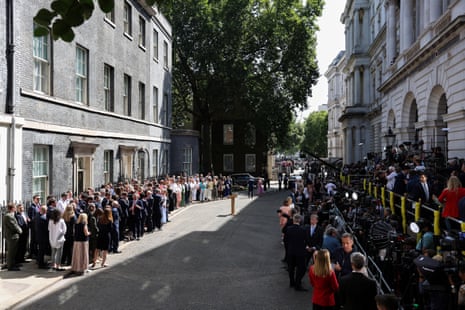
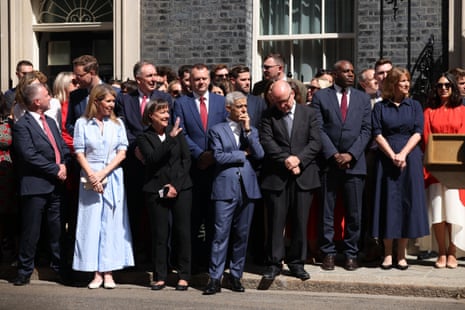
The day began with a palpable sense of anticipation in Downing Street, described by Guardian political correspondent Alexandra Topping as "pure theatre," with journalists from around the world jostling for position and expensive equipment. Outgoing Prime Minister Keir Starmer delivered his final speech from the iconic black door at 11:15 am, before making his way to Buckingham Palace to formally tender his resignation to the King. Starmer, in an Instagram video reflecting on his tenure, expressed pride in leaving the country "in a better place," a sentiment echoed by his loyal allies like Jenny Chapman, the development minister. Chapman, speaking on Sky News, noted Starmer’s "reconciliation" with leaving office, attributing it to his pre-politics perspective as a lawyer and emphasizing the importance of a smooth and respectful transfer of power – a democratic hallmark in the UK.
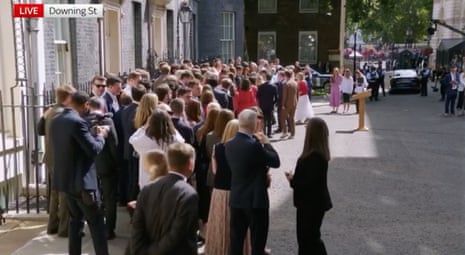
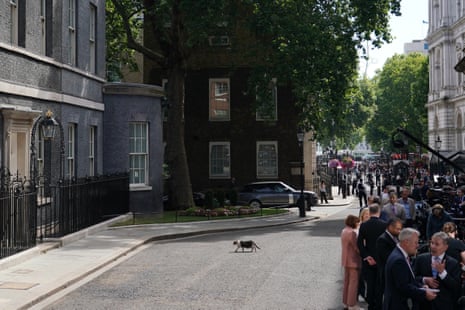
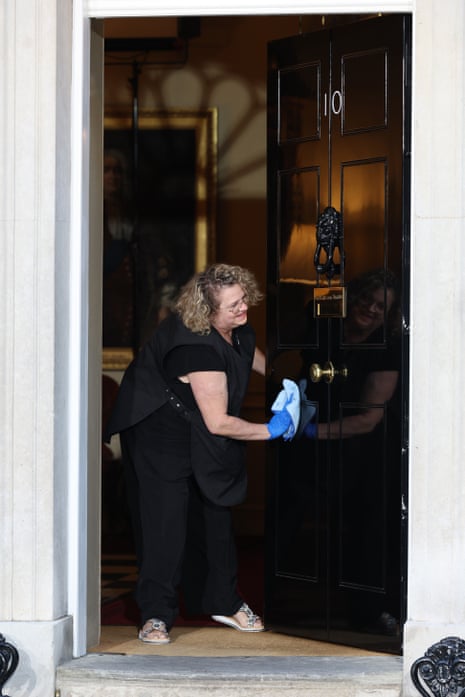
Amidst the political change, some traditions endured. Larry, the long-serving Downing Street cat, was observed on the prowl, a familiar sight since 2011, providing a quirky note of continuity across multiple administrations. Meanwhile, the "podium guy" was seen setting up the lectern for the incoming Prime Minister’s address. However, reports from the BBC’s Chris Mason suggested Burnham might eschew the lectern, preferring to maintain the more direct, unscripted style he employed as Mayor of Greater Manchester, a symbolic gesture of his commitment to govern "in a different way" from the formal conventions of Number 10.
The transition was not without its immediate political reverberations. James Timpson resigned as prison minister, sparking speculation that Sally Jameson, the MP for Doncaster Central and a former prison officer, might be a candidate for the role. Timpson, known for his liberal stance on penal policy and his family company’s groundbreaking practice of employing ex-offenders, represented a particular reformist wing within Labour. His departure highlights the swift personnel changes that accompany a new administration, as Burnham begins to shape his team.
Protests and Environmental Policy Challenges
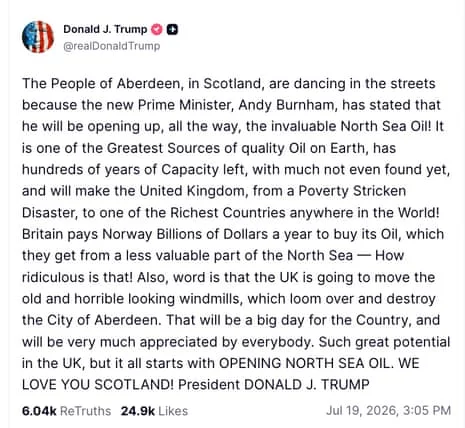
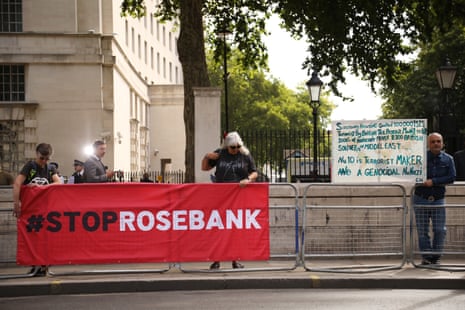
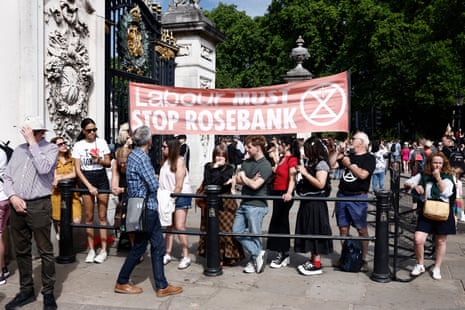
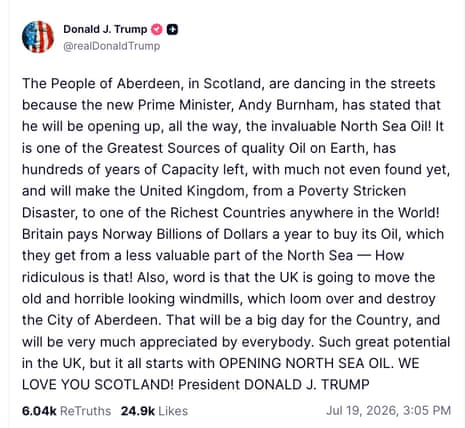
Outside the corridors of power, the change of leadership was met with public expression. Environmental protesters displayed banners on Whitehall and outside Buckingham Palace, urging the new government not to approve the proposed Rosebank oil field development in the North Sea. This issue is a significant early challenge for Burnham, particularly given comments from his Deputy Labour Leader, Lucy Powell, who, while insisting the party’s manifesto policy against new oil and gas exploration would stand, hinted at a "more pragmatic approach" and a "change of emphasis" in working with the industry. This subtle shift has already attracted international attention, with former US President Donald Trump controversially claiming on Truth Social that Burnham would open up the North Sea "all the way," a statement that could presage early diplomatic friction or simply reflect Trump’s characteristic hyperbole, setting a complex stage for UK-US relations on climate policy.
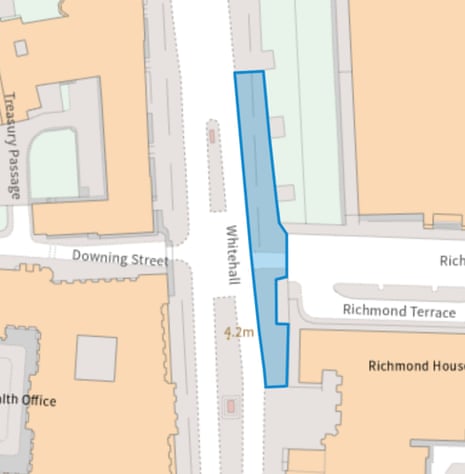
In a modern political landscape increasingly shaped by direct communication, the Met Police took measures to ensure the smooth running of today’s events. Conditions were put in place on Whitehall, restricting amplified noise equipment between 10:30 am and 1:30 pm to prevent disruption to the speeches and official proceedings. This move effectively silenced veteran anti-Brexit campaigner Steve Bray, known for using loud music, including the EU anthem "Ode to Joy," during previous Downing Street transitions. Bray, in response, relocated to Buckingham Palace but confirmed he would refrain from playing music during the royal audiences, demonstrating the careful management of public space and sound during such high-profile political events.
The Road Ahead: A New Era?
Andy Burnham’s arrival at Downing Street at 12:40 pm, following his appointment by the King, marked the formal beginning of his premiership. His inaugural speech, followed by the crucial process of appointing his cabinet throughout the afternoon, will set the tone for his administration. The composition of his cabinet will be closely scrutinized for signals of his policy direction and his ability to unite the diverse factions within the Labour Party, balancing continuity with the fresh vision he has articulated. The transition from Keir Starmer, who had increasingly struggled to connect with the electorate despite leading Labour to a significant electoral victory, to the more charismatic and often populist Burnham, represents a calculated gamble by the party to inject new energy and appeal, hoping to capitalize on Burnham’s established public popularity.
Burnham assumes power at a challenging juncture for the UK, facing not only the entrenched cost of living crisis but also complex issues such as climate change, healthcare pressures, and a fractured geopolitical landscape. His "10-year plan" suggests an ambition for deep-seated structural reform rather than incremental adjustments, aiming to fundamentally re-shape the nation’s trajectory. Whether his promised "different way" of governing can cut through the cynicism of modern politics and deliver tangible improvements to people’s lives will be the ultimate test of his premiership. The coming days and weeks will be critical in establishing the true extent of his policy agenda and the composition of the team he intends to lead Britain forward, navigating both domestic demands and international expectations.