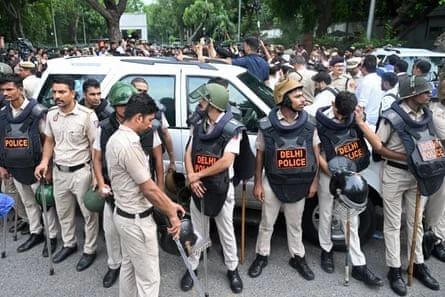
India’s parliamentary proceedings were brought to a standstill on Wednesday as a united opposition bloc, spearheaded by the Congress party, intensified its demands for the resignation of Education Minister Dharmendra Pradhan. This dramatic escalation comes in staunch solidarity with the burgeoning youth-led "Cockroach Janta" (CJP) movement, which has galvanized thousands across the nation against alleged police brutality and persistent examination scandals. The protests underscore a deep-seated disillusionment among India’s vast youth population, posing a significant challenge to Prime Minister Narendra Modi’s ruling government.
Chronology of Escalating Tensions
The political temperature began to rise sharply on Monday, when the Cockroach Janta Party (CJP), a movement that originated as satirical online commentary but has rapidly morphed into a potent political force, organized one of the largest anti-government demonstrations in recent memory. Despite being denied official permission by authorities to march on parliament, an estimated 50,000 people converged in central Delhi, expressing their outrage over systemic issues plaguing the education sector and perceived government apathy.
The demonstration, initially peaceful, descended into chaos by late afternoon as police employed teargas and baton charges against the protesters. Official figures released by the Delhi Police reported 60 civilian injuries and 118 police personnel injured, attributing the clashes to protester instigation. However, CJP organizers vehemently condemned the "high-handedness" of the authorities, asserting that hundreds of peaceful demonstrators had been brutalized. Disturbingly, they reported at least one woman was critically injured and is now on a ventilator in intensive care, a detail that has fueled further public anger and calls for accountability.
Tuesday saw prominent opposition figures directly confront the government. Rahul Gandhi, leader of the Congress party, was briefly detained by police after staging a sit-in protest outside Prime Minister Modi’s official residence. Gandhi accused the Prime Minister of "destroying the future of India’s youth," a sentiment resonating with many young citizens struggling with unemployment and a flawed education system. His sister, Priyanka Gandhi Vadra, a key Congress strategist, was also briefly detained on Tuesday, further highlighting the government’s firm stance against the burgeoning dissent. Both were later released.

By Wednesday, the protests had spilled into the hallowed halls of Parliament. Opposition politicians, many clad in black as a symbol of protest, gathered outside the parliament building in Delhi, waving placards demanding Pradhan’s immediate resignation. Inside the chamber, proceedings were repeatedly suspended as opposition members vociferously insisted that the Modi government address the police violence from Monday and the string of scandals that have compromised crucial national examinations. The government’s perceived reluctance to engage in a parliamentary debate on these critical issues only served to deepen the impasse.
The Rise of the "Cockroach Janta" Movement
The "Cockroach Janta Party" (CJP) represents a fascinating and unprecedented phenomenon in Indian politics. What began as a sardonic online joke, a self-deprecating label adopted by disillusioned youth to highlight their perceived insignificance in the political discourse, has rapidly transformed into a formidable grassroots movement. The term "cockroach" itself, intended to symbolize resilience and omnipresence despite attempts to suppress them, has become a powerful rallying cry.
The movement’s core demands initially crystallized around widespread scandals in India’s highly competitive examination system. Reports of question paper leaks, irregularities in grading, and allegations of corruption have repeatedly undermined the credibility of national entrance exams for prestigious universities and government jobs. For millions of young Indians, these exams are the sole pathway to a secure future, and their integrity is paramount. The CJP, therefore, explicitly calls for comprehensive reforms to the education system, transparent testing procedures, and the immediate resignation of Education Minister Dharmendra Pradhan, holding him accountable for the perceived systemic failures.
Beyond the immediate academic grievances, the CJP has become a broader conduit for the frustrations of India’s youth. The nation, with one of the world’s largest young populations, faces significant challenges in providing adequate employment opportunities. Youth unemployment rates, particularly among graduates, have been a persistent concern, leading to widespread anxiety and a sense of betrayal. The CJP taps into this deeper wellspring of discontent, articulating grievances related to economic precarity, limited social mobility, and a perceived lack of voice in national policy-making. The movement represents a generational outcry against a system they feel is failing them.
Opposition’s Unified Front and Parliamentary Deadlock
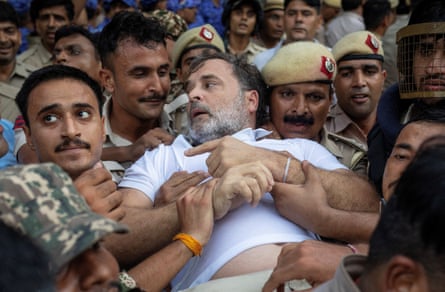
The opposition parties, particularly the Congress, have swiftly recognized the potent political capital embedded within the CJP movement. Their decision to shut down parliament on Wednesday was a strategic move to amplify the students’ demands and corner the ruling Bharatiya Janata Party (BJP) government. Rahul Gandhi’s proactive engagement, from leading protests outside the Prime Minister’s residence to his strong condemnations of police action, signifies a concerted effort to position the opposition as the champion of India’s youth.
Speaking to the media, Gandhi stated, "The government doesn’t want to take any accountability, nor does it want to have a debate on it in parliament." This statement encapsulates the opposition’s narrative: that the Modi government is dismissive of youth concerns and unwilling to confront the systemic issues highlighted by the CJP. The symbolic act of dressing in black by opposition members in Delhi further underscored their somber mood and unwavering resolve.
Sandeep Dikshit, a senior leader of the Congress party, articulated the broader constitutional implications, remarking, "What happened yesterday is our constitution got trampled upon. After that, no self-respecting politician or citizen can stand aside." Such statements aim to elevate the issue beyond mere student grievances to a question of democratic principles and governmental accountability. The opposition’s unified stance, a rare sight in India’s often fractured political landscape, demonstrates the perceived gravity of the situation and the potential electoral ramifications of alienating a significant demographic.
Government Response and Evolving Stance
Initially, Education Minister Dharmendra Pradhan had dismissed the CJP protesters with strong rhetoric, labeling them a "B-team of terrorists." This combative stance, however, appeared to soften in the wake of mounting pressure from widespread protests, opposition outcry, and the severity of injuries reported.
In his first public comments since Monday’s violent clashes, Pradhan adopted a more conciliatory tone through a social media post. "We owe them [students] answers, reforms and accountability. That is exactly what our government remains committed to delivering," he wrote. This marked a noticeable shift from his earlier dismissive remarks, suggesting an acknowledgment of the gravity of the situation and perhaps an attempt to de-escalate tensions. However, he also took a veiled swipe at the opposition, adding, "The students of India deserve far better than being treated as props in a political campaign," implicitly referring to Rahul Gandhi’s high-profile protests.
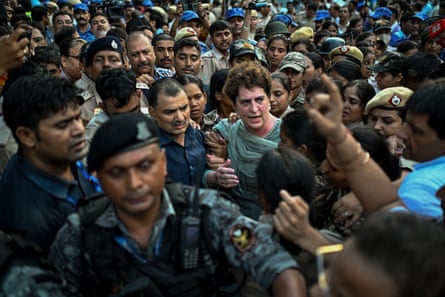
Prime Minister Modi himself has yet to comment directly on the protests. His silence, while characteristic of his administration in times of controversy, has drawn criticism from the opposition and the CJP alike, who argue that his direct intervention is crucial to address the national crisis. The government’s broader strategy appears to be a mix of initial suppression, followed by a more tempered, though still defensive, official response from the responsible minister.
Broader Impact and Implications
The CJP movement and the subsequent parliamentary deadlock carry significant implications for India’s political landscape. Firstly, it highlights the growing political agency of India’s youth. Historically, youth movements have played pivotal roles in shaping the nation, and the CJP signals a new generation’s readiness to demand change. Their digital-first origins, combined with effective on-ground mobilization, demonstrate a new model of activism that traditional political parties are grappling to understand and respond to.
Secondly, the protests underscore the deep-seated structural issues within India’s education and employment sectors. The repeated examination scandals erode public trust in institutions, while the persistent challenge of providing meaningful employment to millions of young people creates a fertile ground for dissent. Unless these fundamental issues are addressed, such movements are likely to recur and intensify.
Thirdly, the crisis poses a direct challenge to the Modi government’s narrative of stability and progress. Having recently secured a strong mandate, the administration now faces criticism over its handling of domestic dissent and its perceived failure to safeguard the future of its younger citizens. The government’s response to the CJP’s demands and the opposition’s parliamentary tactics will be closely watched, particularly as India approaches its next electoral cycle. A prolonged standoff could dent the government’s image and galvanize opposition forces.
The CJP’s ability to sustain its protest, despite the grueling heat and humidity of Delhi, is a testament to the determination of its participants. More than 1,000 people continued to camp out at the protest site on Wednesday, many having traveled vast distances, vowing not to disperse until their demands are met. The logistical support, including food deliveries (biryani, pizza, rice, and dal) organized by supporters both domestically and from abroad, illustrates a well-coordinated and resilient movement. Morale remained remarkably high, with slogans and songs echoing across the encampment, signaling a collective spirit of defiance.
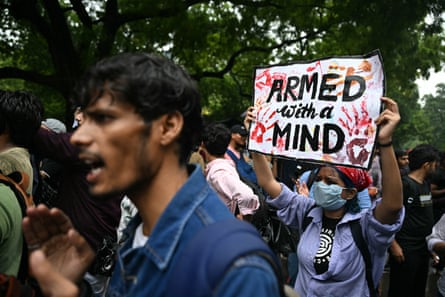
Beyond Delhi, protests in solidarity with the CJP movement were also reported in major cities like Mumbai and Bengaluru, drawing hundreds of people and indicating the nationwide resonance of the issues. This geographical spread suggests that the CJP is not an isolated Delhi phenomenon but a reflection of broader national sentiment.
Abhijeet Dipke, the CJP’s founder, urged protesters not to lose hope, speaking from atop a lorry at the Delhi site. "They want to break our spirit," he declared. "Do not let them silence you." His words encapsulate the confrontational yet resilient spirit of a movement determined to be heard and to hold power accountable for the aspirations of an entire generation. The ongoing standoff thus represents not just a political crisis, but a defining moment for India’s youth and its democratic future.