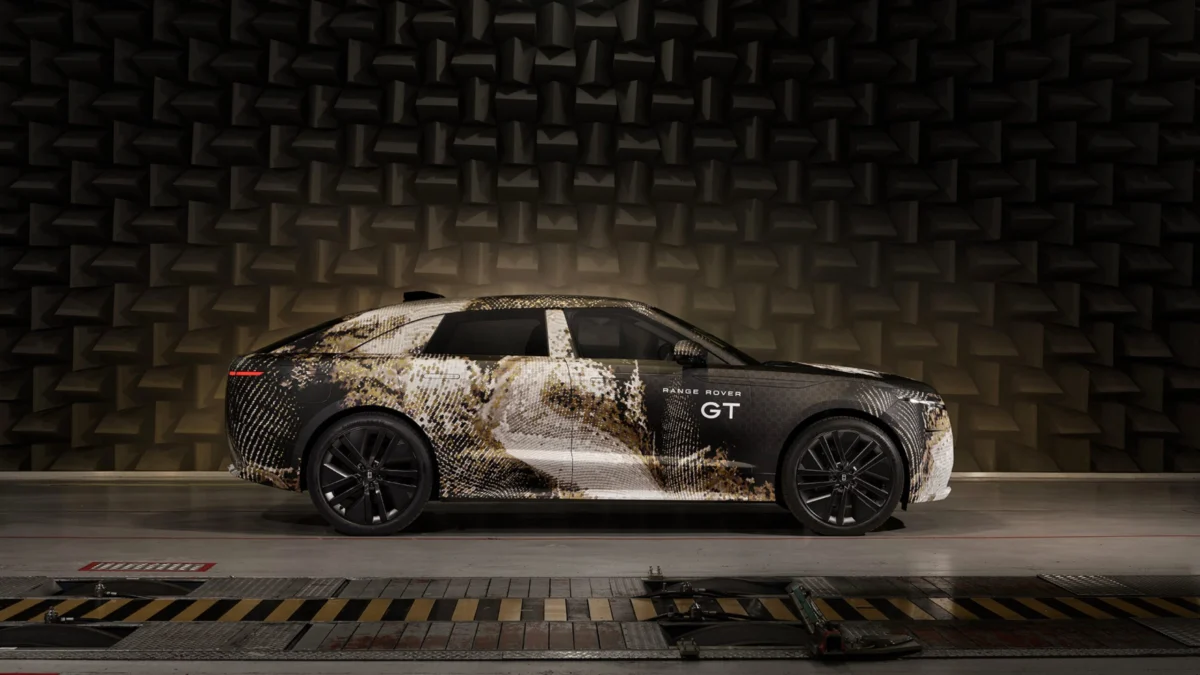
The automotive world is buzzing with the preview of Range Rover’s audacious new venture: a sophisticated, uniquely Range Rover Grand Tourer (GT) built upon the company’s advanced electrified Modular Architecture (EMA). This strategic pivot, revealed by Martin Limpert, managing director of Range Rover, underscores the brand’s intensive multi-year effort to redefine its core identity in the burgeoning electric vehicle (EV) era, promising a blend of unprecedented car-like dynamics with the marque’s iconic capability. The GT, poised to be the "most car-like, yet unmistakably capable, Range Rover ever created," leverages the inherent advantages of its dedicated EV architecture to deliver a truly distinctive luxury experience, complementing its existing diverse powertrain portfolio and catering to evolving customer demands. This innovative model is not merely an addition but a significant reinterpretation of the Range Rover ethos, marrying effortless EV performance with first-class long-haul refinement and the brand’s legendary all-terrain prowess. Its serene and ultraminimalist interior design further signals a forward-looking vision for the modern grand tourer, pushing the boundaries of luxury automotive design and functionality.
The Strategic Imperative: Range Rover’s Evolution in the Electric Age
Range Rover, a name synonymous with luxury SUVs and unparalleled off-road capability, is embarking on one of its most transformative journeys in its more than 50-year history. The introduction of the Range Rover GT is a direct response to a confluence of industry shifts: the accelerating global transition to electric vehicles, the increasing demand for sophisticated luxury experiences beyond traditional SUV formats, and Jaguar Land Rover’s (JLR) overarching "Reimagine" strategy. Launched in 2021 by CEO Thierry Bolloré, the "Reimagine" strategy committed JLR to becoming a net-zero carbon business by 2039, with all Jaguar and Land Rover models available in pure electric form by the end of the decade. This ambitious plan necessitates not just electrifying existing models but also exploring entirely new segments and vehicle architectures to maintain market relevance and leadership in the premium sector.
For decades, Range Rover has cultivated an image of rugged luxury, pioneering the premium SUV segment. From its humble beginnings in 1970 as a more comfortable, yet still highly capable, utility vehicle, to its current status as a global icon of opulence and adventure, the brand has consistently evolved. The original Range Rover was revolutionary, combining the off-road ability of a Land Rover with the comfort and style of a saloon car, a concept that would define the luxury SUV segment for decades. Subsequent generations, from the P38A to the L322 and the current L460, have consistently pushed boundaries in luxury, technology, and refinement. However, the move into a dedicated GT segment represents a significant departure from its established SUV-centric identity. It signifies a strategic intent to capture a new demographic of luxury buyers who seek the elevated driving experience of a grand tourer combined with the unique attributes Range Rover can bring – namely, its inherent capability and sophisticated design language. This expansion of the brand’s portfolio is crucial for future growth, allowing Range Rover to diversify its offerings and appeal to a broader spectrum of discerning customers in an increasingly competitive luxury EV landscape. The GT project is not merely an engineering exercise; it is a profound philosophical statement about what a Range Rover can be in the 21st century.
Unveiling the EMA Platform: The Backbone of Range Rover’s Electric Future
Central to the Range Rover GT’s groundbreaking nature is its foundation: the Electric Modular Architecture (EMA). As Range Rover’s third electrifiable platform, EMA represents a significant technological leap, designed from the ground up to prioritize electrification. This platform stands distinct from the Modular Longitudinal Architecture (MLA) currently utilized by larger Range Rover and Range Rover Sport models, which supports a range of powertrains including internal combustion engines (ICE), plug-in hybrids (PHEV), and future battery electric vehicles (BEV). MLA’s flexibility is key for transitioning existing model lines, allowing for a gradual shift away from ICE without requiring entirely new vehicle designs. EMA, by contrast, is primarily conceived for battery-electric propulsion, though it retains some flexibility for future hybrid applications if market demands dictate. This BEV-first approach allows for optimized packaging of batteries and electric motors, leading to enhanced performance, range, and interior space by eliminating the compromises often associated with adapting an ICE platform for electrification.
The development of EMA underscores JLR’s commitment to creating bespoke platforms tailored to specific vehicle types and brand identities within its portfolio. While MLA serves as a versatile foundation for larger, more traditional SUV offerings that demand significant towing capacity and robust off-road geometry, EMA is designed for a new generation of electric vehicles, particularly those where a lower roofline, a sleeker aerodynamic profile, and a more car-like stance are desired. Its inherent modularity means it can be adapted to various vehicle sizes and body styles, suggesting that the Range Rover GT is likely just the first of several models that will eventually leverage this advanced architecture. The emphasis on electrification from the outset allows engineers to integrate advanced battery cooling, energy management systems, and high-performance electric drive units seamlessly, ensuring the GT delivers on its promise of "effortless EV performance." This focused approach to platform development is a cornerstone of JLR’s strategy to differentiate its products in a crowded EV market, ensuring each new electric model delivers a distinct and authentic brand experience rooted in its unique brand values.
Redefining the Grand Tourer: Performance, Refinement, and Capability
Martin Limpert’s assertion that the Range Rover GT is "the most car-like, yet unmistakably capable, Range Rover ever created" highlights the delicate balance the brand aims to strike. A grand tourer traditionally emphasizes long-distance comfort, high-speed cruising ability, and refined performance. Range Rover aims to imbue these characteristics with its signature blend of luxury and versatility.
The "effortless EV performance" promised by the GT suggests rapid acceleration, smooth power delivery, and a quiet, composed driving experience characteristic of modern high-performance EVs. While specific power output figures remain under wraps, the use of a dedicated electric platform implies the potential for significant horsepower and torque, likely enabling brisk acceleration comparable to, or even exceeding, many high-performance ICE vehicles. For instance, luxury electric GTs often boast 0-60 mph times well under 4 seconds. The inherent silence of electric powertrains will undoubtedly contribute to the "first-class long-haul refinement," creating a serene cabin environment conducive to extended journeys. Advanced suspension systems, potentially incorporating predictive adaptive air suspension, sophisticated active damping technologies, and active roll control, will be crucial in delivering both the supple ride comfort expected of a luxury GT and the dynamic control required for spirited driving on winding roads. The flat skateboard-like battery integration within the EMA platform also contributes to a low center of gravity, enhancing stability and handling dynamics.
What truly sets the Range Rover GT apart from other luxury electric grand tourers, however, is the brand’s commitment to retaining "all-terrain capability." This is a hallmark of Range Rover and a unique proposition in the GT segment. While it’s unlikely the GT will match the extreme off-road prowess of a full-sized Range Rover SUV, the integration of advanced traction management systems (such as an evolved Terrain Response system), intelligent all-wheel drive with torque vectoring, and potentially adjustable ride height would allow it to confidently tackle challenging road conditions, unpaved tracks, and adverse weather with a level of assurance few rivals can offer. This capability is not just about extreme off-roading; it’s about providing a sense of invincibility and freedom that resonates deeply with the Range Rover brand identity, ensuring that the GT is not confined to perfect tarmac but can truly embark on grand tours, regardless of the destination’s accessibility. This unique blend of on-road dynamism and off-road assurance positions the Range Rover GT as a truly distinctive offering in the luxury electric vehicle market, appealing to those who desire ultimate versatility without compromise.
A Vision of Serenity: The Ultraminimalist Interior
The preview of the Range Rover GT’s interior reveals a clear and deliberate departure from the cabin aesthetics of its SUV siblings, embracing an "ultraminimalist" philosophy. This design choice aligns with a broader trend in luxury automotive design, where simplicity, clean lines, and integrated technology create a sense of calm and uncluttered sophistication. Range Rover describes this interior as "calming," a testament to the meticulous attention paid to material selection, ergonomics, and spatial harmony. The focus is on creating a sanctuary for occupants, where modern technology seamlessly blends with luxurious comfort. The choice of premium, perhaps sustainable, materials will further reinforce this serene environment, with options for bespoke customization expected.
Crucially, this minimalist approach does not come at the expense of functionality or safety. Range Rover designers have carefully navigated the increasingly stringent regulatory landscape, particularly in Europe (where Euro NCAP is increasingly factoring physical controls into safety ratings) and Australia (where crash testers have also advocated for them), which mandates the retention of physical controls for certain critical functions. This ensures that while the cabin appears streamlined, essential operations like climate control, volume, and hazard lights remain tactile and intuitive, preventing driver distraction and enhancing safety. This judicious balance between digital integration and physical haptics represents a thoughtful response to industry feedback and safety concerns, setting the Range Rover GT apart from some rivals that have gone "all-in" on touchscreen interfaces, sometimes leading to frustration or compromised safety.
The digital interface itself is state-of-the-art. The GT features two prominent OLED screens: a main instrument display for driver information and a central infotainment touchscreen. OLED technology offers superior contrast, deeper blacks, and vibrant colors compared to traditional LCDs, enhancing the visual experience and readability from various angles. Notably, Range Rover has eschewed the trend of a third screen for the front passenger, opting instead for a more focused and driver-centric cabin environment while still ensuring a premium experience for all occupants through high-quality materials and connectivity. Further enhancing driver convenience and safety, a head-up display (HUD) is made standard for the GT. This technology projects key driving information directly onto the windshield, allowing the driver to keep their eyes on the road, minimizing distractions and improving situational awareness. The combination of advanced display technology, intelligent control layout, and premium materials – likely including exquisite leathers, sustainable textiles, and refined metal accents – will define the GT’s interior as a benchmark for modern grand tourer design, blending timeless luxury with cutting-edge technology.
JLR’s Multi-Platform Strategy: EMA, MLA, and JEA
The introduction of the EMA platform for the Range Rover GT provides a crucial insight into Jaguar Land Rover’s sophisticated multi-platform strategy, designed to cater to diverse segments and brand identities while maximizing efficiency and technological synergy. JLR is operating with three distinct, yet interconnected, electrifiable architectures, forming the bedrock of its "Reimagine" strategy:
-
Modular Longitudinal Architecture (MLA): This platform currently underpins the latest generations of the Range Rover and Range Rover Sport. MLA is highly versatile, designed to accommodate a wide range of powertrains including advanced Ingenium internal combustion engines, sophisticated plug-in hybrids (PHEV), and future pure battery-electric vehicle (BEV) variants, such as the upcoming Range Rover Electric. Its longitudinal layout is ideal for larger vehicles requiring significant ground clearance, robust towing capacity, and inherent off-road capability, making it perfect for Range Rover’s traditional SUV offerings. This platform facilitates a flexible transition period for existing model lines.
-
Electric Modular Architecture (EMA): As discussed, EMA is a BEV-first platform, optimized for electrified powertrains. While retaining some flexibility for future hybrid applications, its primary focus is on pure electric vehicles that may feature a lower center of gravity and a more car-like stance, as exemplified by the Range Rover GT. This architecture is expected to be scalable, potentially underpinning a range of future electric models that demand advanced packaging for batteries and electric motors, offering superior efficiency and dynamic performance for road-biased vehicles, without completely abandoning Range Rover’s core capabilities. This platform is key to expanding Range Rover’s appeal beyond SUVs.
-
Jaguar Electric Architecture (JEA): This platform is dedicated exclusively to Jaguar’s ambitious reinvention as a pure-electric luxury brand. The first model to emerge from this architecture will be the Jaguar Type 01, also a four-door grand tourer, slated for a debut later this year. JEA is designed to support Jaguar’s vision of ultra-luxury, high-performance electric vehicles, focusing on dynamic driving characteristics, avant-garde design, and state-of-the-art technology. The existence of a dedicated Jaguar platform underscores JLR’s commitment to ensuring distinct brand identities, even as they share electrification goals and core technologies. This platform will be instrumental in positioning Jaguar as a true competitor to brands like Bentley and Porsche in the ultra-luxury EV space.
This three-pronged platform approach allows JLR to achieve significant economies of scale in component development and manufacturing, leveraging shared modules and engineering expertise across its brands. Simultaneously, it provides the necessary architectural differentiation to maintain the unique character and brand DNA of Range Rover and Jaguar vehicles. The Range Rover GT, sharing the "four-door grand tourer" concept with the forthcoming Jaguar Type 01, highlights this strategy. While both will be luxurious electric grand tourers, the Range Rover GT will likely lean into its brand’s DNA with greater emphasis on comfortable long-distance travel, sophisticated refinement, and its unique all-terrain capability. The Jaguar Type 01, by contrast, is expected to prioritize sharper dynamics, more overt performance, and a sleek, perhaps more aggressive, design aesthetic, aligning with Jaguar’s sporting heritage and its re-positioning as a truly exclusive luxury brand. This careful segmentation ensures that each brand offers a compelling, distinct proposition in the rapidly evolving luxury EV market.
Market Implications and Competitive Landscape
The Range Rover GT enters a rapidly expanding, yet highly competitive, segment of luxury electric grand tourers. Its arrival signifies Range Rover’s intent to capture a new echelon of discerning buyers who prioritize sustainability, cutting-edge technology, and a refined driving experience, but are also drawn to the unique prestige and capability associated with the Range Rover badge.
Target Market: The GT is likely aimed at affluent individuals who appreciate luxury and performance but are seeking something beyond a traditional SUV. These buyers might be existing Range Rover owners looking for an electrified second vehicle, or new customers drawn from brands like Porsche, Mercedes-Benz, and even high-end Tesla, who are looking for a more exclusive and uniquely capable electric grand tourer. The blend of EV performance, luxury refinement, and all-terrain capability could appeal to those who desire a versatile vehicle for both urban commuting, long-distance touring, and light adventure, without compromising on luxury or brand prestige.
Competitive Landscape: The Range Rover GT will face formidable competition. Key rivals in the luxury electric GT space include:
- Porsche Taycan: A benchmark for electric sports sedans, known for its dynamic driving, performance, and charging infrastructure.
- Mercedes-AMG EQS Sedan: Offers a blend of opulent luxury, advanced technology (like the Hyperscreen), and potent electric performance, particularly in its AMG variants.
- Lucid Air: Celebrated for