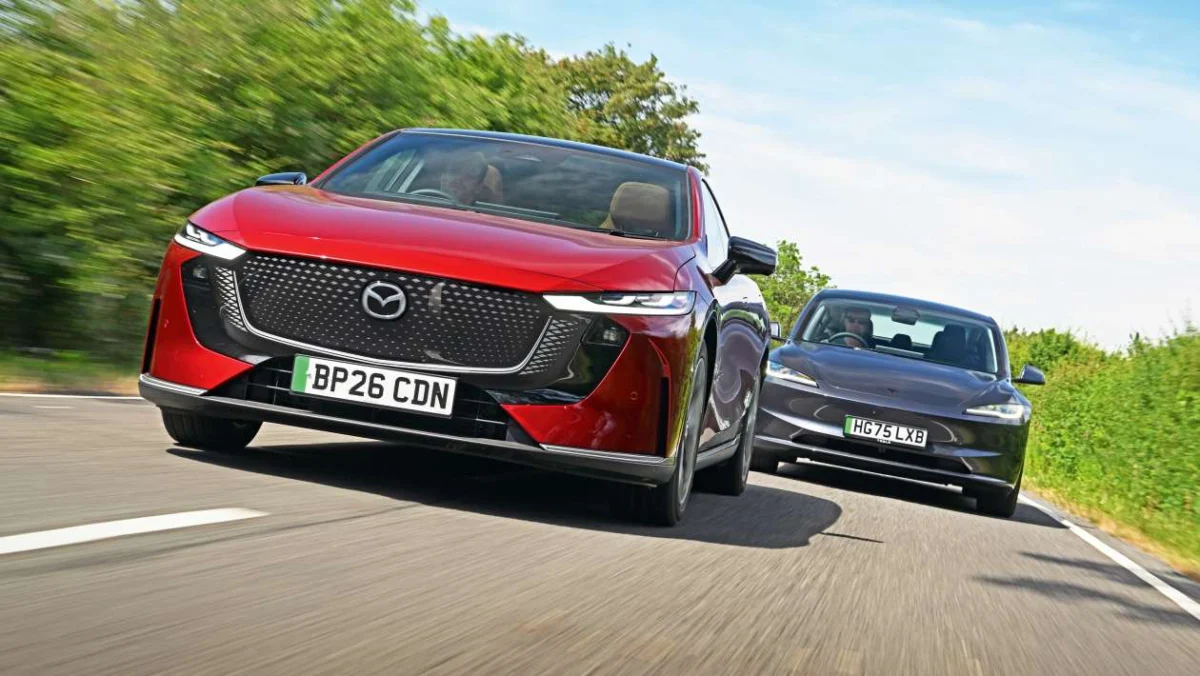
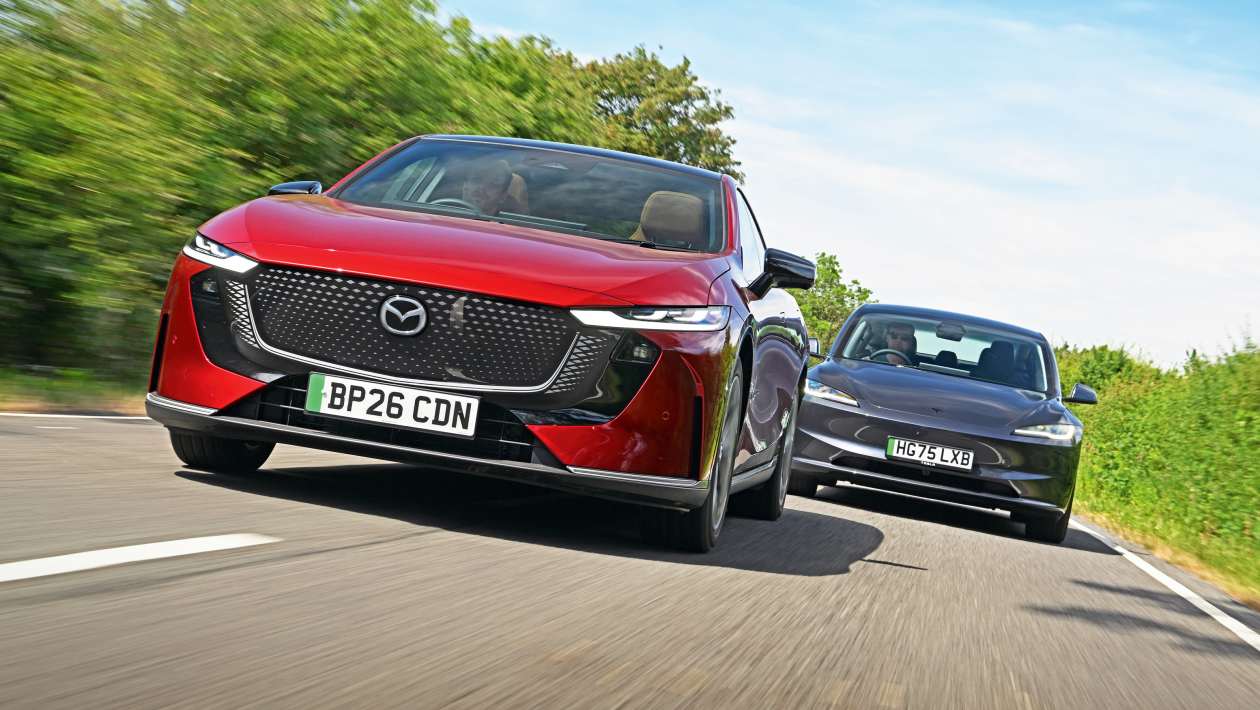
The Mazda 6e arrives at a critical juncture for Mazda. After the internal combustion engine (ICE) powered Mazda 6 was phased out in 2022, a void was left in the brand’s lineup. The 6e seeks to fill that space, not as a traditional three-box saloon, but as a sleek five-door hatchback designed to compete directly with the Model 3 on price, performance, and range. By partnering with Changan, Mazda has bypassed years of independent research and development, utilizing an existing Chinese EV platform to bring a competitive product to market with unprecedented speed. This head-to-head comparison evaluates whether Mazda’s new "Sino-Japanese" hybrid can truly dethrone the king of the electric executive pack.
Strategic Context: The Mazda-Changan Alliance
The development of the Mazda 6e is a byproduct of the changing dynamics in the global automotive industry, where Japanese manufacturers, once leaders in hybrid technology, have found themselves playing catch-up in the battery-electric vehicle (BEV) race. Mazda’s partnership with Changan Automobile—one of China’s "Big Four" state-owned automakers—allowed the company to tap into the mature EV supply chain and platform architecture prevalent in the Chinese domestic market.
This collaboration is primarily centered around the Changan Mazda joint venture. The 6e is heavily derived from the architecture used in Changan’s Deepal sub-brand, specifically the SL03 platform. This strategic move allowed Mazda to focus on "Mazda-fying" the aesthetics and interior quality, while the heavy lifting of battery integration and motor calibration was handled by Changan’s proven hardware. For Mazda, this was a survival tactic; for Changan, it provided a prestigious gateway to refine its engineering for a global audience.
Chronology of Development and Launch
The path to the 2026 Mazda 6e began in earnest following the discontinuation of the petrol Mazda 6. While Mazda initially focused on its "Large Product Group" (CX-60, CX-90) featuring plug-in hybrid and inline-six engines, the pressure to deliver a pure EV for the European and Asian markets became undeniable.
- 2022: The traditional Mazda 6 is retired from most major markets.
- 2024: Mazda unveils the EZ-6 at the Beijing Auto Show, confirming a collaboration with Changan.
- 2025: Intellectual property filings confirm the "6e" moniker for the European and North American markets, signaling a shift from the EZ-6 naming convention.
- July 2026: The Mazda 6e officially enters the UK and European markets, positioned as a direct rival to the refreshed Tesla Model 3.
Technical Specifications and Performance Data
The competition between the Mazda 6e and the Tesla Model 3 RWD (Rear-Wheel Drive) is remarkably tight on paper, though they achieve their goals through different engineering philosophies.

Mazda 6e 78kWh Takumi Plus
The 6e is powered by a substantial 78kWh lithium-ion battery pack, providing an official WLTP range of 348 miles. Its single electric motor produces 254bhp and 290Nm of torque. Despite its sleek appearance, the 6e is a heavy vehicle, tipping the scales at 2,015kg. This mass impacts its off-the-line performance, resulting in a 0-62mph time of 7.9 seconds and a top speed of 109mph. However, its charging capabilities are robust, supporting up to 195kW, which allows a 30% to 80% charge in approximately 15 minutes.
Tesla Model 3 RWD
The entry-level Tesla Model 3 utilizes a smaller estimated 62.5kWh battery but benefits from Tesla’s industry-leading efficiency. It offers a 332-mile range, nearly matching the Mazda despite the smaller battery. The Tesla is significantly lighter at ,1768kg, which translates to superior performance metrics. It produces 279bhp and achieves a 0-62mph sprint in just 6.2 seconds—nearly two seconds faster than the Mazda. Tesla’s peak charging rate for this model stands at 175kW.
Interior Design and Technological Integration
One of the most striking differences between the two vehicles lies in their approach to the cabin environment. Mazda has traditionally been praised for its driver-centric, tactile interiors, while Tesla redefined the industry with its minimalist, screen-first philosophy.

The Mazda 6e features a "Takumi" trim that feels decidedly more premium than the Tesla. It utilizes a mix of leather and artificial suede, creating a plush, traditional luxury feel. However, the influence of its Chinese development is evident in the technology suite. The 14.6-inch central touchscreen controls almost every vehicle function. In a controversial move for Mazda, even the wiper controls and light settings have been moved to the screen or mapped to shortcut buttons on the steering wheel, a departure from the physical switchgear Mazda fans have come to expect.
The Tesla Model 3, following its "Highland" refresh, offers a refined but still stark interior. It relies on a 15.4-inch central display and lacks a traditional instrument cluster, a feature the Mazda retains with a 10.2-inch digital dashboard and a head-up display. Tesla’s software remains the gold standard for responsiveness and ease of use, though the Mazda attempts to compete with unique features such as headrest-mounted speakers for localized navigation prompts and "ambience modes" designed for relaxation during charging sessions.
On the Road: Handling and Dynamics
For decades, Mazda’s marketing has centered on Jinba Ittai—the feeling of oneness between horse and rider. In the 6e, this DNA appears somewhat diluted. Because the vehicle is based on a platform designed for the Chinese market, which prioritizes rear-seat comfort and soft damping, the 6e feels more like a comfortable cruiser than a sports sedan. Testers have noted that the car’s significant weight causes it to "wallow" in corners, lacking the sharp turn-in associated with the Mazda 3 or the MX-5.

In contrast, the Tesla Model 3 remains the driver’s choice in this segment. Its lower curb weight and lower center of gravity provide a more agile feel. While the ride is firmer than the Mazda’s, it offers better body control and a more communicative steering rack. The Tesla’s powertrain calibration also feels more immediate, providing the instantaneous torque delivery that EV buyers have come to expect.
Practicality and Everyday Usability
The Mazda 6e’s transition to a five-door hatchback body style gives it a significant advantage in terms of loading flexibility. The large rear aperture makes it easier to load bulky items compared to the Tesla’s traditional saloon trunk. However, the Mazda’s rear-mounted motor configuration results in a high boot floor, limiting total volume to 337 liters with the seats up.
Tesla, despite the restricted saloon opening, offers a much deeper and wider boot with 594 liters of capacity. Furthermore, Tesla continues to lead in "frunk" (front trunk) space, offering 88 liters of storage compared to the Mazda’s 72 liters.

Ownership, Infrastructure, and Warranty
The ownership proposition is where the two brands diverge most sharply. Mazda is banking on consumer confidence by offering a six-year or 100,000-mile warranty, significantly outperforming Tesla’s four-year or 60,000-mile coverage. This long-term security may be a deciding factor for buyers wary of new EV technology.
However, Tesla’s "ace in the hole" remains the Supercharger network. For executive drivers who travel long distances, the seamless integration of Tesla’s charging infrastructure—featuring "plug and charge" functionality and high reliability—remains a major hurdle for Mazda to overcome. While the Mazda 6e can use third-party rapid chargers, the experience is often fragmented across various apps and payment providers.
Broader Implications for the Automotive Industry
The Mazda 6e represents a broader trend of "platform sharing" between established global brands and Chinese tech giants. As the industry moves toward 2030, the cost of developing bespoke EV architectures is becoming prohibitive for smaller manufacturers like Mazda. This partnership with Changan is a blueprint for how other mid-tier automakers might survive the transition.

However, this strategy carries risks. By adopting a third-party platform, Mazda risks losing the unique driving characteristics that define its brand identity. The 6e, while a competent and efficient EV, struggles to feel like a "true" Mazda in the corners. It raises a fundamental question: In the electric age, is brand identity defined by the software and the badge, or by the mechanical soul of the chassis?
Final Verdict and Market Outlook
The Tesla Model 3 remains the winner of this confrontation, primarily due to its superior efficiency, performance, and the unrivaled Supercharger network. It continues to offer a more cohesive driving experience and a tech-forward approach that feels more integrated than the Mazda’s.
The Mazda 6e, however, is a strong runner-up and a legitimate alternative for those who find the Tesla too clinical or "common." With its plusher interior, striking exterior design, and longer warranty, it appeals to a more traditional sense of automotive luxury. While it may not possess the sporty DNA of its predecessors, the 6e proves that Mazda is finally a serious player in the EV market. As the Changan partnership matures, future iterations may find the balance between Chinese efficiency and Japanese driving dynamics, but for now, the Tesla Model 3 retains its crown as the executive EV to beat.